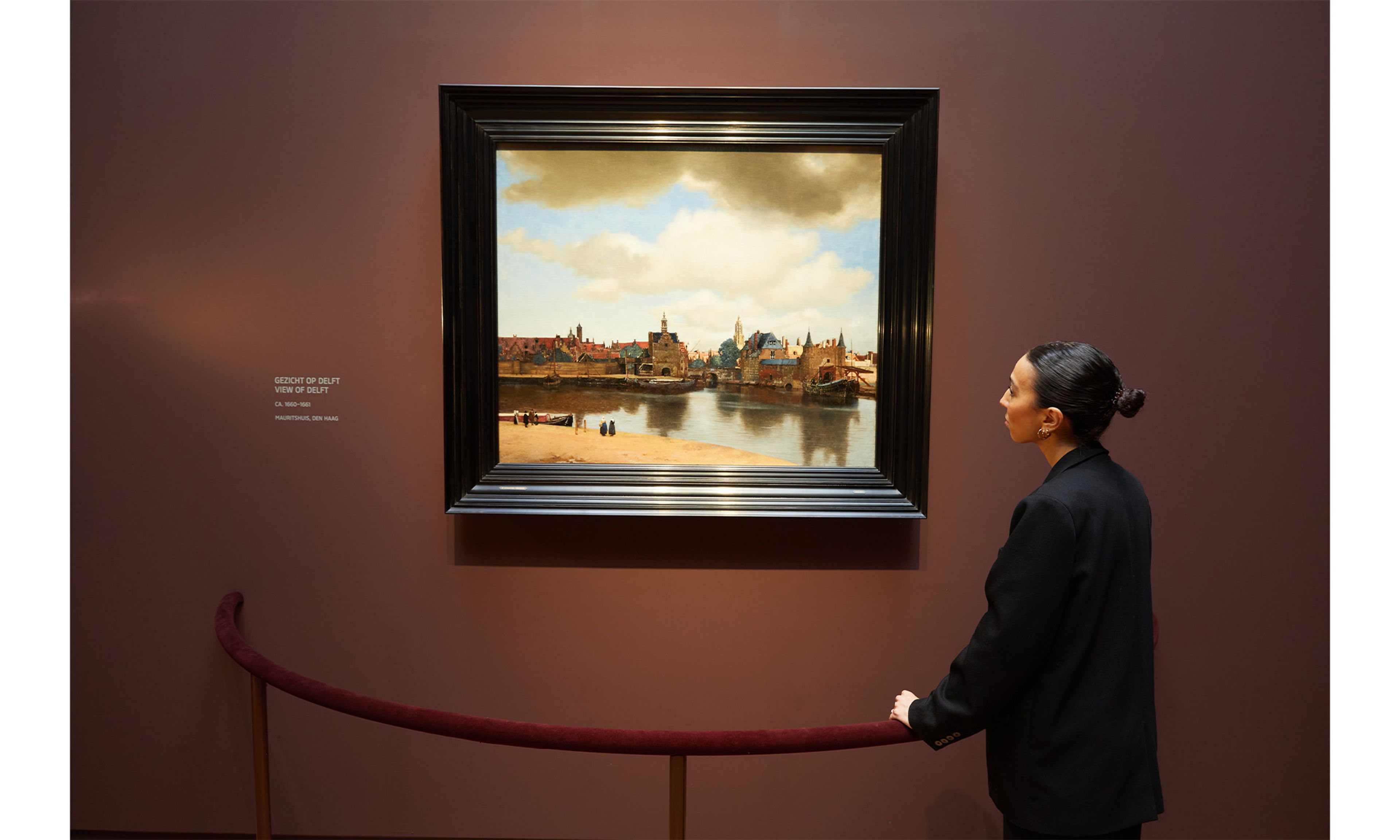
Last week I wrote about Vermeer, now on view at the Rijksmuseum in Amsterdam. No one’s surprised it’s a blockbuster. Johannes Vermeer (1632–1675) painted around 45 works, and only 38 are still with us. Almost all are in museums. The Rijksmuseum gathered 28, though Girl with a Pearl Earring, from the Mauritshuis museum in The Hague, left the show early, so then there were 27. Still, it’s the biggest Vermeer exhibition ever. The last survey of Vermeer’s work — and Vermeer is 100 percent, pure Vermeer — happened in 1995.
Vermeer’s small, quiet, enigmatic pictures are both loved and famous. The Milkmaid, from 1658 or 1659, is the stuff of a cloister. A servant pours milk in a bowl on a table with bread in baskets and what’s probably a pitcher of beer. She’s hefty, and the wall behind her, deceptively minimalist, is expansive. It’s empty space that demands our attention. Sometimes women in his paintings play music. In Woman in Blue Reading a Letter, from 1662 or so, and Mistress and Maid, from a few years later, the mail has come. There’s urgency and drama, but we don’t know what.





Comments