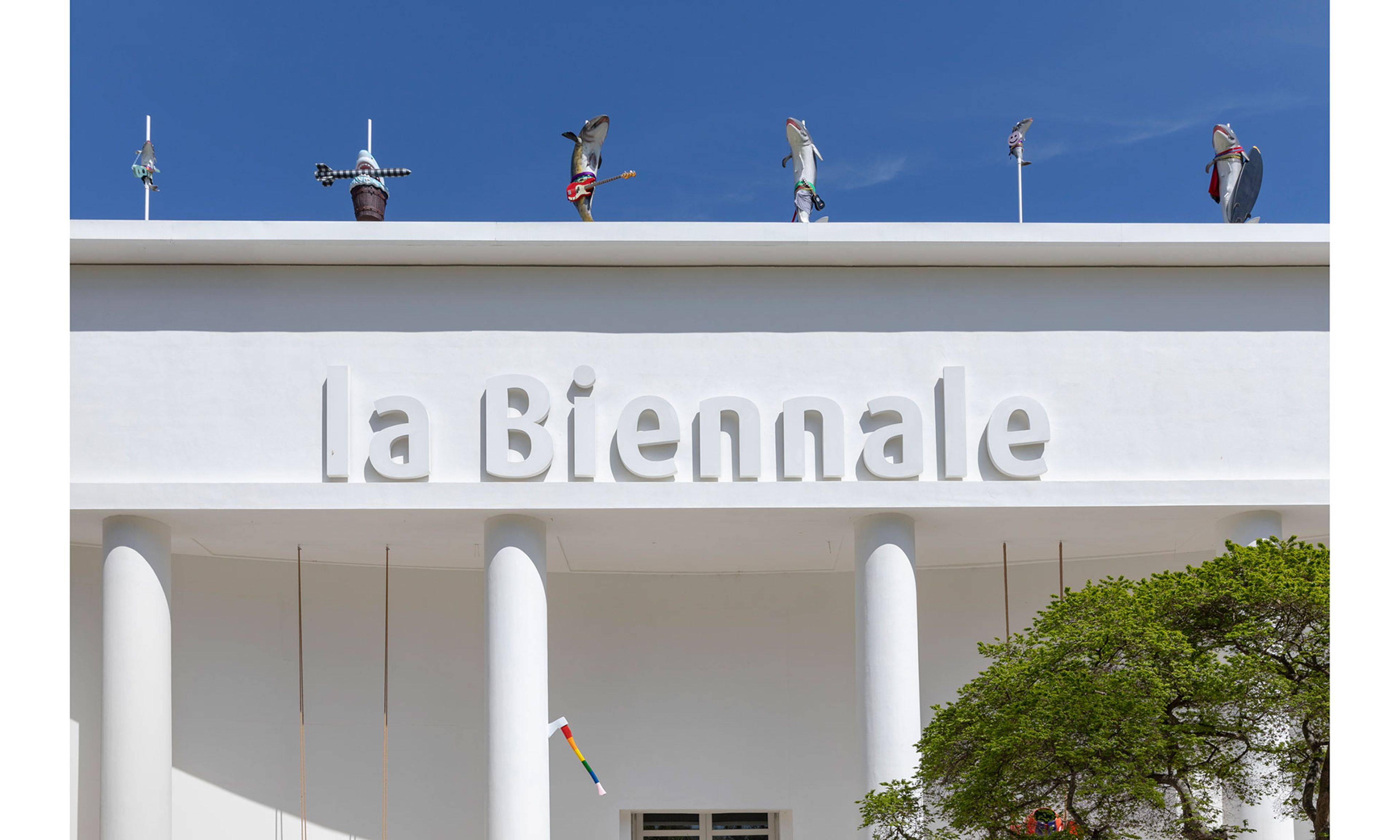
Earlier this week I wrote a story about the American pavilion at the Venice Biennale. Simone Leigh’s a very good artist, but she doesn’t have the heft to represent the zenith of American art. Black-femme subjectivity, her subject, is a niche appealing, no surprise, to big funders of the American pavilion such as the Mellon Foundation and the Ford Foundation. Both make lots of race-driven gifts these days. The NEA and State Department’s education-and-culture division, together, select the artists showing at the American pavilion. Leigh’s work is oppression art but sleek and beautiful, and it looks good in a gallery. It’s smooth, not gruesome or dogmatic. A convincing case can be made that it’s historicist. It suits haut bourgeois, PC, Acela Corridor taste.
The Biennale is far more than the American pavilion. This Biennale is the 59th since 1895. It’s called the art-world Olympics, a decent analogy in that dozens of countries, 80 this year, send exhibitions, called pavilions, showing what their art honchos want to celebrate. It’s the biggest contemporary art show in the world. Of course, Venice, a unique proposition, adds sparkle. The Biennale began in the Venice of Henry James, Edith Wharton, and Sargent, so it has always had cachet. It’s always been serious, too. The Italians have always been proud of it and covetous of its doings. As in the College of Cardinals, Italians have a disproportionate sway.





Comments