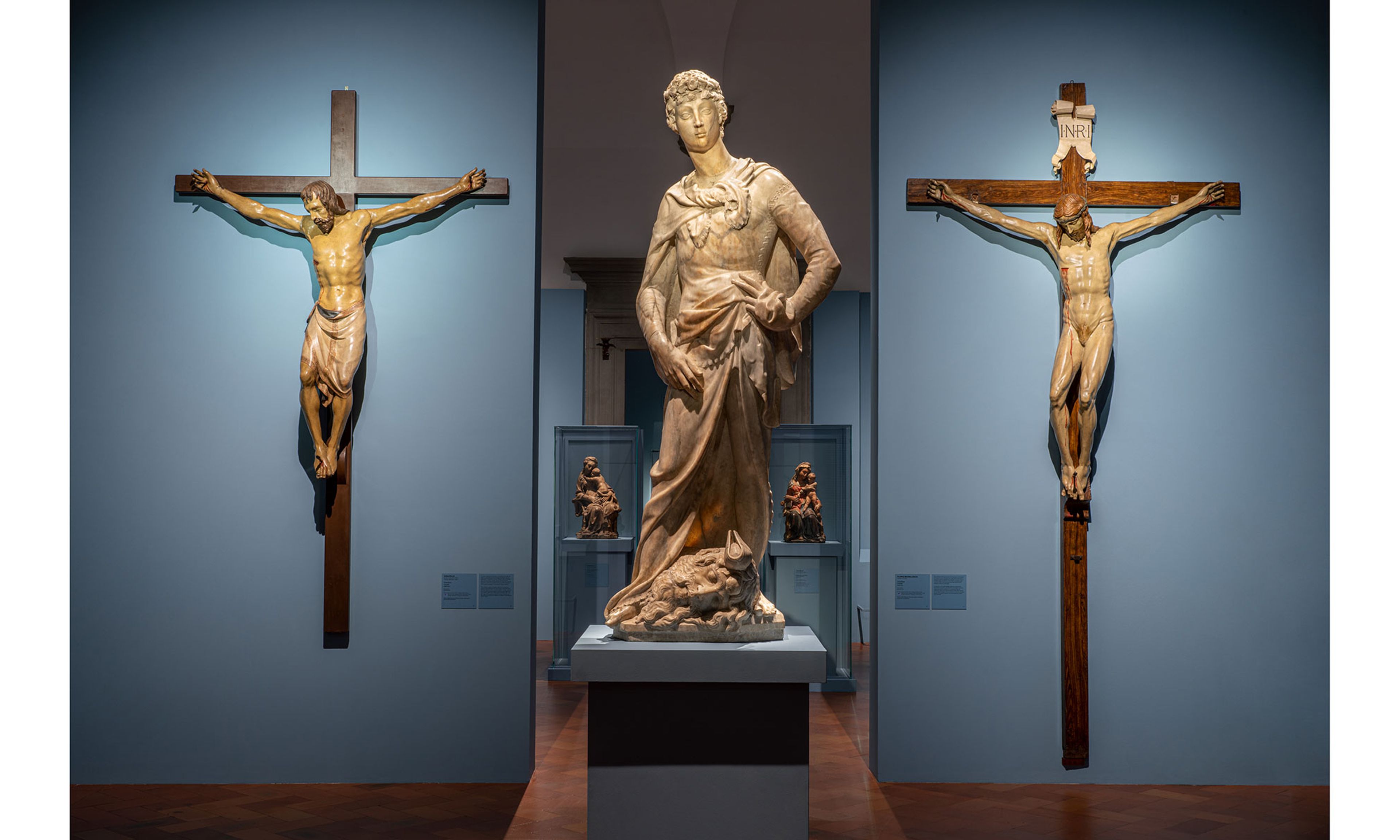
Earlier this week, I wrote about Donatello: The Renaissance, the retrospective of the work of Donato di Niccoló di Betto Bardi (1386–1466). Donatello was an aesthetic adventurist. He’s voracious like Picasso, and nearly as long-lived. At a time with a lust for new thinking, he served invention after invention. He refined theories of linear perspective so every artist could use them. He revived the dormant art of terra-cotta. He was a symbol maker, too. His David Victorious, from the late 1430s, a bronze of the young David standing by Goliath’s dead head, became Florence’s calling card, the ultimate little engine that could.
Through his sculptures of David and Saint George and his terra-cotta sculptures of the Virgin and Child, he expressed a new cult of youth. Yes, he depicted lots of gnarly old prophets, but, overall, Donatello is all about what was fresh and pulsing with life and energy. The exhibition first develops this overarching theme through objects such as his first David Victorious, evoking sass and a sense of destiny, a painted wood sculpture from 1408 of Jesus on the Cross looking like a truck driver, Saint George, from around 1415, and lifelike terra-cotta takes on the Virgin and Child where the Virgin actually looks like an attentive, loving young mother, and the baby fidgets and reaches like a real baby.




Comments