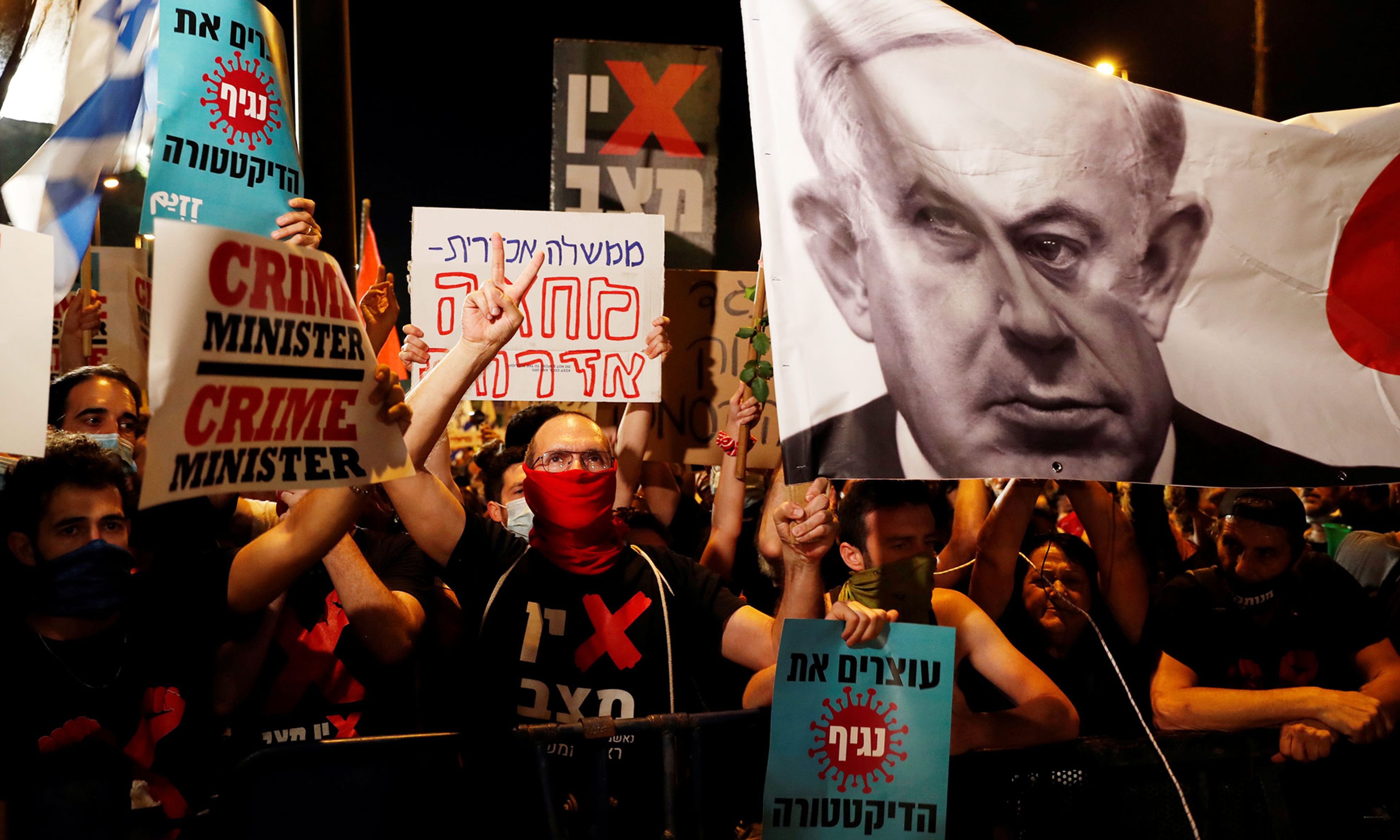
Once touting itself as a model for tackling the coronavirus, Israel is now experiencing a massive surge in new infections and widespread disappointment over the government’s handling of the ensuing economic collapse. At least 10,000 protesters on Saturday night packed into Paris Square in Jerusalem, next to the residence of Prime Minister Benjamin Netanyahu, while an unclear number of protesters arrived at major highway intersections to protest the government’s economic response to the pandemic. Unfortunately for Netanyahu and his allies, as much as they would like to paint these protests as entirely the product of the radical Left, they indicate much wider discontent.
Israel imposed one of the strictest lockdowns in the world at the height of the pandemic’s arrival in Europe, causing newly reported coronavirus cases to flatline by May. However, Israeli health experts and even Netanyahu himself acknowledge that the country reopened too soon. Israel also failed to develop a plan to build up the contact-tracing infrastructure necessary to nip outbreaks in the bud without closing large sectors of the economy. Naftali Bennett, a right-wing rival of Netanyahu’s, called in April for the IDF to handle contact tracing, because of the army’s massive size and organizational capabilities. However, Netanyahu, loath to hand a right-wing competitor credit for tackling the coronavirus, kept contact-tracing responsibilities with other agencies. Detractors believe that Netanyahu became too distracted by other issues, including the Trump peace plan and a looming budget fight in the Knesset, to focus on the pandemic. The surge in coronavirus cases grew to about 2,000 per day by late July, even as some in Netanyahu’s ruling party were hinting at the possibility of new elections and were preemptively blaming rivals for causing what would be the fourth round of voting in less than two years.




Comments