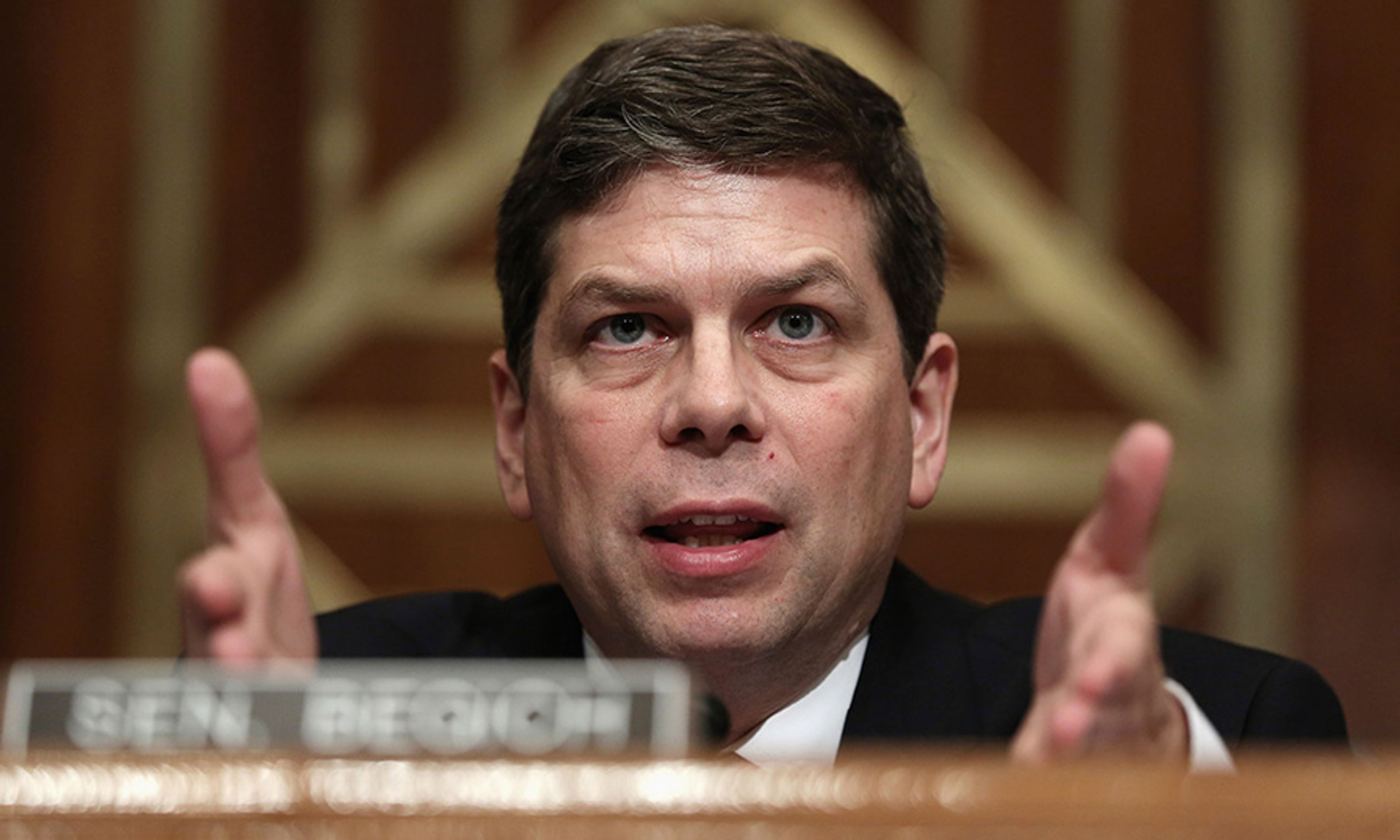
If his campaign were a P. D. Eastman story, junior Alaska senator Mark Begich (D.) would be walking around the state asking senior senator Lisa Murkowski (R.), “Are you my supporter?”
The reality is somehow more pitiful: He’s not asking, but he keeps making her say no. Begich persists in running an ad that implies that his more popular colleague loves having him in the Senate with her.
“Lisa Murkowski and Mark Begich vote as much as 80 percent of the time together; I don’t think we ought to break up that team,” an Alaskan says in the ad, an attempt to woo Republican voters in a state that Mitt Romney carried by 14 points and in which, this year, the Democratic incumbent is in danger of losing his seat.
“No means no,” the Republican senator, snorting mad, told reporters Saturday. Begich offended Murkowski first by the running the ad and then by ignoring a cease-and-desist letter from her lawyers. He maintains that Murkowski was complaining merely because — as he told his (actually Murkowski-endorsed) Republican opponent, Dan Sullivan, in Thursday’s debate — “she didn’t like the photo” of herself that appeared in the ad
“This is not a situation where you want to make sure you got a pretty picture on the TV,” Murkowski retorted. “That was an offensive statement, and I don’t appreciate that.”
Alaska Republicans buttressed Murkowski’s statement by turning the Democrats’ “war on women” meme against Begich. “To stand there in a debate and minimize her comments and her decision to no longer be associated with him in a very serious campaign as nothing more than [her] essentially having a bad hair day takes women back, in my opinion, to the 1950s,” state senator Lesil McGuire said Tuesday on a conference call with reporters hosted by the Republican National Committee in Alaska. “What a degrading remark.”
As a campaign strategy, Begich’s refusal to admit that Murkowski opposes his reelection is mystifying. Implicit in his decision to run the ad is the belief that associating himself with her will prove helpful. And yet by provoking her with his stubbornness, Begich has induced Murkowski to attack him in the closing days of a difficult race. Sullivan has led in nine of the last ten polls, though Alaska is a difficult state to poll accurately and the last survey showed Begich suddenly leading by six points.
And this isn’t the only time this election Begich has run ads featuring people who don’t want to be associated with him. The first bump in the senator’s reelection bid came in late August, when he aired an ad blaming Sullivan, a former Alaska attorney general, for a brutal crime allegedly perpetrated by a man who was released from prison early on his watch.
The victims’ family lawyer released a blistering letter. “You are tearing this family apart,” he wrote to Begich. “You[r] campaign is playing pure politics at the expense of my clients, and frankly has done only what is in the best interests of ‘Mark Begich’ rather than protecting the victims of the most serious crime in Alaska history.”
Under fire from the family and the press, Begich pulled the ad, only to make a similar mistake earlier this week in a piece of direct mail. The literature decries sexual violence and suggests that Sullivan failed to “combat sexual violence” as attorney general, before urging voters to help the Alaska Network on Domestic Violence and Sexual Assault in that effort. The group quickly repudiated the ad, which it called “very disappointing.”
“ANDVSA is a 501(c)(3) nonprofit and does not endorse candidates. We are legally prohibited from doing so,” executive director Peggy Brown said, according to the Washington Examiner. “We are absolutely nonpartisan and work well with all parties on the issue of domestic and sexual violence because, quite frankly, domestic and sexual violence are nonpartisan issues and it takes all of us working together on this issue to make any headway.”
Political observers used to compliment Begich for running one of the best campaigns in the country. As he is spurned time and again by putative allies, they — and Alaska voters — might begin a reassessment.
— Joel Gehrke is a political reporter for National Review Online.


Comments