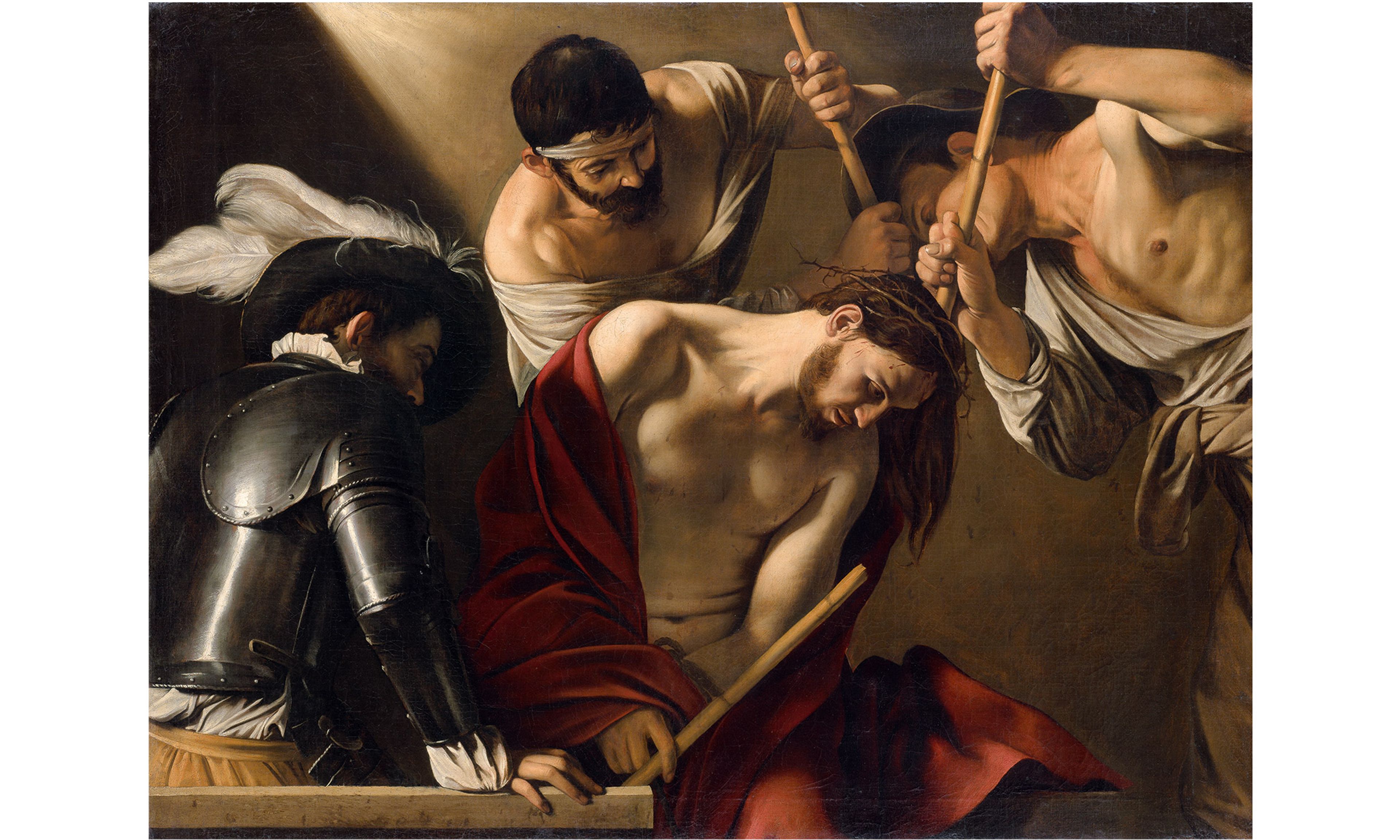
The Wuhan Flu might keep us from Rome, but the Rijksmuseum’s exhibition “Caravaggio/Bernini: Baroque in Rome” is a rarefied substitute. What? We can’t go to Amsterdam, either? Well, enjoy this primer on Baroque style and spirit from the safety of your bunker. The show’s a wonderful travelogue, a history lesson, and an aesthetic banquet, too.
The English word “baroque” comes from the French for “irregularly shaped” and initially referred to pearls that weren’t round but bulged as if a soul inside were trying to escape. Nobody in Rome in the 1600s called Gian Lorenzo Bernini (1598–1680) or Michelangelo Merisi da Caravaggio (1571–1610) Baroque artists It’s a term slapped onto a broad movement years later by art historians wanting to define the revolution in aesthetics that began in Rome around that time. These two artists introduced a spectacular aesthetic vocabulary charged with drama, bravura, vigor. “Baroque” first had legs defining a style in the 18th century, when the critic Goethe used it. The art of Rome around 1600 embraced what Goethe called “the nuance of the bizarre,” and before long “baroque” was the catchier, all-purpose term. It’s art showing the soul as it moves with emotion — anger, sorrow, joy, desire, pity, and love.





Comments