
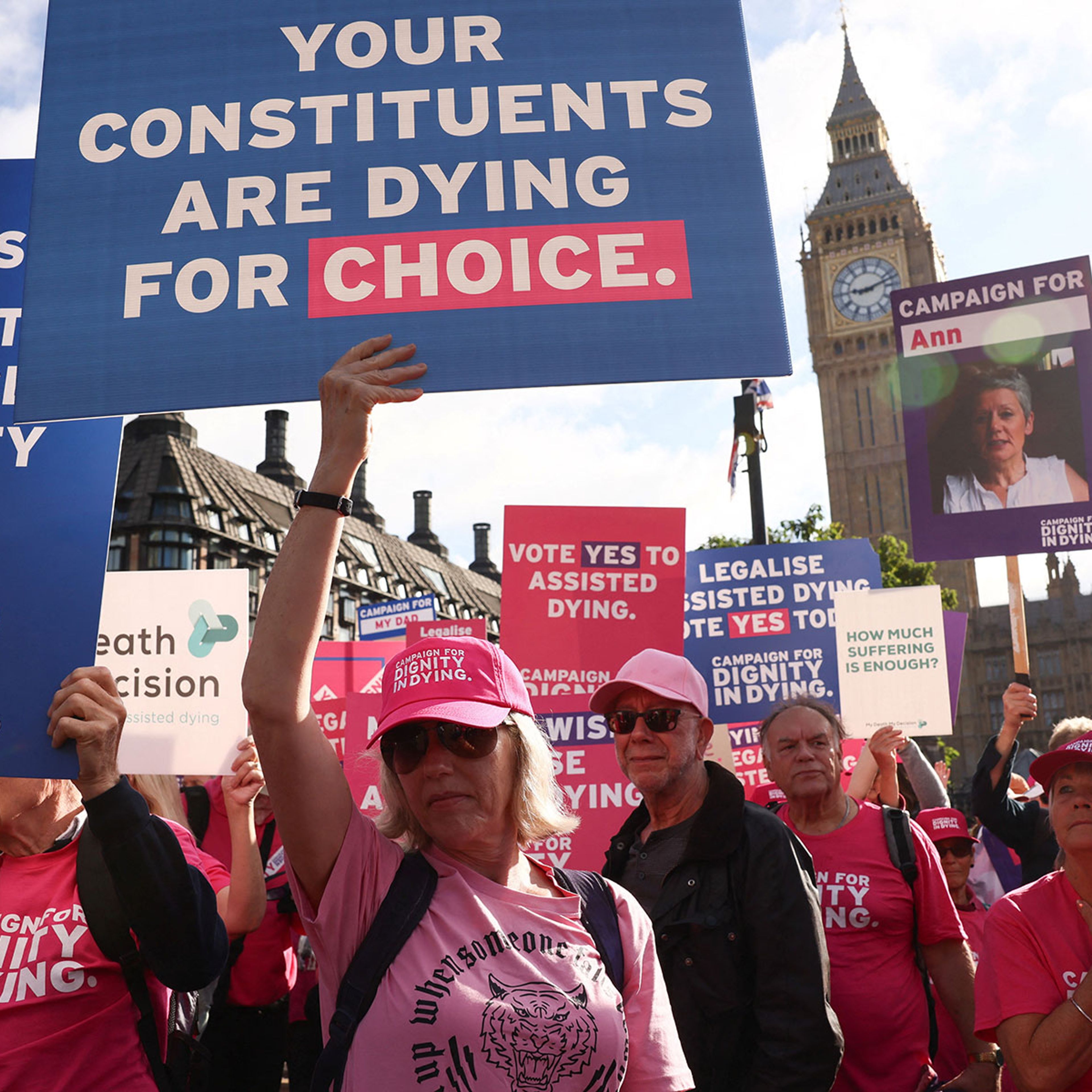
Shall a person diagnosed with a terminal illness be able to legally obtain a lethal cocktail for self-administration prescribed by a health care professional in the United States? Medical aid in dying (MAiD), a.k.a. physician-assisted suicide, is currently legal in ten states, the District of Columbia, and several countries. Proposals are under consideration in at least 19 other states. This week, the New York State Assembly passed the bill Medical Aid in Dying; in Delaware, a bill “Relating to End of Life Options” has passed both chambers and is awaiting the governor’s signature. While motivated by compassion, proponents of MAiD seem to place personal autonomy above all other considerations. A death, any death, must be considered with utmost deliberation and compassion. Rather, proponents of assisted suicide argue their cause using ambiguity and fear.
First, we are told that individuals diagnosed with a terminal illness or condition have a right to end their lives. Does that right of the individual trump its impact on others? Do not friends and family, caregivers, and the writer of the prescription (especially if he or she has not developed a relationship with the patient) experience regret? Could something more have been done? Do I want to be cared for by doctors who endorse MAiD? Might they be giving up on me? Are the disabled and the socially disadvantaged more at risk? Is this how we want society to function? While many may say they support MAiD, they are not being apprised of the harm posed to others, including the most vulnerable among us, this “right” being camouflaged in a fog of ambiguity.



Comments