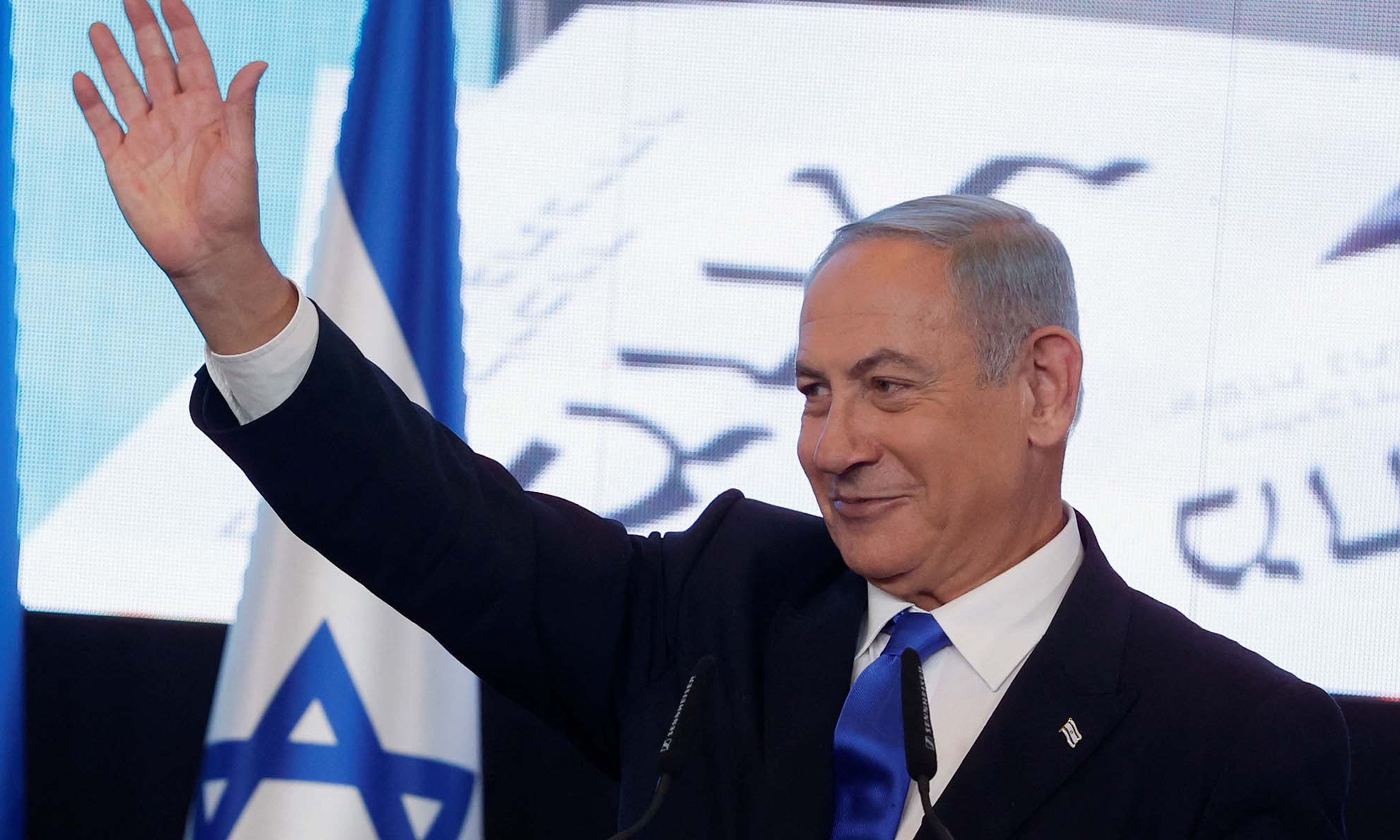
Benjamin Netanyahu has won the fifth Israeli election in as many years and will form a new government in the coming weeks. Netanyahu can be expected to broadly reprise his signature policies in pursuit of strong national security and robust economic growth for the Jewish state, along with his opposition to the Islamic Republic of Iran. While his relationship with the Biden administration will likely be frosty, he will enjoy high support among Republicans and conservative Jews in the U.S. This sets up a unique dynamic for the U.S.–Israel relationship as it approaches its 75th anniversary next May.
Netanyahu is already Israel’s longest-tenured prime minister, having previously occupied the post from 1996 to 1999 and from 2009 to 2021. He has also, at one time or another over the years, been Israel’s minister of foreign affairs, its minister of finance, its minister of communications, and its permanent representative to the United Nations. He is, in short, the most credentialed politician in Israeli history.




Comments