Dear Weekend Jolter,
If there’s anything I have learned from working in this space, it’s that journalists, and especially conservative journalists, embrace change — with arms outstretched. The more of it, the better.
Kidding. Change is inherently suspect. “To improve is to change, so to be perfect is to have changed often,” Winston Churchill said, and to my ear this makes him sound like a fanatic.
So the fact that we, at National Review, are not just pleased but genuinely excited to show off our newly unveiled, completely redesigned website — loaded up with new features — should convey that this is a big deal. A good change. (The relaunch, by the way, went considerably better than your average HealthCare.gov rollout or, say, a routine upgrade to FAA systems.)
And so, I ask this weekend for some holiday-spirit generosity, if you can show it. A relaunch of this scope takes money, as does making the most of the new NationalReview.com — not just the technological aspects, but our commitment to bringing to our readers the very best in conservative opinion, reporting, and analysis. We’ve launched our seasonal webathon, and we hope you can chip in here. For those who don’t already subscribe, we’re also running a limited-time-only special for the Thanksgiving weekend: Get a digital subscription at our lowest price of $4 a month for your first six months, or $48 for your first year.
National Review is on the front line in the battle of ideas. Republicans took a beating in the midterms, in large part because of Trump administration excesses we’ve written about often. But Democrats already indicate they plan to match recklessness with recklessness: See Hakeem Jeffries’s pledge to expand entitlements at a time of fiscal crisis, not to mention the left’s designs on dismantling the current constitutional structure.
Your donations (and your readership and subscriptions) support our work to stop the arsonists.
In service of that goal, we set out to give our publication a refresh, to make it more attractive, yes, but also more navigable and resource-rich. Apart from our new look, we’ve uploaded the entirety of the NR archives online. Want to read what Whittaker Chambers wrote in 1959 about the nuclear arms race, or see what the issues of the day were when you were born? It’s all there, for the browsing. If you haven’t already, take the tour.
Naturally, our new site is looking ahead as we honor our past and our foundation. We’ve made it easier to access all our videos and podcasts, whether you’re looking for Rich Lowry’s or Caroline Downey’s commentary, or the latest episode of The Editors. And click on “My Feed” to curate your own list of topics and authors to follow.
In short, this is change we stand behind. We hope you can, too. Please, donate here. Thank you.
National Review Institute is a nonprofit, 501(c)(3), and all contributions to it are deductible for income, gift, and estate tax purposes.
NAME. RANK. LINK.
EDITORIALS
In the holiday spirit: Thanksgiving in America
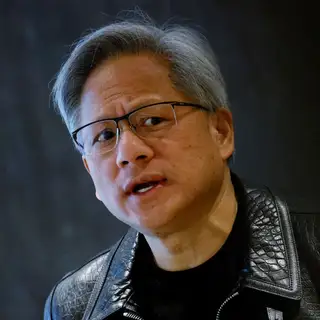
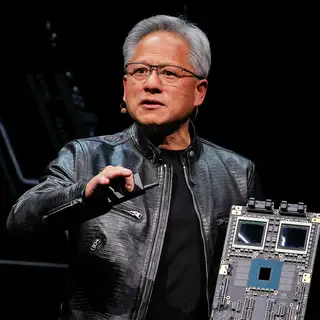
On the Huang boomerang: Huang’s Surprise Return Doesn’t End Nvidia Questions
On the upcoming sentencing: Probation for John Bolton
The precise opposite of what needs to be done: Hakeem Jeffries’s Reckless Medicare Expansion
But this isn’t it either: The Wrong Way to Address Social Security
ARTICLES
Charles Hilu: How Representative Jeff Hurd Withstood the Blue Wave in Colorado
Dan McLaughlin: Populism Isn’t Built for Setbacks
Noah Rothman: Fiscal Reality Interrupts Everyone’s Social Security Fairy Tales
Noah Rothman: The Limits of the Great Man Theory of Business
Andrew McCarthy: How Long Can Jensen Huang and Nvidia Defy Gravity?
Spencer A. Klavan: Gratitude Is the Taproot of American Identity
Eva Terry: Everyone Should Throw a Bill Buckley Birthday Bash
Steve Stewart-Williams: What We Leave Out When We Talk About Sexism in Science
Abigail Anthony: A George Floyd Musical: What Could Go Wrong?
John Puri: A Glorious Man
Gregory W. Slayton: Will America Finally Confront the Massive Chinese Espionage Threat?
Marian L. Tupy: Elon Musk Owes South Africa Nothing
Daniel J. Samet: Chris Van Hollen’s Anti-Israel Turn
Michael Brendan Dougherty: Even Putin Is a ’90s Nostalgist
Shabbos Kestenbaum: On College Campuses, Nothing Is Free from Antisemitism
CAPITAL MATTERS
Amity Shlaes, with a contrarian take: What Elizabeth Holmes Got Right
LIGHTS. CAMERA. REVIEW.
Brian Allen looks back to the dawn of Thanksgiving, and American art in a time of war: Thanksgiving 1863 and the Changing Art Vibe in That Pivotal Year
Armond White unpacks a listicle: The Fault in Variety’s Stars
JUST THE RIGHT AMOUNT OF EXCERPTS, NO LEFTOVERS
In the “what just happened?” files, Andrew McCarthy breaks down the Nvidia news:
It’s foolish to be astonished by anything anymore. Still, Nvidia’s reinstatement of Jensen Huang as president and chief executive officer, just eleven days after his resignation and six days after the board of directors said it had no intention to reinstate him, is surprising, to say the least. . . .
There are, in any event, severe limits to how much protection the Trump administration can give to Jensen Huang and Nvidia.
Let’s assume for argument’s sake that the nascent investigation by the Justice Department (which took it over from the Commerce Department) has cleared Huang of any suspicions that he collaborated with Beijing, such that his reinstatement truly raises no national security concerns. That would not mean other law enforcement concerns have been erased, to say nothing about the company’s potential civil and criminal liability.
Even if we speculate that Huang will be added to the growing list of people the president will pardon before leaving office, that would not shield Nvidia or Huang himself from state criminal investigations, from federal or state civil lawsuits and administrative actions, or from potential foreign liability (Singapore, which is investigating Alice Huang, has already prosecuted a number of defendants over diverted Nvidia servers); China itself has also commenced legal proceedings against Nvidia, and it will now have a more powerful incentive to pursue them given the potential for embarrassing the U.S.
Plus, the Trump administration cannot prevent Congress from investigating Nvidia. Congress, of course, will soon be under the control of Democrats, who will have a strong incentive, for 2028 election purposes, to demonstrate that they are more serious about national security than Republicans. The latter will now be forced either to defend the Trump administration’s laxity or to break publicly with the president. Moreover, the current administration cannot protect Nvidia from future scrutiny by a Democratic-led Justice Department and Securities and Exchange Commission. (The technology transfers under investigation will still be within the relevant statutes of limitations come 2029.)
Regarding its reinstatement decision, the Nvidia board will argue that (a) its business judgment is entitled to deference; (b) the assurances from top Trump administration officials justified its action in reinstating Huang; (c) to the extent the company has investigative and litigation exposure, that is based on activities that have already occurred, so Huang’s restoration doesn’t change things one way or the other; and (d) Huang is so central to the company’s existence, performance, and vision that the upside of reinstating him outweighs the risks.
We’ll see. Undoubtedly, it’s a high-wire act.
Steve Stewart-Williams, a professor of psychology, takes a closer look at the actual science behind sexism in science:
Imagine you’re a young woman considering a career in science. You’ve heard that when a man and a woman with identical qualifications apply for the same job, hiring committees tend to favor the man. You ask for evidence, and someone sends you a study. It’s a real study, published in a prestigious journal, and it says more or less what you were told. Case closed?
Not necessarily.
A little-known fact about research in the social sciences is that it’s often very mixed. One study finds one thing, another finds the opposite, and yet another finds nothing at all. If we want to know what’s going on, we can’t just look at a single paper. We need to look at the overall pattern of evidence.
Unfortunately, people often don’t. Instead, they cherry-pick evidence for whatever position they already hold. They don’t necessarily do this on purpose; they just rummage through the evidence to see if their views are right, and they soon find what they’re looking for. This is an example of a phenomenon that psychologists call confirmation bias.
The bad news is that it’s not just laypeople who do this. Journalists and academics often do it as well. And when they fall prey to confirmation bias, they don’t just mislead themselves. They mislead the general public as well.
ICYMI, John Puri had a lovely tribute to Ben Sasse last weekend:
Sasse wasn’t supposed to make it this long. He has been gifted extra time by an extraordinary drug, turning a few months more of life into almost a year, and counting. The husband and father of three is using this time to focus on what matters in the end, and to add one last burst to a life already packed with agency: podcasts, essays, interviews, and a final book written alongside his daughter.
Born in a Nebraska town of fewer than 1,500 people, Sasse is as Midwestern as they come, exemplifying the heartland’s trademark mix of grit and gregariousness. As a boy, he detasseled corn in the fields — a much more tedious task than it sounds — and later sent his young children off to do the same. To raise adults capable of self-direction, he believes such physical work is essential to scratch in the “scar tissue of character.”
Sasse was one of the few U.S. senators who could teach a college course on government — bachelor’s degree from Harvard, master’s from St. John’s, and a Ph.D. in history from Yale. Then he began his true passion: trying to fix the problems of people who don’t want to hear it, also known as consulting. At 37, he became president of a tiny Nebraska college, rescuing it from bankruptcy and more than doubling its enrollment.
From there, Sasse vaulted to the Senate. An earnest health-care wonk who had studied the issue for years, he knew Obamacare wouldn’t heal what ailed it. His run for office was fueled by earnest indignation. When he talked about policy, one could see Sasse thinking, not just remembering what he was supposed to say. How many current senators is that true of? . . .
Even now, hopped up on morphine for most of his waking hours, with a torso “chock-full of tumors” pressing on his spine, Ben Sasse has not stopped thinking and speaking and writing about America. He is what Samuel Adams must have imagined when he hoped the country would be governed by “men of wisdom and knowledge, of moderation & temperance of patience, fortitude and perseverance, of sobriety & true republican simplicity of manners, of zeal for the honor of the supreme being & the welfare of the common wealth of men.”
We did not deserve such a leader, and soon we will no longer have him. But it’s pretty dang glorious that we did.
CODA
A little something autumnal, for the season. Happy Thanksgiving.