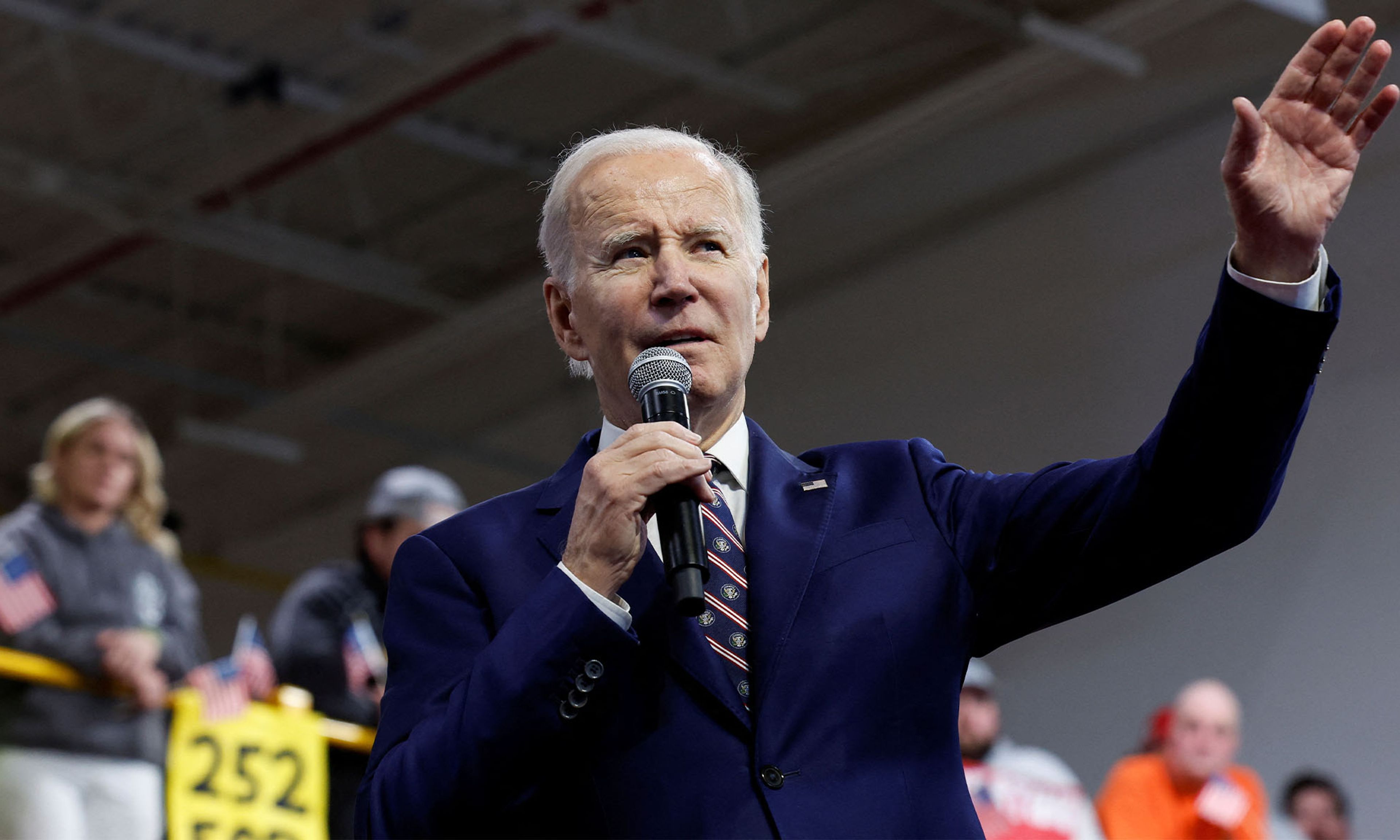
‘What’s behind your decision to end the Covid emergency?” NBC News reporter Kristen Welker asked President Joe Biden in late January. This should have been an easy one. “The pandemic is over,” would have sufficed. That’s what Biden told 60 Minutes anchor Scott Pelley last September. Maybe the president could have said that the United States had experienced “the two strongest years of job growth in history,” which his White House touted as a metric of the relative “grip” Covid maintained “on our economy and our lives.” But Biden didn’t say any of that. What he let slip instead was an admission against his own interests.
“The Covid emergency will end when the Supreme Court ends it,” Biden asserted with ponderous confidence. It’s reasonable to infer from this remark that Biden was referring not to the Covid-related national- and public-health-emergency declarations, but to the various pandemic-inspired policies his administration is trying to preserve, the absence of the emergency that supposedly justified them notwithstanding.





Comments