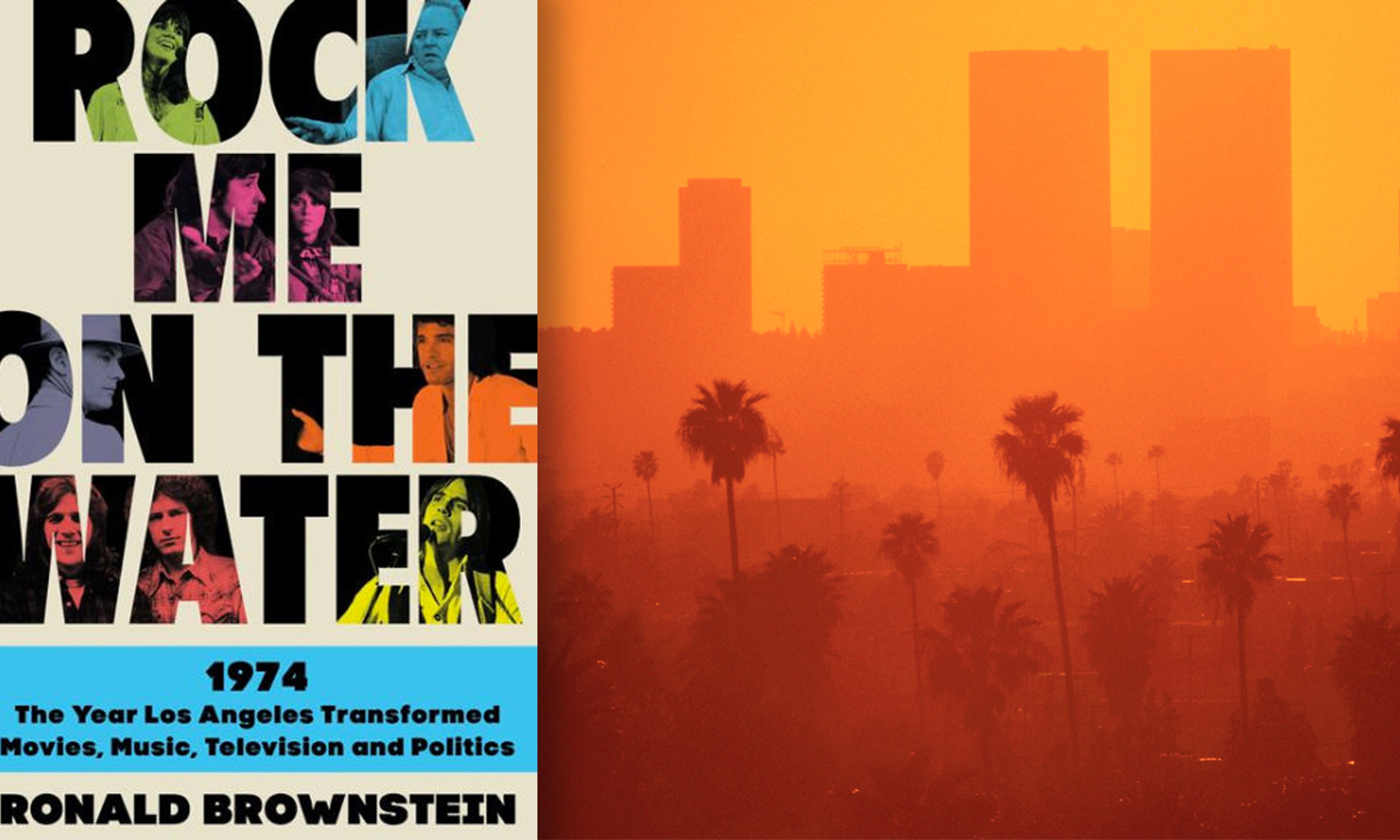
There was a moment when all of popular culture seemed to be on the same page, in the same spot: Los Angeles in 1974. The Eagles, Jackson Browne, and Linda Ronstadt had all overcome fitful starts to unite around a folky-country-rock sound that became America’s new soundtrack. A new wave of sophisticated television, displacing cornball and piffle such as McHale’s Navy and Green Acres, brought us the enduring classics All in the Family and The Mary Tyler Moore Show. On the screen, the labors of friends Warren Beatty, Jack Nicholson, and Robert Towne yielded Chinatown, released that summer, and Shampoo, which wrapped earlier in the year. Both before and after this peak, other places — notably London and New York — seized the reins of popular culture, but for a moment, America was in an L.A. groove.
It was “a historic constellation of inspiration, collaboration, and achievement,” argues longtime Los Angeles Times writer and now CNN analyst Ronald Brownstein in Rock Me on the Water, a warm and glowing portrait of one key year in Hollywood history. “We were in this pool of, like magic stuff, and it was rubbing off on everybody,” is how Graham Nash describes the moment. Rock musician Danny Kortchmar recalls, “You couldn’t throw a rock without hitting a genius.” Brownstein holds that it was “the last time culture was demonstrably ahead of politics in predicting what America would become.”





Comments