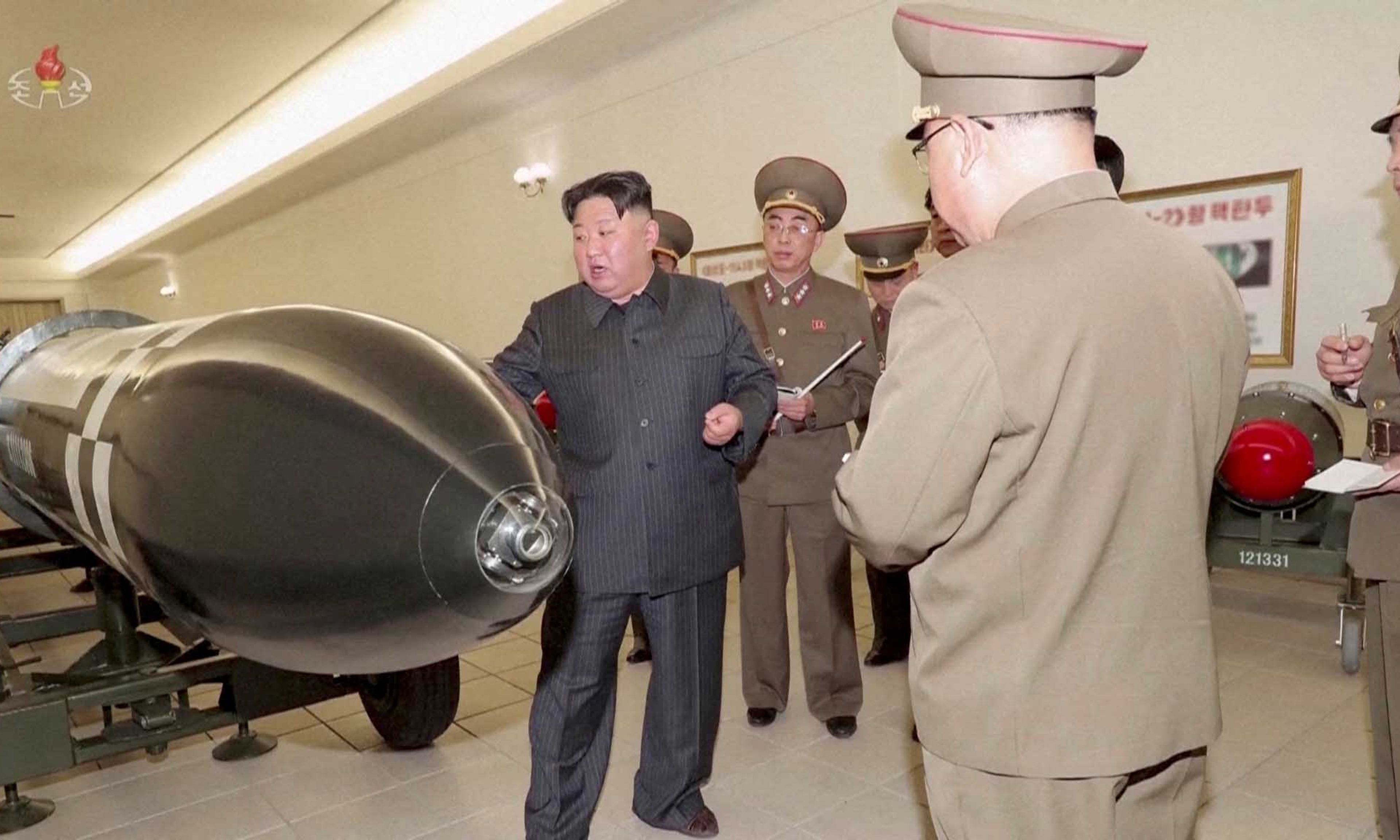
Last month, President Biden hosted his South Korean counterpart, President Yoon Suk Yeol, at the White House for a state dinner to celebrate the 70th anniversary of the alliance between the United States and the Republic of Korea. During Yoon’s visit, the two allies unveiled the Washington Declaration, a bilateral statement to meet the challenge of the shifting security landscape on the Korean Peninsula. The statement reiterates America’s commitment to South Korea’s defense, bolstering our extended deterrence, in return for an implicit guarantee that the country will remain a non-nuclear state, despite the growing call in Seoul for the development of autonomous nuclear capabilities. As per the agreement, the U.S. will deploy nuclear-armed submarines to South Korea for the first time in decades.
Amidst these well-received affirmations of friendship and jovial renditions of “American Pie,” the specter of the North Korean nuclear threat loomed large. During a joint news conference in the Rose Garden, Biden said, “Look, a nuclear attack by North Korea against the United States or its allies or . . . partners is unacceptable and will result in the end of whatever regime, were it to take such an action.”





Comments