Newark, N.J. — The salutatorian of the Bayonne High School class of 1917 was cause for celebration a week ago, on the first Saturday of October. “If you can be a saint in Newark, N.J. . . . ” the cab driver taking me to the Cathedral of the Sacred Heart memorably said as I explained to him the reason for the police, media, and crowds in and around this American Gothic treasure. Miriam Teresa Demjanovich was being beatified at the morning Mass, recognizing her life lived right here on the streets of the Garden State, several decades before Bruce Springsteen, Bon Jovi, and Chris Christie.
During her brief life, Blessed Miriam Teresa cared for her ailing parents, taught, and became a Sister of Charity, having long felt called to the religious life. She was only 26 when she died, from complications following a bout of tonsilitis. Her spiritual director had seen that she had tremendous contemplative gifts and asked her — this was unheard of — to write a series of spiritual conferences that he would preach to her and her fellow religious sisters in formation. The priest announced her authorship after her death — a note was tacked to a convent bulletin board — and her brother, also a priest, would have the conferences published in a challenging but accessible collection called Greater Perfection. She left behind great spiritual guidance and a model of living life well, whatever the time we wind up with, whatever the challenges.
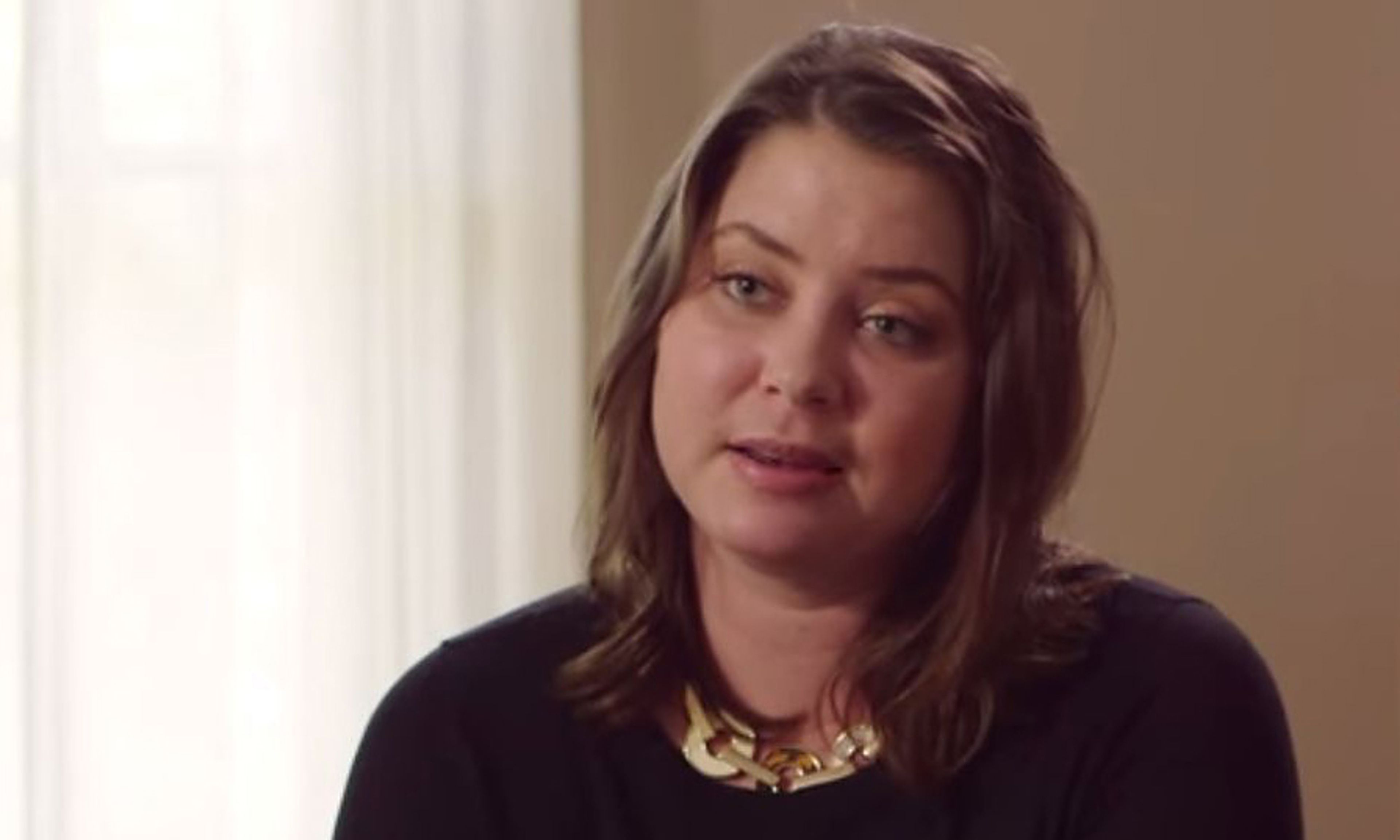
I thought of Miriam Teresa’s short life when I read about Brittany Maynard. If you haven’t seen her heartbreaking video, she is a 29-year-old who has been devastatingly diagnosed with brain cancer. Her diagnosis is grim, and death is impending. She and her husband have moved to Oregon so that she can speed the process along and end her life on November 1. That’s her right in the Beaver State.
But how can that be right? What does it say about our society when this is becoming a legal norm in some states? What does it say about us that we do seem to value choice more than life? And is it really a free choice if this is what our culture values? Is it really a free choice when medical protocols cast aside care and comfort in favor of a lethal hand?
“Death with dignity allows people who are in the predicament of facing a lot of suffering that they can decide when enough is enough,” Maynard’s husband says.
Her mother says, “My hope now is that my daughter can live her life the way that she wants to. She can make the decisions that she wants to. That she can be who she is. Which is this very autonomous, bright, well-read, well-traveled person who loves adventure.”
This all makes sense in a culture that idolizes beautiful, bright, well-read, well-traveled adventurers at the expense of those whose gifts might be less obvious to a largely transactional establishment, which is content to cast her aside when she is no longer able to be that independent individual.
Another woman who received a diagnosis similar to Maynard’s writes about her very different decision. She tells us of the dignity that comes from appreciating the tenderness of caregivers, when all the pricks and prods would tempt anyone to believe all dignity is lost.
Back in Newark, just days after the celebration of Blessed Miriam Teresa’s short life, Father Benedict Groeschel was laid to rest at the same Sacred Heart Cathedral. In a book about death and what comes after, Father Groeschel wrote: “Every thinking person knows that in the midst of terrible tragedy, anyone can be brought to a moment of wishing that life would end. This life on earth can have moments of exquisite beauty, of great satisfaction, but it can also be a ‘valley of tears.’”
Brittany faces that valley.
“It’s immoral that people have to die.” Father Groeschel was quoting an architect who worked on a “Lifespan Extending Villa” in East Hampton, N.Y., seeking to beat aging and delay death. It’s a monument to our fears.
“The most common personal problem of sane people is anxiety and fear,” Father Groeschel wrote, reflecting on his four decades as a psychologist. “In denial we try to go on, living day after day, oblivious to the fact that we and those we care for will one day die. We live as if the world were static, yet it changes constantly; every microsecond brings enormous change. We pretend that is it not in the nature of all life to be born, to grow, to decline, and eventually to perish.” Because of this norm, he wrote, we can be totally unprepared for “life-threatening events.” It’s all too likely that if, in a moment of desperation, we look to friends for help, we will find that they are “unable to deal with the possibility of death either — unable to help us when we need them most.”
We’re becoming a society whose institutions opt to prolong the denial, to deny the importance of the loving, human aspects of the decline and death of human life. We claim it is merciful to cut life short, forgetting that down that dark tunnel of illness and decline just could be unexpected sources of hope and healing. When the road gets treacherous in unchosen and undesired ways, it can teach us how to love more fully. It can be painful and yet beautiful.
Those who advocate legal euthanasia and assisted suicide have adopted the word “dignity.” It is a co-opting. We are a culture that has surrendered the inalienable right to life to circumstantial choice. We should be champions for true human dignity, ensuring that no one is made to feel her or his life is no longer worth living.
“The world tells us that our lives are our own and can be used as we see fit,” Father Groeschel wrote. But, he argued, in fact they are gifts, “and one day we will surrender them back to our heavenly Father. . . . He has made us in His divine image, and He calls us to reflect this image by serving in charity. This draws us out of ourselves, inspiring us to spend ourselves for ourselves as Jesus did.”
And there is the hope that even amidst the darkness — families broken and separated and hearts wounded — there is the hope that our Calvary will bring us to the joy for which we were made.
That’s what Jersey Girl Miriam Teresa Demjanovich wrote in Greater Perfection. The perfection she sought was not an unattainable ideal but a vulnerability in which she could love fully and hope for a life beyond this current exile.
— Kathryn Jean Lopez is senior fellow at the National Review Institute, editor-at-large of National Review Online, and founding director of Catholic Voices USA.



Comments