
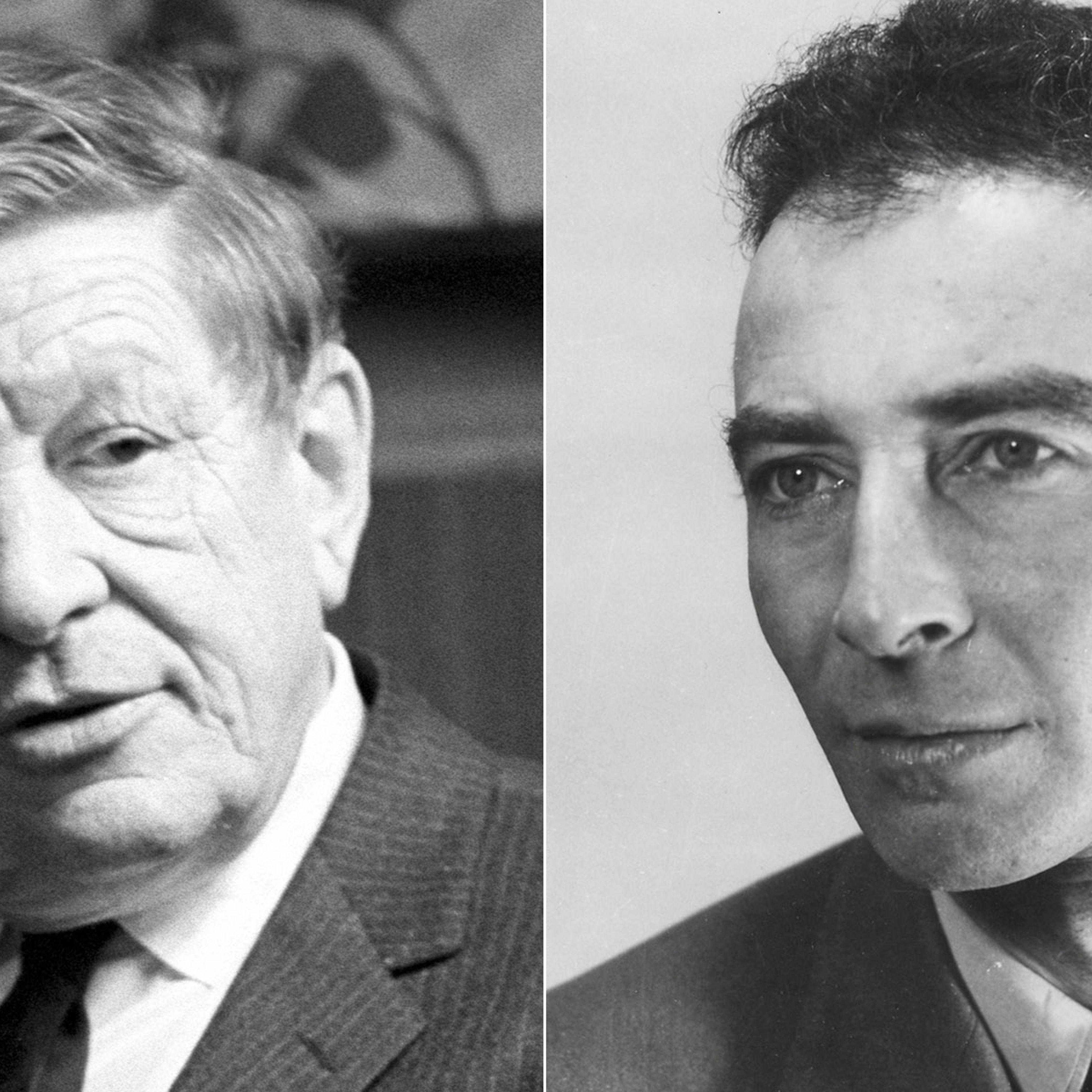
‘It does not seem possible to bring J. Robert Oppenheimer’s life and character into a clear focus,” began National Review’s 1967 remembrance of the controversial physicist dubbed the “father of the atomic bomb.” About him, “there remains an ambivalence, an aura of mystery and dark magic,” it continued. “What was he truly like? What were the demons that drove him, by the evidence of his haunted face as well as of his tense career, so relentlessly? Trying to answer, we somehow begin to think of art rather than life, but is it Hamlet, Macbeth, Timon, Othello, or Iago?”
What is being described here is a puzzle, and no contemporary film director enjoys a puzzle more than Christopher Nolan. Perhaps this helps explain what attracted the director to the subject and drew him away from the “reality-adjacent” thrillers (Inception, Interstellar, the Dark Knight trilogy) that have been his biggest commercial successes to date. That Nolan is not exactly a typical blockbuster director makes his success so interestingly paradoxical: His films are relentlessly and uncompromisingly his own, cerebral, sometimes labored, and demanding of close attention. Yet filmgoers flock to them, as they will to Oppenheimer, a three-hour biopic about a theoretical physicist.


Comments