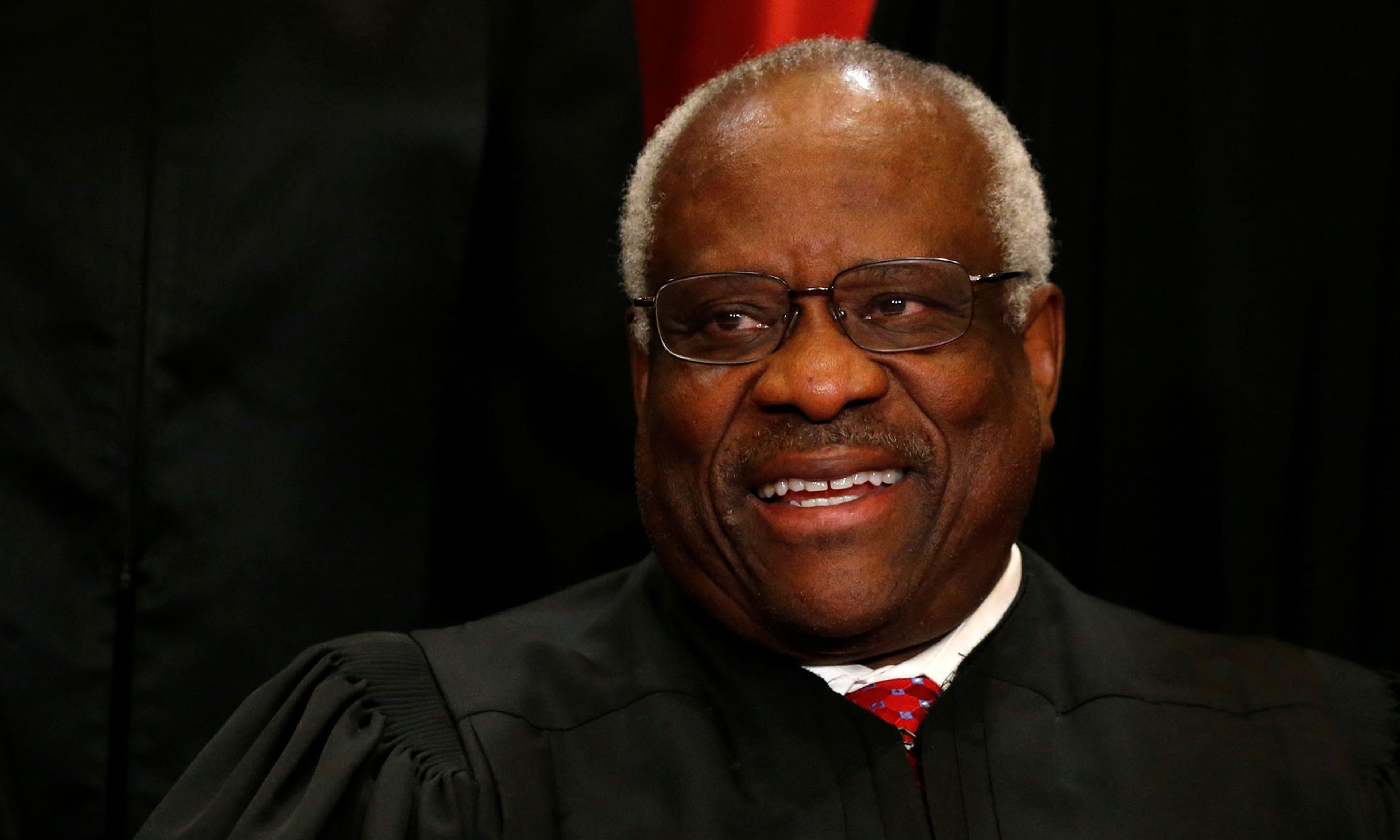
How should conservatives think about the intersection of property rights, government regulation, and Big Tech? Part of answering this question requires us to gain a better understanding of the American legal tradition’s sources, recovering them from recent distortions. Justice Clarence Thomas recently sought to educate us on just this.
In his concurring opinion in Joseph Biden v. Knight First Amendment Institute at Columbia University, Justice Thomas noted that First Amendment doctrines may not always apply when it comes to the considerable powers of Big Tech companies to control access to speech. Instead, he suggested that the Court and lawmakers might have to consider other legal limitations on the powers of Big Tech. “If part of the problem is private, concentrated control over online content and platforms available to the public,” he suggested, “then part of the solution may be found in doctrines that limit the right of a private company to exclude.” Those limits are found in the law. In many respects, Big Technology companies are like common carriers, such as telegraph and telephone companies, a legal status that entails a duty to serve everyone.



Comments