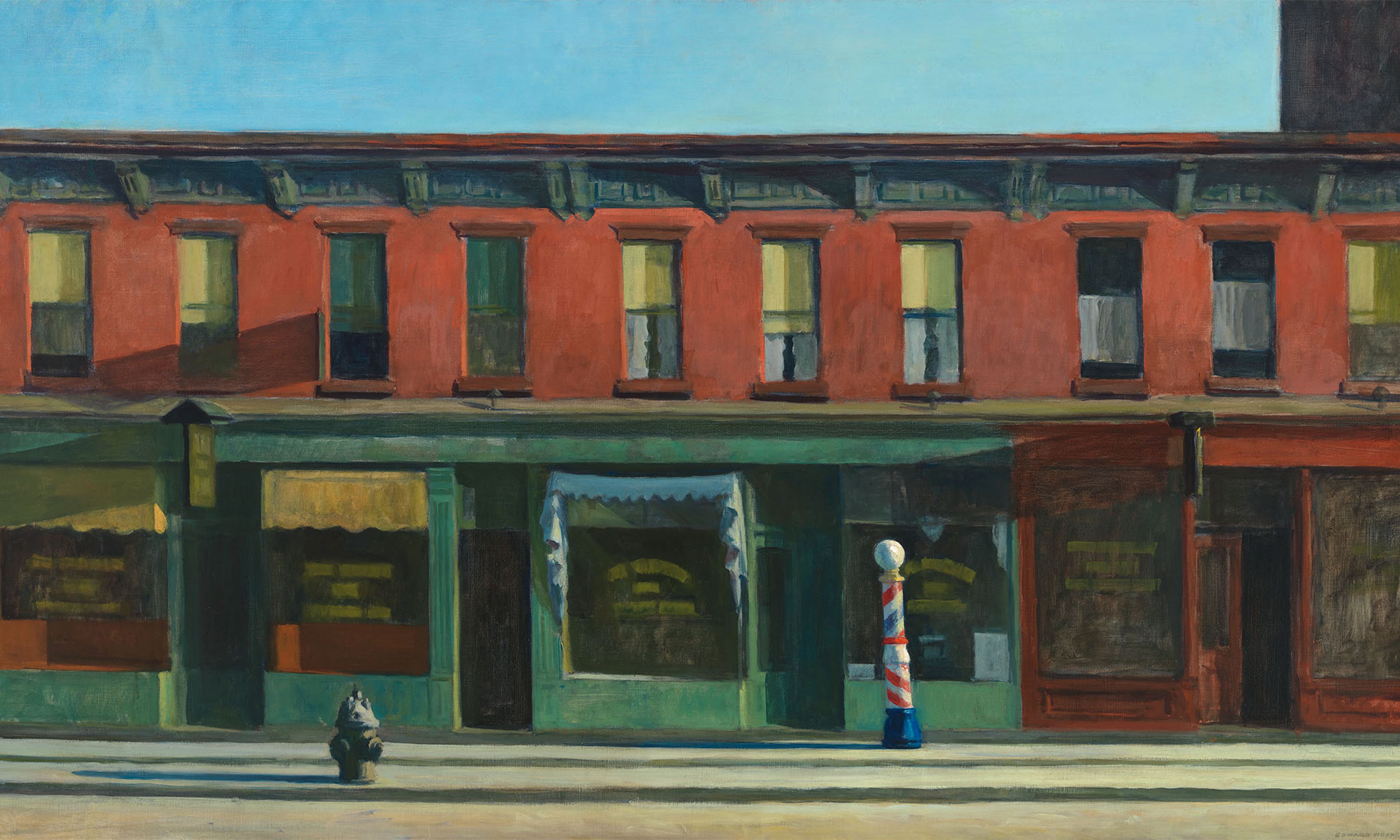
Edward Hopper’s New York, now at the Whitney Museum, is as frank and rich an exhibition as can be had on an artist so swathed in ambiguity. Hopper (1882–1967) is still the cryptic eminence among American painters. His death was headline news, and news packed with reverence. From the ’30s, he was famous mostly for his New York scenes, with pure, unpopulated cityscapes, and city interiors with one or two people in isolated contemplation. His pictures were, and still are, icons absorbed into the American head.
The Whitney sits on dozens of Hopper’s best paintings, hundreds of his drawings, and ephemera saved by the pack-rat Hoppers, husband and wife. The museum has the curatorial talent, too, to tell — for the first time — the story of Hopper’s life in New York City, his home for nearly 60 years. The Whitney got superb loans, too.





Comments