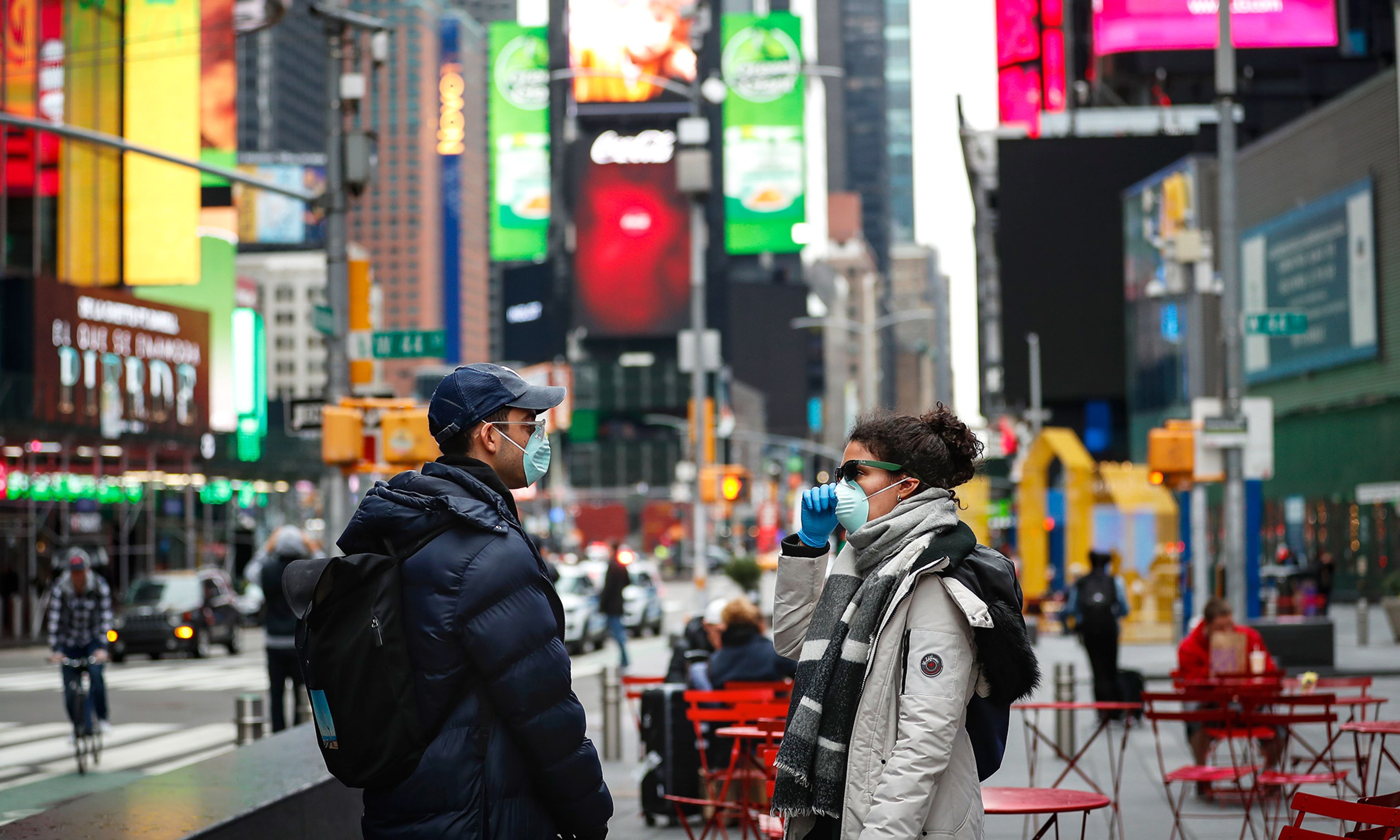
If there’s anything to be said for pandemics, it might be their stone-cold egalitarianism. In practically every country in the world, elites die at lower rates from violence and disease because they live in safer neighborhoods, have better access to food, water, and medicine, and can buy or bribe their way out of many problems. This creates a hierarchy of suffering not only between countries, but within them as well. The tiny West African nation of Liberia, for example, has one of the highest poverty rates in the world, and one of the lowest life expectancies. For the past 30 years it has been pummeled by relentless waves of violence and tropical disease. But if you’re a wealthy Liberian — and endemic corruption has produced many — you can sit these ordeals out in London or New York.
Now a reckoning has arrived that cannot, it seems, be bribed. Not only are affluent countries highly vulnerable to COVID-19, but affluent people are vulnerable as well. COVID-19 arrived in this country by airplane, which means that international travelers, some of them extraordinarily wealthy, were among the first to test positive for the disease. Americans have had the odd experience of watching movie stars, politicians, and professional athletes get sick at the same time as — if not before — the general public.





Comments