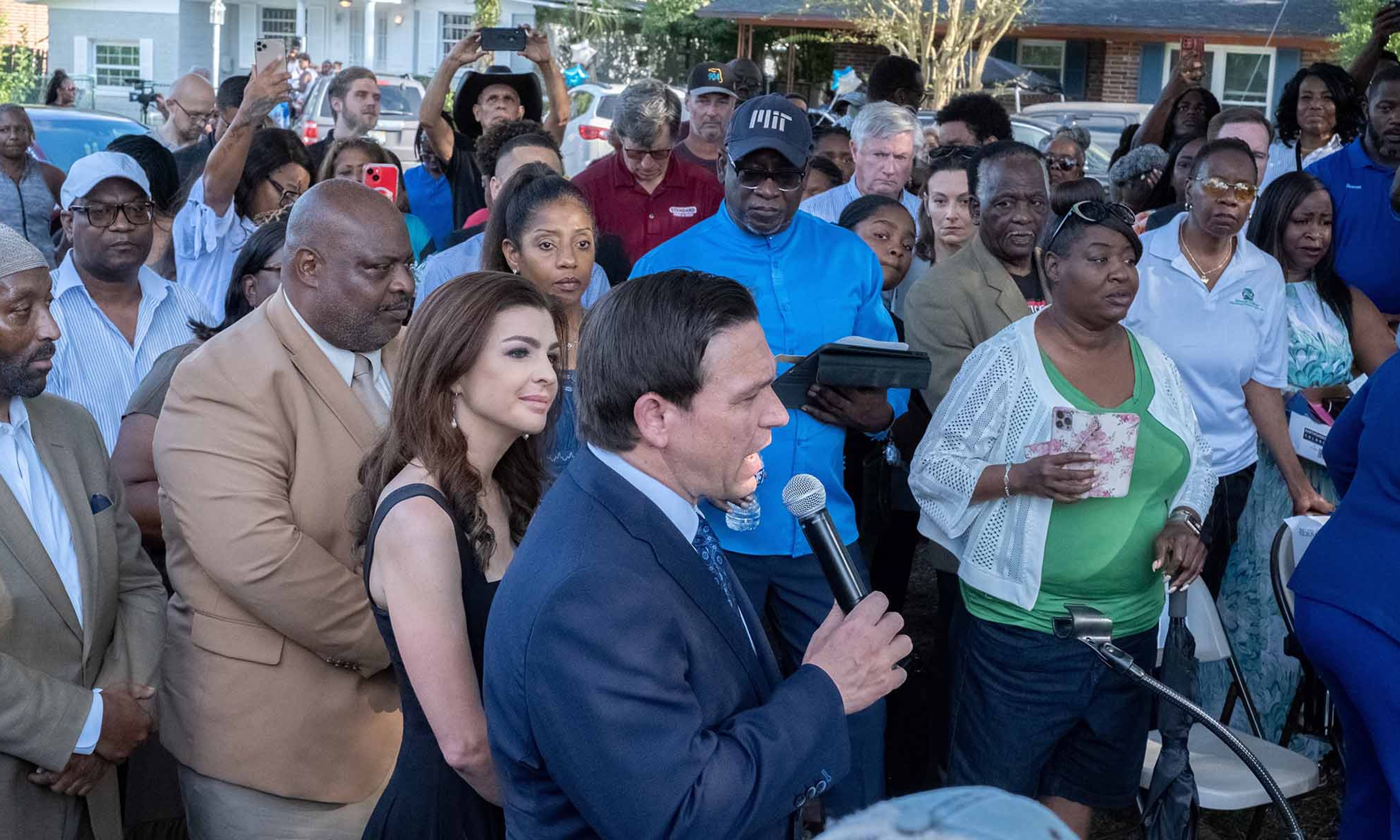
In the space of a single week, fate has delivered to Republican primary voters three stark reminders of what elections are supposed to be about. Ten days ago, the governor of Florida, Ron DeSantis, was sauntering around Iowa and New Hampshire, shaking hands and making promises while his home state sat on autopilot. Today, he has his hand on the tiller once again. A racially motivated spree-killing in Jacksonville has put DeSantis’s leadership skills — and political choices — on display. An uptick in Covid-19 cases has threatened to reignite the debates over masking that made DeSantis famous in the first place. And, to top it all off, a hurricane is bearing down on Florida’s west coast. In the press, these developments have been cast as potential “distractions” from DeSantis’s participation in the primary. In reality, they are the opposite: This, not the horse race, is what an interested electorate ought to be watching.
Historically, Republicans have preferred to elevate executives, rather than legislators, to the presidency. As a matter of fact, every Republican president in the last 100 years has had some form of executive experience — whether that experience came from his having been a governor (Coolidge, Reagan, Bush II), a vice president (Coolidge, Nixon, Bush I, Ford), a military leader (Eisenhower), or a businessman (Hoover, Trump). Why? One potential answer is that voters find it easier to evaluate such figures than to elevate their counterparts in Congress. Governors represent the state-level equivalents of the president. Vice presidents and businessmen are tied to an executive record. Military leaders are unable to escape their decisions. When compared to legislators, this renders them more capable of answering the practical questions that voters inevitably have: “How will he use the power he has been granted?”; “Is he capable of leading a large team?”; “Does he work well with a legislature?” and so forth.




Comments