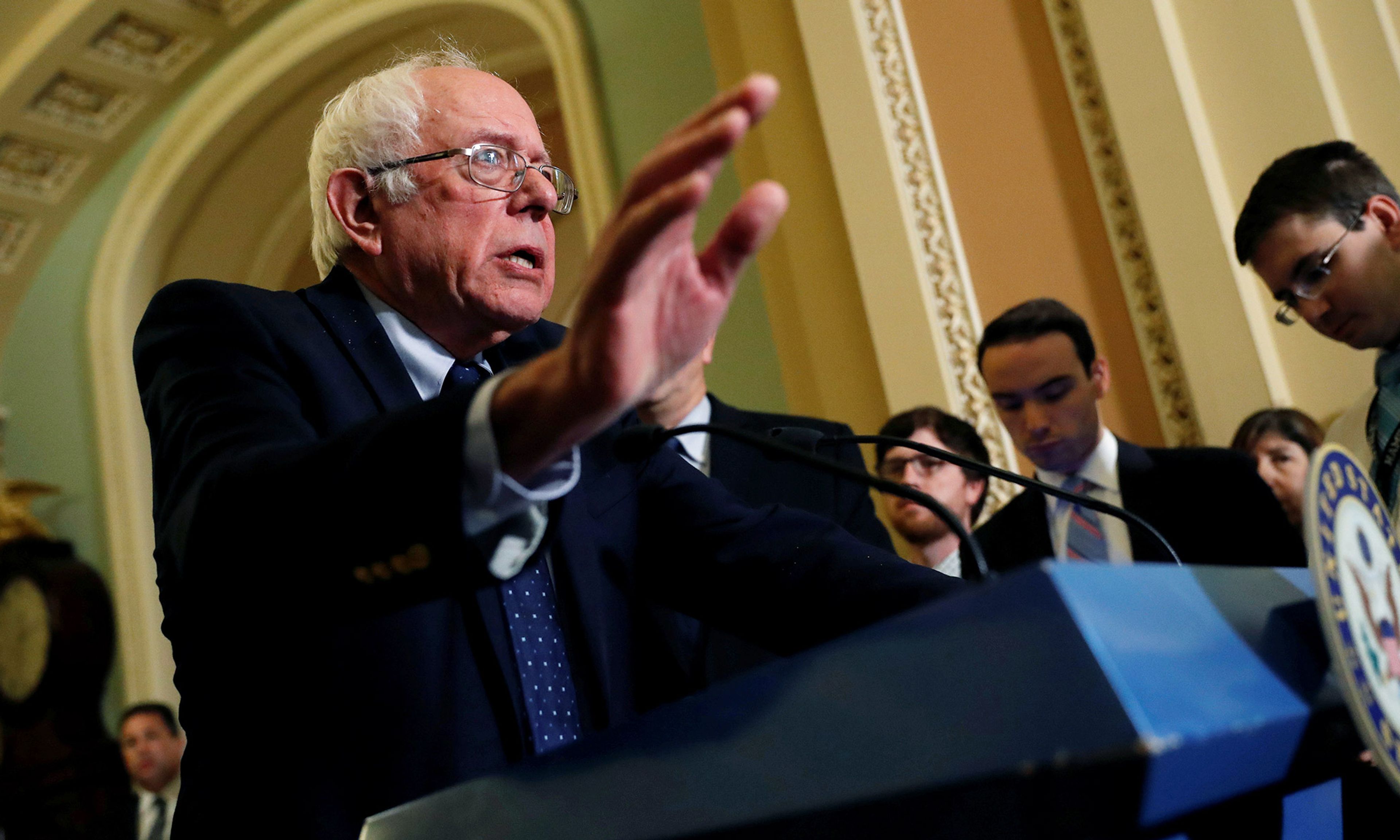
Right now, Democrats are debating whether they are outright, outspoken socialists, like Bernie Sanders; capitalists trying to save capitalism, as John Hickenlooper describes himself; or some sort of quasi-socialist midpoint between those identities. But self-identification almost always involves a bit of self-deceit and a healthy dose of self-flattery. To assess the leading Democrats’ true agenda, look beyond their rhetoric and instead consider the legislation they introduce, and how they want to change America’s laws. The portrait is clear: Well beyond the high-profile bills such as the New Green Deal and Medicare for All are less-noticed proposals for price controls and revoked patents, vastly expanded government benefits programs, much higher taxes, bans on the closure of federal-agency field offices, and a general appetite to expand the size of government at all levels.
Five of the Democratic presidential candidates in the Senate — Bernie Sanders, Kirsten Gillibrand, Cory Booker, Kamala Harris, and Elizabeth Warren — are cosponsoring the Prescription Drug Price Relief Act of 2019, which would have the federal government decide what a “fair price” for medication is and then revoke the patents on any drugs it deemed overpriced. The fair price would be determined by the federal government’s calculation of the average costs for the same drug sold in other countries. Even if the price was in line with the cost in other countries, the federal government could deem it overpriced given the size of the affected patient population, the value of the drug to patients, the size of a manufacturer’s revenues generated by the drug, or “other factors the Secretary [of Health and Human Services] determines appropriate.” Sanders’s legislation would apply to any medication sold in the United States. This would create enormous new risks in development of new prescription drugs, as the HHS secretary could, at any time, deem a drug “overpriced” and revoke the patent, allowing any other manufacturer to make the drug. The patents on prescription drugs would become extraordinarily unreliable; the more popular a drug was, the more likely it was that people would complain to HHS that it was “overpriced.”



Comments