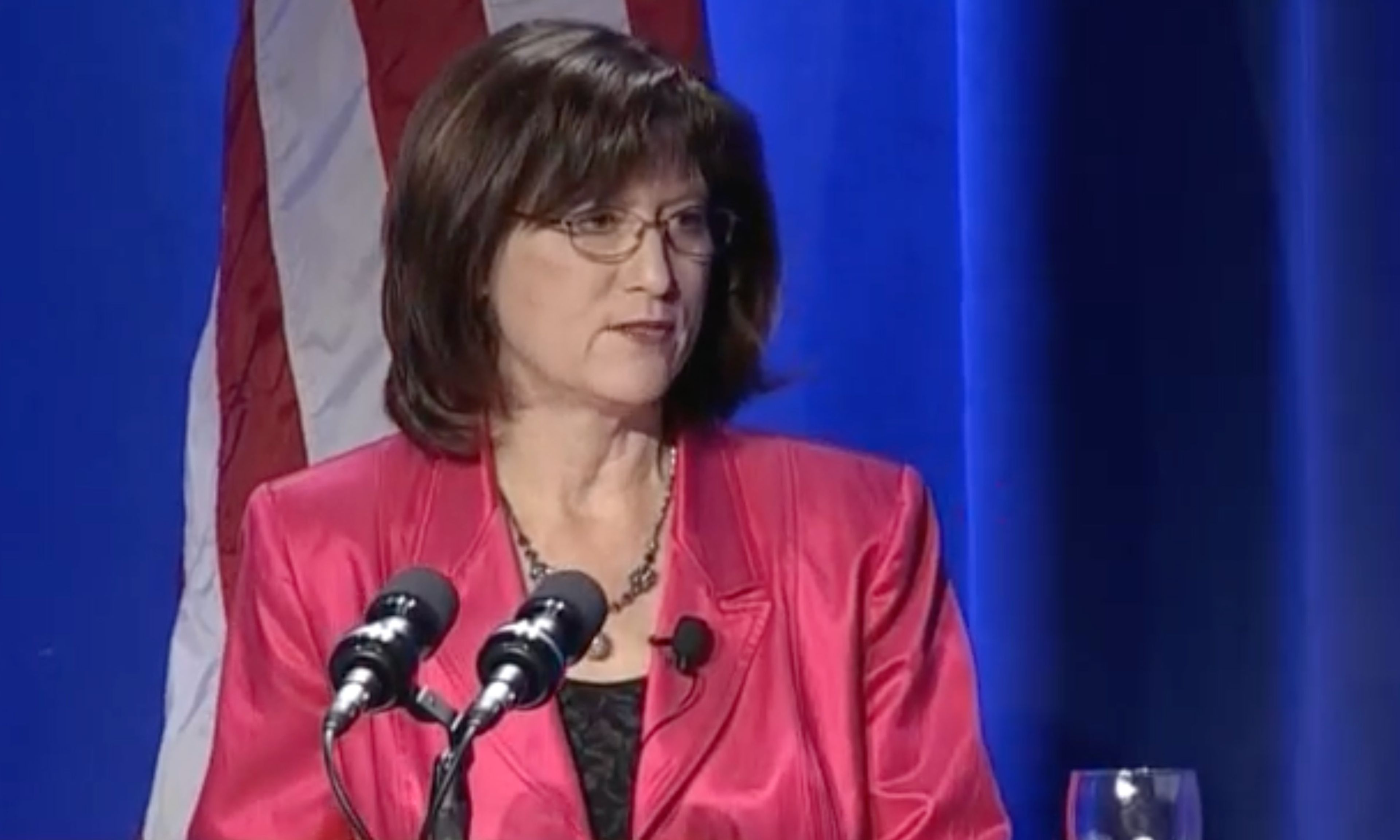
Why does a judge choose to retire? Not long ago in these pages, I described the kind of strategic thinking that can motivate a retirement-eligible judge to step down — or not. But perhaps the better path still is when a judge recognizes that she is just a steward of an office that belongs to the people, and that the time has come for her to step aside. Chief Judge Diane Sykes of the U.S. Court of Appeals for the Seventh Circuit recently announced that she will be taking that path. A former Supreme Court short-lister, Judge Sykes has had a varied and consequential legal career. In the insular world of the law, talented circuit judges are celebrities in their own rights, sitting atop the legal food chains in their respective jurisdictions, and commanding prestige from government officials, the academy, and the press. That Judge Sykes chose to step away from this makes hers a rare model of honorable service.
Judge Sykes started her career as a newspaper journalist in Milwaukee, a fact that caused her to drill into decades of law clerks (including me) that good legal writing always starts with a compelling lede. Switching to the law, she was a litigator at a time when young lawyers got real experience — and young female lawyers were still relatively rare. This experience, in turn, allowed her to become a trial judge in Milwaukee at 34. She did her job so well that the guards in Wisconsin’s maximum-security prison jokingly named a wing after her.




Comments