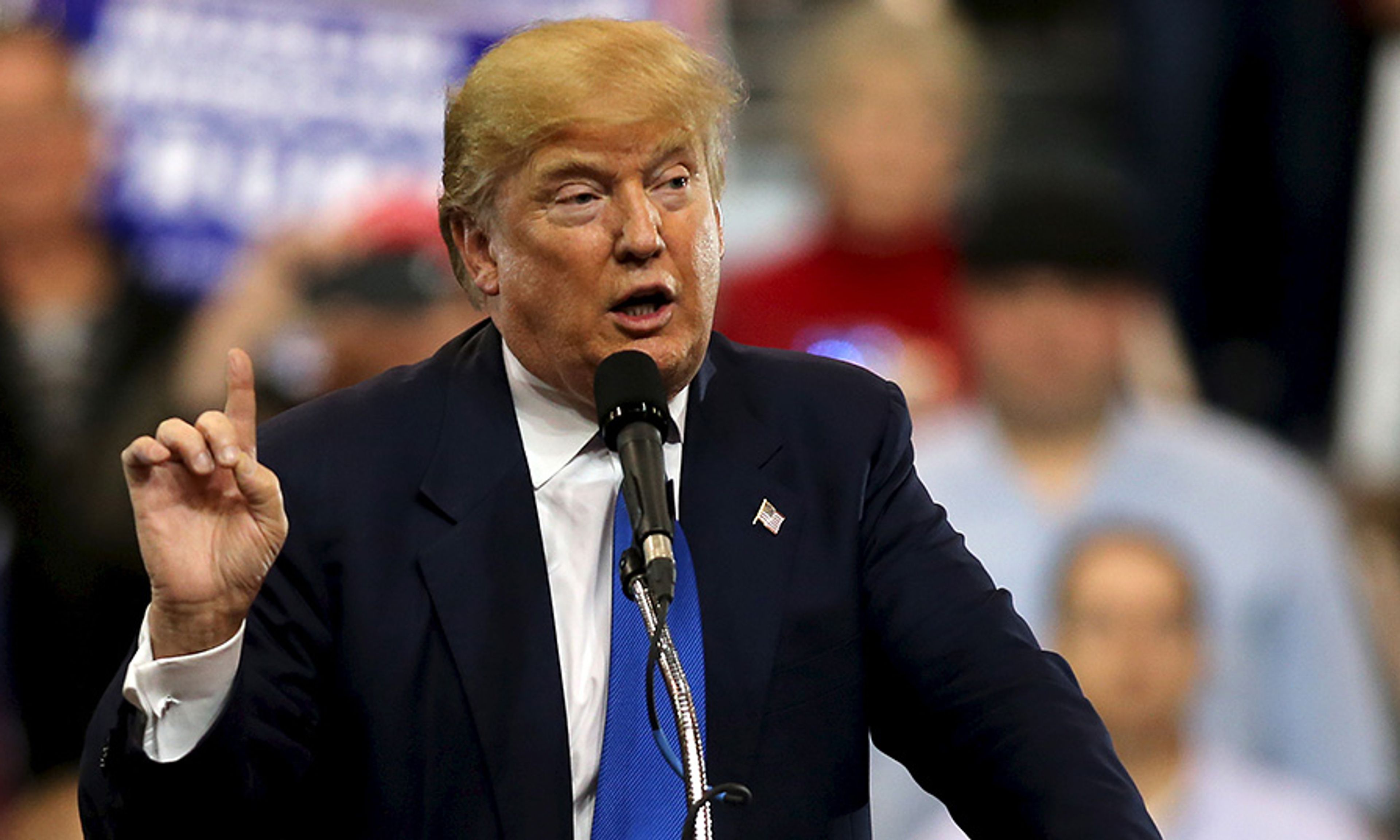
Human Rights Watch (HRW) has apparently decided that incoming president Donald J. Trump is a threat to American civil liberties.
In a summary of its 2017 world report released last week, the organization berates Trump for “float[ing] proposals that would harm millions of people, including plans to engage in massive deportations of immigrants, to curtail women’s rights and media freedoms, and to use torture” during his presidential campaign. In its full report, HRW argues that the policies Trump embraced on the stump “would cause tremendous harm to vulnerable communities, contravene the United States’ core human rights obligations, or both.”
Heady stuff for a man who hasn’t even been inaugurated yet.
The logic behind HRW’s warnings is flimsy. The U.S., the group suggests, is a potential abuser of basic human rights because under Trump the federal government might . . . enact a conservative rather than progressive model of health care. As evidence, the group notes Trump’s promise to repeal the Affordable Care Act and “nominate ‘pro-life’ Supreme Court justices who would ‘automatically; overturn Roe v. Wade, which would allow individual states to criminalize abortion.” In the report’s estimation, it seems, repealing Obamacare and protecting unborn life amounts to the abuse of human rights.
It might be easier to take HRW seriously if the group had a better track record of critiquing actual human-rights abuses. Specifically, the group would do well to cease ignoring the ongoing terrorist attacks against Israel, and to refrain from blaming the country for enforcing “severe and discriminatory restrictions on Palestinians’ human rights.” Israel is the only democracy in the Middle East, and yet HRW considers it to be a violator of human rights and blames it, in large part, for the ongoing conflict with Palestine.
HRW also actively supports “women’s rights” around the world, where “women’s rights” invariably means “abortion.” The group leans heavily in favor of pro-abortion policies, lobbying for increased access to abortion as a part of foreign aid and lamenting the fact that “women are prevented from making deeply personal choices in their private lives.” On the rare occasions that the group addresses very real human-rights crises such as forced abortion and sex-selective abortion, it argues that curtailing safe, legal abortion will actually harm women more in the long run, and thus that regulating these abuses is not a solution. The group also lobbies for the public funding of Planned Parenthood, classifying attempts to defund it as “an attack on women’s health.” Its 2017 report calls Texas’s attempts to regulate abortion clinics — which were struck down by the Supreme Court last summer in Whole Women’s Health v. Hellerstedt — “onerous restrictions on abortion providers,” ignoring the pro-life movement’s concerns for the safety of mothers.
HRW’s unmistakable bias against Israel and clear preference for aggressively pro-abortion policies are just two examples of its skewed perspective on what constitutes a human right. Trump’s rhetoric and policy proposals were just that: rhetoric and proposals. He hasn’t yet taken office, and we have little idea what kind of president he’ll be. For now, it’s hard to take seriously claims that the freedom as we know it is in danger from a group with such a perverted view of the world.





Comments