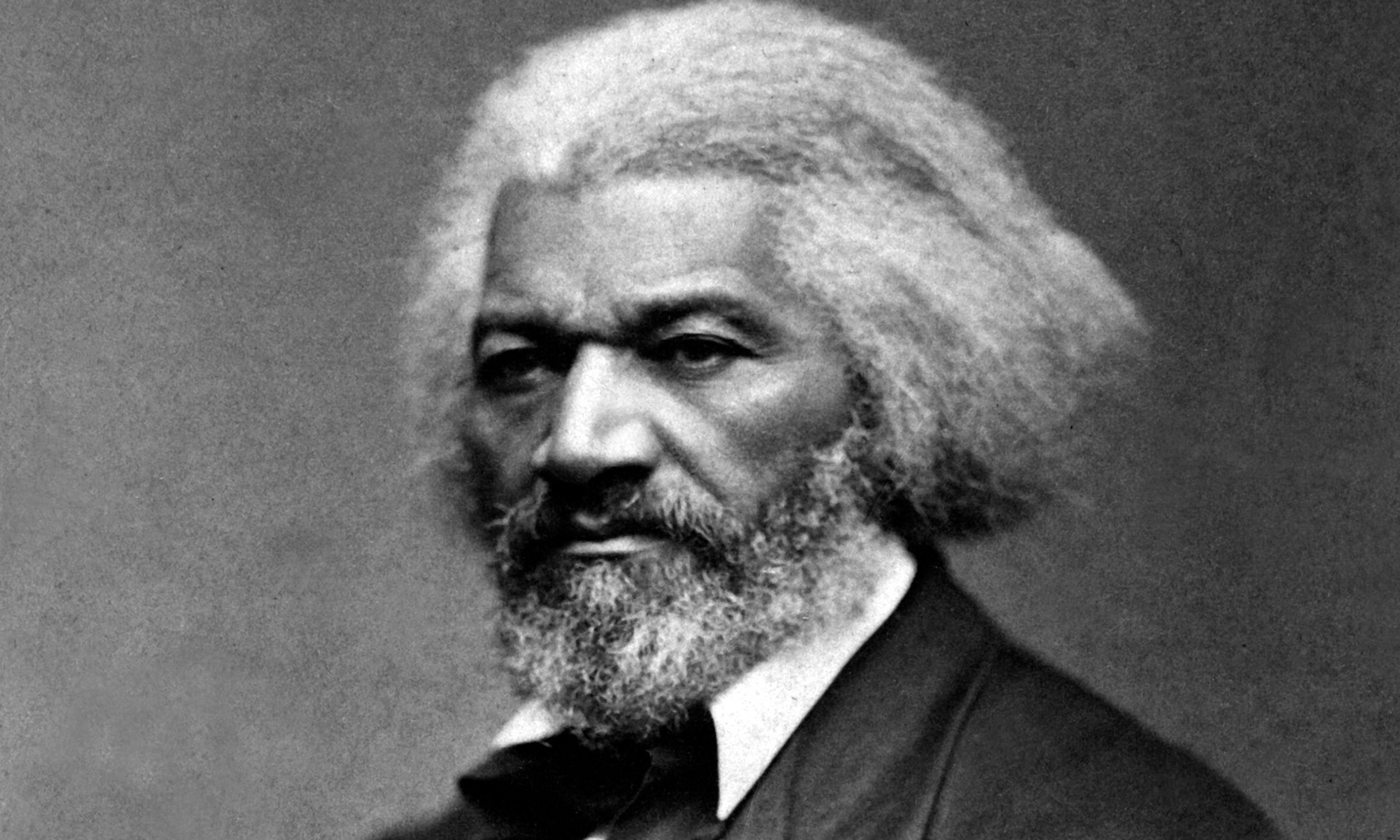
A thunderous new musical, American Prophet, whose script adapts Frederick Douglass’s extraordinary writing and oratory, ended its run at the Arena Stage in Washington, D.C., last weekend. Despair not: Assuming that demand for the subgenre birthed by Lin-Manuel Miranda’s Hamilton remains healthy, you’ll probably be able to catch the show on Broadway very soon. But expect any characteristic complexities and imperfections to be eclipsed by the halo the director casts around Douglass, the result being more hagiography than biography.
Still, Charles Randolph-Wright (who has previously directed Motown: The Musical) proves that the Revolutionary or Civil War–Era musical is to be urgently welcomed. One reason for this is that, perhaps because of her young age, America since the Founding has been a nation obsessed with writing and documentation: There’s plenty of historical material, and some of it is exceptionally good. Marcus Hummon (a familiar face on Nashville’s Broadway), who wrote the music and lyrics for American Prophet, clearly understands this. In fact, having made the sensible decision not to paraphrase or reimagine Douglass (a compulsive autobiographer), his latter task became chiefly one of compiling and editing and filling in — rather than writing — the protagonist’s parts. (Cornelius Smith Jr. delivers these capably, though it’s his co-star Kristolyn Lloyd, in the role of Anna Murray Douglass, whose vocal talent stands out.)




Comments