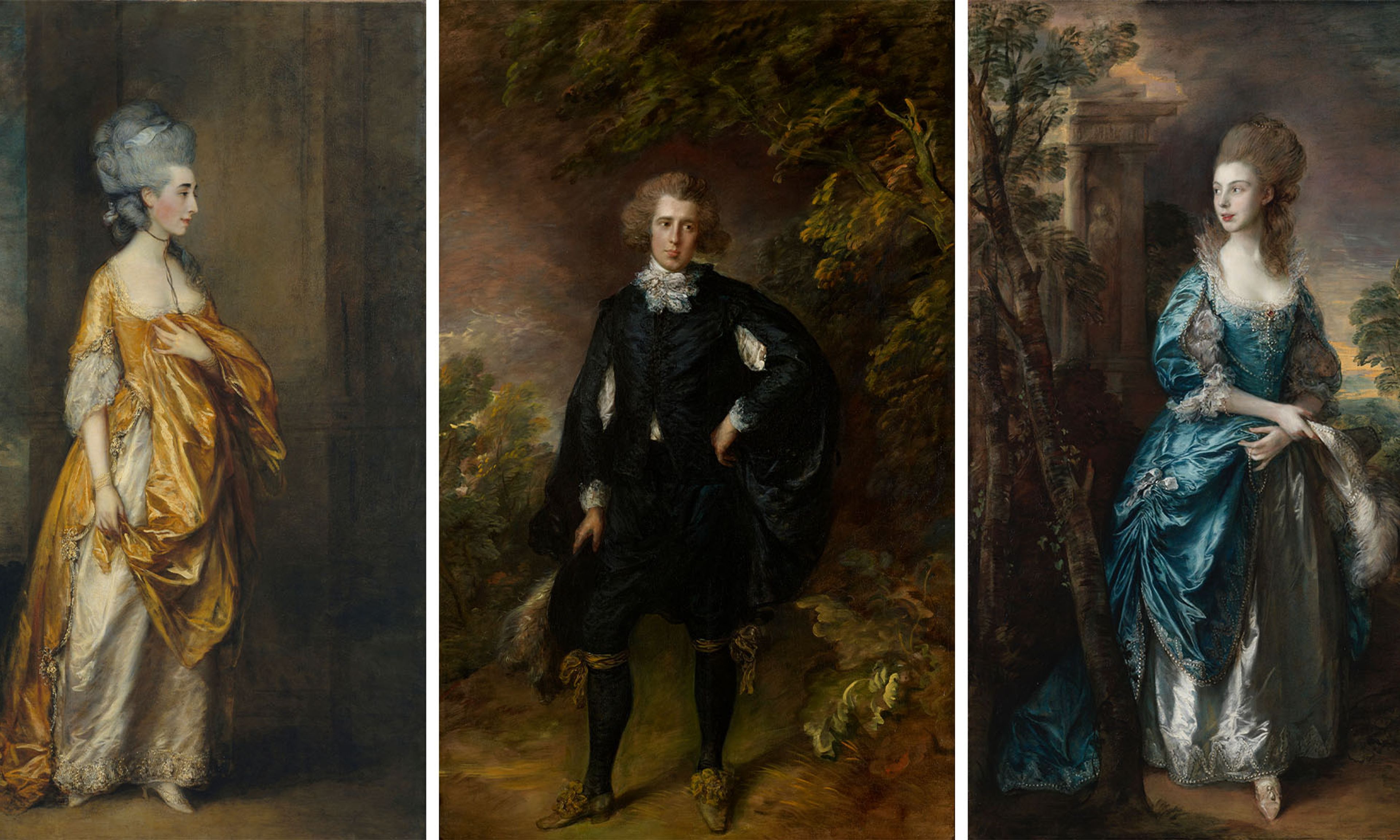
Gainsborough: The Fashion of Portraiture is the new exhibition at the Frick Collection and a beauty. Thomas Gainsborough (1727–1788) loved his rural landscapes the most but, today, we think of him for his portraits, those lush surfaces painted with the speed of light. Some of the portraits in the show took just a bit more than an hour. New York, America’s fashion capital, hasn’t ever had a Gainsborough portrait show. The Frick, with eight Gainsborough portraits and dozens of portraits by other artists, seems to be the best place for one. The exhibition displays 27 paintings and transports us to Georgian England at its most chic. You can hear the taffeta rustle, eye the silk as it shimmers, and gaze on the soft velvet.
It’s a sumptuous show, roughly chronological but with a keen eye toward putting things where they look best. From childhood, cloth was in Gainsborough’s DNA. His father was a weaver and sold high-end woolen goods in Sudbury in Surrey. Gainsborough showed talent as a child when he decorated shrouds and as a young adult in London worked for William Hogarth and Francis Hayman. He painted as a career first in Sudbury, then in the 1760s in Bath, a spa town, and, after 1774, in London. His studios were always in neighborhoods thick with drapers, milliners, and tailors.





Comments