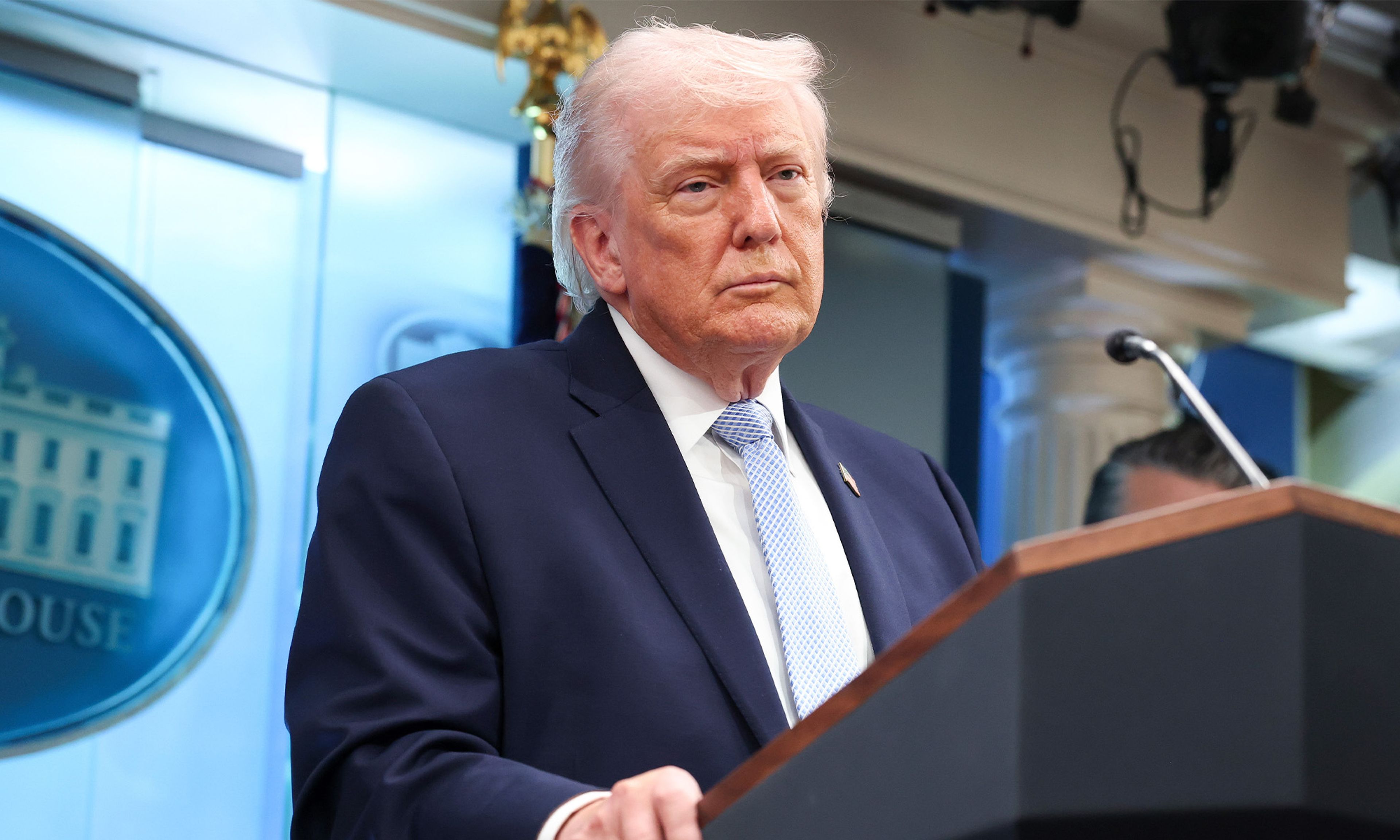
For weeks, the default assumption among the president’s critics was that he would find some way to wiggle out of the war he ignited in the Middle East. And yet, “any minute now” stretched on for weeks as the president prosecuted, first, the kinetic phase of the conflict and, later, a throttling strategy that coupled economic restrictions and threats against sanctions violators with a naval blockade. All the while, Donald Trump and his administration projected unanticipated (and, too often, unrecognized) steadfastness in pursuit of their objective in the war against the Islamic Republic of Iran. Until yesterday.
Since the outbreak of the cease-fire at the beginning of April, we’ve had stasis in the Strait of Hormuz. But then, on Sunday, a flurry of activity broke the unstable equilibrium. Islamic Revolutionary Guard Corps boats and shore-based missile crews fired on civilian vessels. U.S. cruise-missile destroyers transited the strait, where they were fired on by Iranian forces. Unsuccessful in their attacks, Iranian field commanders did what they had done during Operation Epic Fury: They fired missiles, rockets, and drones at their Gulf neighbors, targeting Oman and the UAE and striking a crucial Emerati oil-distribution hub.




Comments