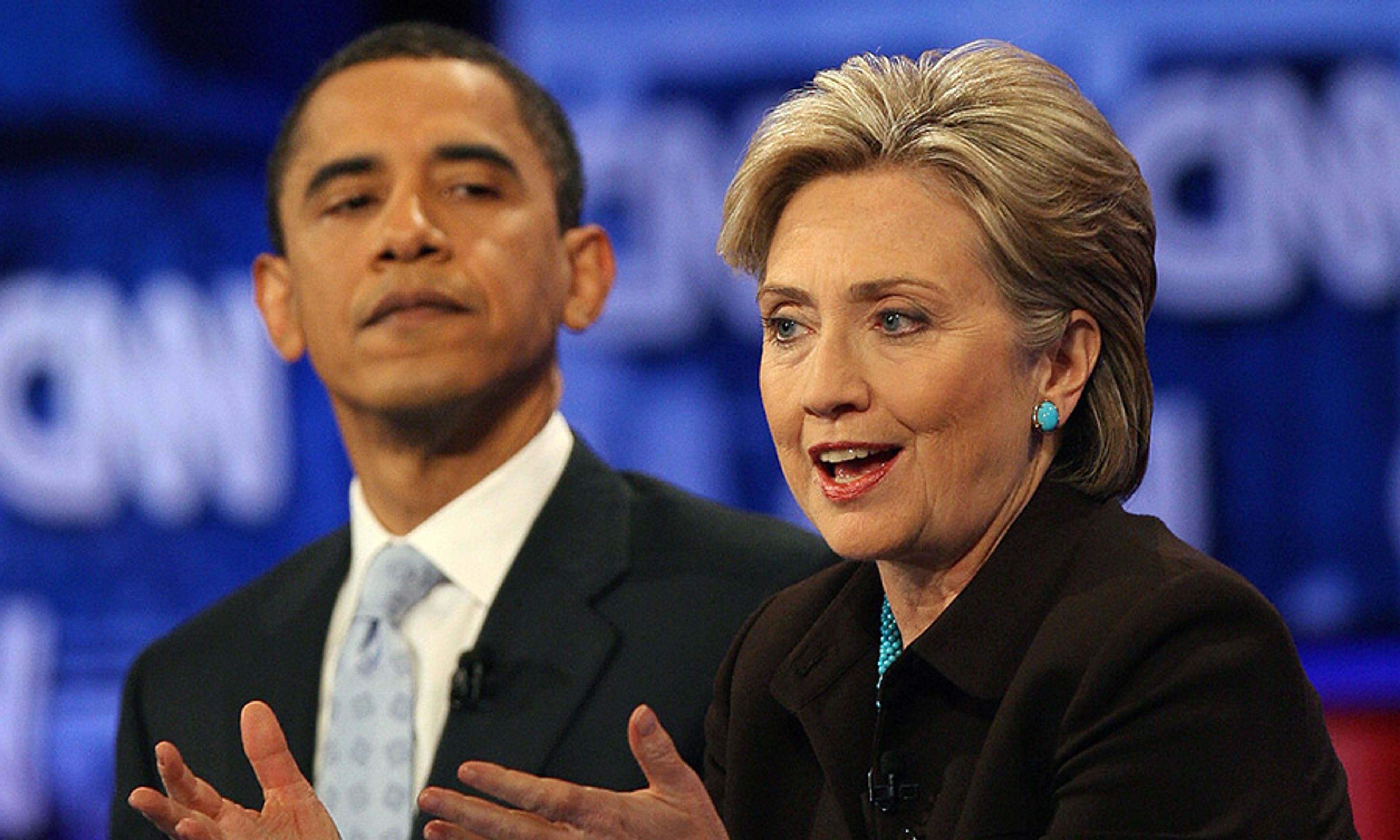
The conventional wisdom is clear: African-American Democrats will save Hillary Clinton.
“Hillary’s high levels of support in the African-American and Hispanic communities are well-known,” Clinton campaign manager Robbie Mook boasted in a memo after Bernie Sanders’s blowout New Hampshire win. The media and party operatives seem to agree.
But why? What reason do African Americans have to turn out in droves as a firewall for Hillary Clinton?
It is well known that black Democrats broke overwhelmingly for then-Senator Obama in the Democratic primaries eight years ago — 82 percent of them supported his bid over Clinton’s. But many political observers forget that Obama didn’t enter the primary with that level of support among African Americans; until his victory in the Iowa caucuses, Clinton held a substantial lead with the demographic. And then seemingly overnight, that lead evaporated.
And as it evaporated, she and Bill Clinton fought back in such a way as to infuriate the many African Americans who felt emotionally invested in Obama’s bid.
RELATED: Only Divisive, Racial-Identity Politics Can Save Hillary Clinton
As the campaign wore on, Clinton’s team began to seem spectacularly tone deaf in its rhetoric. A former John Edwards supporter introduced her at a campaign event by declaring, “Some people compare one of the other candidates to John F. Kennedy. But he was assassinated. And Lyndon Baines Johnson was the one who actually” ushered civil-rights reforms into law.
It was bad enough that the statement downplayed Kennedy and implied that Obama could someday be assassinated, though at that point it could still have been dismissed as the ill-considered metaphor of one overzealous supporter. But a day later, Clinton compounded the damage by embracing the comparison to Johnson:
I would point to the fact that that Dr. King’s dream began to be realized when President Johnson passed the Civil Rights Act of 1964, when he was able to get through Congress something that President Kennedy was hopeful to do, the president before had not even tried, but it took a president to get it done.
Then in May, she made another odd allusion to assassinations:
My husband did not wrap up the nomination in 1992 until he won the California primary somewhere in the middle of June, right? We all remember Bobby Kennedy was assassinated in June in California.
To some ears, that might sound like a routine historical reference; but to many African Americans, it sounded like Clinton was predicting an assassination attempt against Obama.
While they could never prove it, Obama’s team was convinced that Clinton’s campaign had circulated a 2006 photo of Obama in Somali garb, and accused her of “the most shameful, offensive fear-mongering we’ve seen from either party in this election.”
African Americans might prefer Clinton to Sanders, but can she generate the enthusiasm, energy, and excitement that Obama made them feel in 2008?
Clinton’s longtime aide and friend, Sid Blumenthal, also spread racially charged rumors about Obama. According to Mark Halperin and John Heilemann’s Game Change, “Blumenthal was obsessed with the ‘whitey tape’ and so were the Clintons, who not only believed that it existed but felt that it might emerge in time to save Hillary. ‘They’ve got a tape, they’ve got a tape,’ she told her aides excitedly.” (The “whitey tape” was a persistent rumor in 2008 that a videotape existed of either Barack or Michelle Obama making racially incendiary remarks. In June 2008, I found the rumor just happened to match the plotline from a 2006 thriller novel.)
Bill Clinton also offered his share of comments that rubbed African Americans the wrong way, most famously dismissing Obama’s South Carolina win by comparing him to Jesse Jackson, the most successful black presidential candidate up to that point.
#share#Time heals all wounds, and polling indicates that Hillary’s standing among black voters has since recovered. At first glance, Bernie Sanders doesn’t seem like an ideal candidate to win over skeptical African Americans; they make up about one percent of the population in his home state of Vermont.
But the basic message of Sanders’s campaign is: “You’re getting screwed by people who have more power and money than you” — not exactly an unheard-of sentiment in African-American circles. And Clinton’s team is occasionally even clumsier than it was in 2008; after Sanders unveiled his “America” ad, her hatchet man David Brock contended that the crowd shots were too white: “From this ad, it seems black lives don’t matter much to Bernie Sanders.”
African Americans might prefer Clinton to Sanders, but can she generate the enthusiasm, energy, and excitement that Obama made them feel in 2008? Will they turn out in the same numbers as they did in the past two cycles? Can the increasingly aged Bill Clinton come out and stir passions one more time? It’s not as iron-clad as one might assume.
#related#Obama’s indisputable political accomplishment in 2007 and 2008 was recognizing that the changing demographics of the Democratic Party and the country as a whole had made Clinton-style triangulation outdated. It’s too simple to say that all it took was a black candidate to beat Clinton, the heavily favored white front, but her vote for the Iraq war, her long career in politics, and the party’s appetite for a dramatic change from the Bush years had set the stage.
This cycle, she dodged a bullet when the 2016 Democratic field settled and it was clear she would not face a rival who could count on overwhelming African-American support. But so far, no one in either party has figured out how to beat or replicate Obama’s playbook. And unless Clinton can somehow generate real enthusiasm among African-American voters, she’ll be in for a long, uncomfortable next few months.






Comments