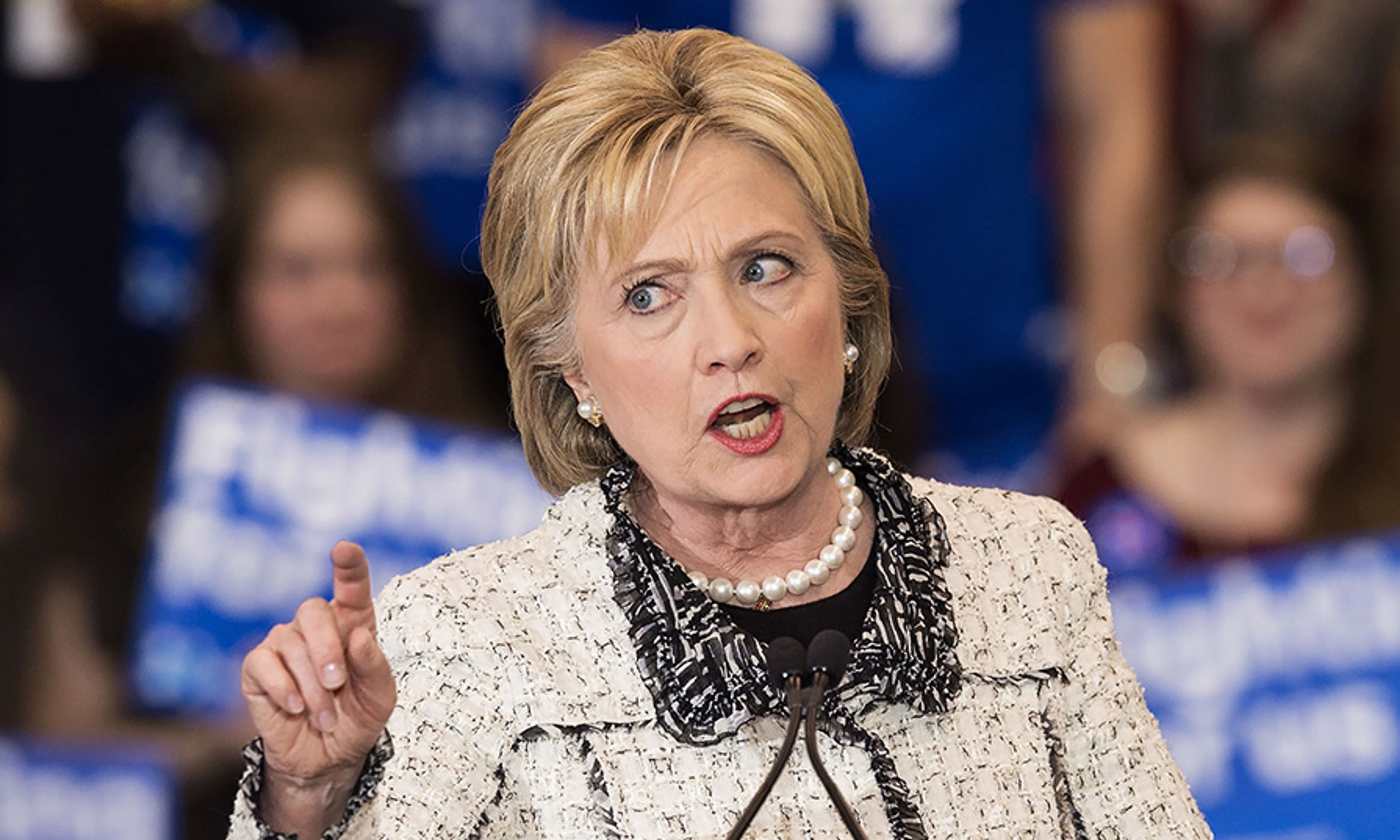
On Tuesday, Bernie Sanders won his sixth straight victory in the Democratic nominating contest with a 13-point victory over Hillary Clinton in Wisconsin. It doesn’t matter. Bernie Sanders is not going to be the Democratic nominee — Democrats will not let it happen.
Across the aisle, Donald Trump supporters are currently warning that anti-Trump Republicans (now synonymous with that nebulous and all-powerful force, The Establishment) plan to rob Trump of the nomination should he arrive to a contested convention close to but short of the requisite 1,237 delegates. Trump backer, Republican operative, and professional provocateur Roger Stone calls it “The Big Steal.”
This, too, is not going to happen. After Ted Cruz’s resounding victory in Wisconsin on Tuesday, the odds of a contested convention are higher than ever. This is good news for Cruz, who knows the rules and is using them. He has been working diligently to secure Trump delegates who would be friendly to him on a second, third, or fourth vote. He has been wooing unbound delegates. And, despite his reputation as a barn-burner, Cruz is a tactician; he’s not the last viable challenger to Trump because of dumb luck. If the Republican race goes to Cleveland and the delegates choose Cruz (or someone else), the nomination will not have been “stolen” by Republican powerbrokers; the delegates will have been entrusted with the right and duty to select the candidate who they think will be best for the party, and they’ll have done it. And whomever they choose, Mitch McConnell won’t have had a thing to do with it.
RELATED: Sanders Has Few Options for a Cruz-Style Insurgency
If you want to see an “establishment” at work, consider the Democrats. It’s extraordinarily difficult to envision Bernie Sanders’s winning an outright majority of delegates. FiveThirtyEight’s Nate Silver has gamed out a “Bernie-miracle path” that’s not strictly impossible, but that would require his winning, for example, Pennsylvania, New Jersey, and California, where polls show him down significantly — and that just as a start.
Hillary may not be a good candidate, but she has a résumé and name recognition, she’d be the first female president, and she’s disciplined.
But let’s say Sanders did have a majority of delegates going into the Democratic convention in July. Enter the “superdelegates” — the party leaders and VIPs who also get to cast votes toward the selection of the Democratic nominee. There are 712 superdelegates who will cast about 15 percent of the votes in Philadelphia. Currently, 469 of them have committed to Clinton, 31 to Sanders, and the rest remain unattached. Given her current superdelegate haul, Clinton could win the nomination even if Sanders had 52.5 percent of the elected delegates (more than Silver gives him in his “miracle” scenario). Obviously, the smaller Sanders’s hypothetical majority, the fewer superdelegates Clinton would need. Superdelegates, as Clinton was painfully reminded in 2008, are free to change their commitment at will. But it’s difficult to envision a scenario in which enough of them jump ship to give Sanders 2,383 votes (the threshold for the nomination).
First, this is not 2008. The alternative to Clinton is not a charming young senator whose nomination and election would be “historic”; it’s a 74-year-old white male from Vermont. He’d have to do some actual heavy lifting.
#share#Second, Democrats are not going to throw this election away — especially not now. In the form of Donald Trump, the Democratic party has received a bailout to rival General Motors’s. Poised to retake the White House after two terms of a divisive Democratic president, the Republican party has thrown itself into an abusive relationship with a reality-television star whose antics have made it possible for Democrats to recapture not only the Senate, but possibly the House, where in 2014 Republicans earned their biggest majority since the Hoover administration. And if the nominee’s not Trump, it’ll likely be that raving senator from Texas who hates women and wants to shut down the government permanently! Hillary may not be a good candidate (even her supporters will admit that), but she has a résumé and name recognition, she’d be the first female president, and she’s disciplined. Democrats are not going to throw this opportunity away on an upstart issues-candidate who only ran to push the party leftward, and who might inadvertently quote Trotsky approvingly on the stump.
RELATED: Hillary’s Woman Problem: Most Women Don’t Like Her
Third — and here’s the nub of it — this is Hillary Clinton’s party. During Barack Obama’s tenure, the Democrats embraced the zanier fringes of race and gender politics, and the Occupy movement gave momentum to the party’s stridently anti-corporate tone. But Obama has been an interloper in what remains the party of the Clintons. Bill Clinton was president from 1992 to 2000 — a lifetime ago, in politics — yet today we are once again reading about the machinations of Sidney Blumenthal, we are re-litigating “bimbo eruptions,” and John Podesta is chairing Hillary Clinton’s campaign. Meanwhile, viable Democratic presidential contenders declined to run so as not to impede Clinton’s coronation. Tulsi Gabbard, who has since resigned her post as vice chairwoman of the DNC, was punished for challenging party orthodoxy on the minimal debate schedule (that was designed to protect Clinton). Since Bill Clinton left office, the Democratic party has been arranging itself around Hillary. At some point, of course, the party will have to be reconfigured, and naturally Sanders supporters want that to happen now. But it will not happen until Hillary Clinton loses a general election, or leaves the White House.
#related#This is what an actual “establishment” looks like. The Democratic party revolves around the same power couple that it did in 1992, and its top congressional leaders — Harry Reid in the Senate and Nancy Pelosi in the House — were elected in 1987. Meanwhile, in just the time since George W. Bush left office, Republicans have elected Ted Cruz, Marco Rubio, Mike Lee, Tom Cotton, and Ben Sasse to the Senate, and made Paul Ryan the youngest speaker of the House since James Blaine in 1875.
The Republican party is in the process of reconfiguring itself as a reform-oriented coalition of dedicated small-government conservatives. The Democratic party is in the midst of playing out the last act of a script written by party elites a decade-and-a-half ago.
If you’ve been worrying about an “establishment” flouting “the will of the people,” maybe you’ve been voting Democrat.






Comments