On November 4, as the prospect of Barack Obama’s election had commentators harkening back to the Civil Rights Act of 1964, voters in Colorado and Nebraska considered identical ballot initiatives that read like a summary of the Act itself: “The state shall not discriminate against, or grant preferential treatment to, any individual or group on the basis of race, sex, color, ethnicity, or national origin in the operation of public employment, public education, or public contracting.”
The driving force behind both initiatives was Ward Connerly, the former University of California regent who spearheaded successful efforts to ban racial preferences in California (1996), Washington (1998), and Michigan (2006). Each time a Connerly initiative had come before voters, it had passed with room to spare.
This time around, the results were mixed. Nebraskans approved the measure by a resounding margin of 58 to 42 percent, but in Colorado it was narrowly defeated, 51 to 49 percent.
Both initiatives slightly outperformed the McCain-Palin ticket in their respective states; opponents of racial preferences have also recently won court victories in Michigan and in the Federal Circuit. Connerly believes that racial preferences are on their way out. “With each passing day,” he writes in Lessons from My Uncle James, preferences “resemble more and more the appendix of the body politic, a vestigial reminder of a color-coded past.”
One suspects that governmental color-coding will hang on a bit longer than Connerly suggests. Yet Lessons is not principally concerned with racial preferences, but rather with the challenges of self-government, understood as the task of ordering not only our democracy, but ourselves:
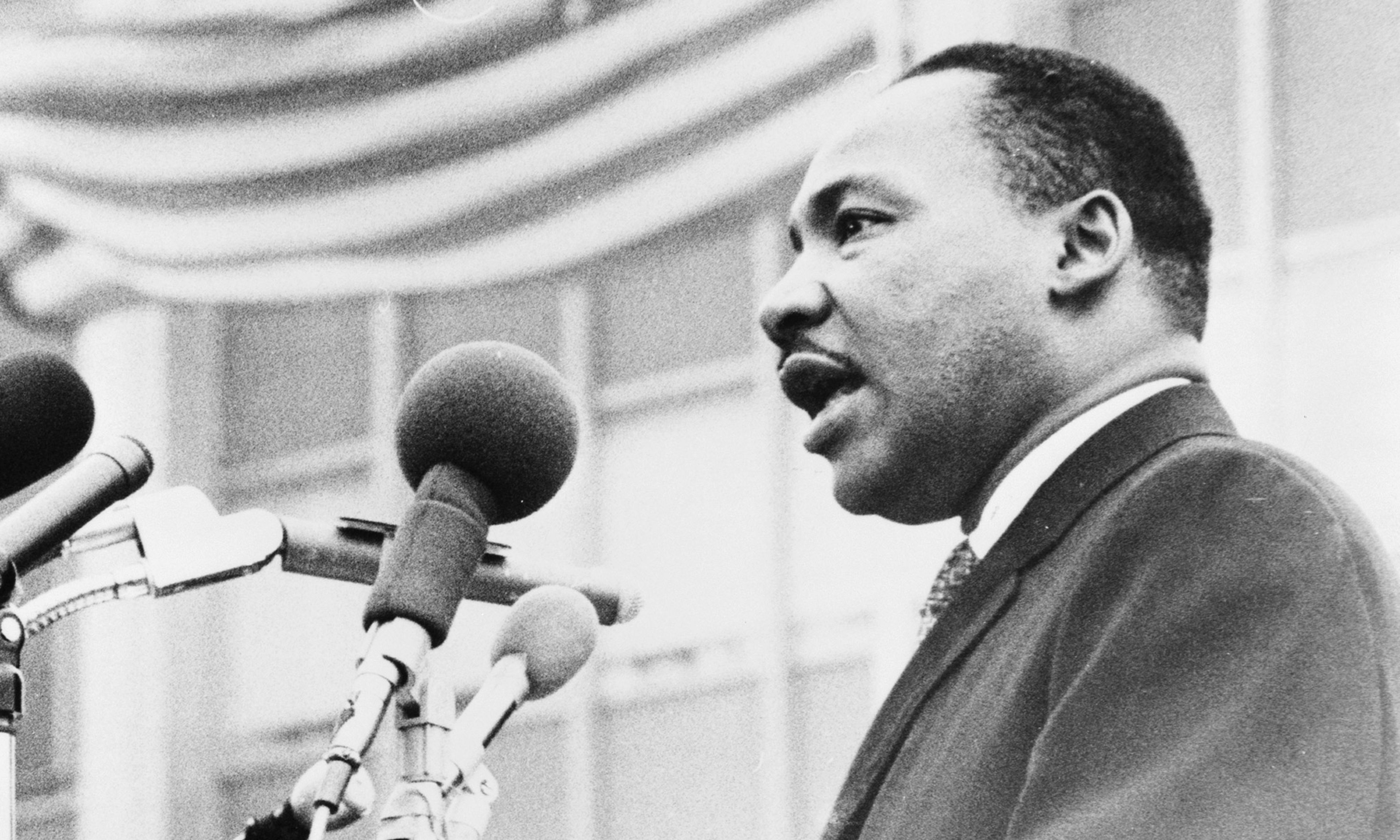
As we at last seem to be “getting beyond race,” we face a dilemma. If, as Martin Luther King “dreamed” in his great 1963 speech [at the Lincoln Memorial], the color of our skin seems to matter less with each passing day, the content of our character must necessarily become ever more important. The more we see ourselves as individuals rather than as members of some racial or ethnic group struggling for advantage in a zero-sum political game, the more we must think about the moral guidelines we use in building our individual lives.
Wardell Connerly was born in 1939, in rural, segregated Leesville, La., into a family that was equal parts French Canadian, African-American, Choctaw Indian, and Irish. In the melanin-obsessed South, his family suffered the contempt of whites and the mistrust of some blacks.
A pair of family tragedies brought James Louis into his nephew Ward’s life. First, Ward’s father, Roy Connerly, a drinker, gambler, and skirt-chaser, abandoned his family when Ward was an infant. (Ward would not see him for another 50 years.) Just a few years later, Ward’s mother died. The decision of Ward’s grandmother to send him to live with his Aunt Bert and Uncle James Louis in Washington state was a long-overdue stroke of luck for the youngster.
Six feet tall and strong, the son of black sharecroppers, James had worked as a deckhand on cargo boats on the Mississippi before escaping segregation by moving to the Pacific Northwest and getting a job at the Puget Sound Naval Shipyard. Connerly writes of his uncle: “The only thing he wanted from the world was for it to respect him and regard him as a man — a word he pronounced, in the down-home accent he never quite lost, as ‘mane.’” He became Ward’s father figure, protector, and teacher.
Connerly devotes each chapter to a different set of lessons, about work, responsibility, religion, education, love, and the other building blocks of a meaningful life, illustrating each with stories from his life with his uncle.
One of the most telling vignettes comes in a chapter on manhood. Ward, at 9 or 10 years old, came home from school having been thoroughly whupped in his first playground fight. When he heard Ward’s self-pitying tale, Uncle James responded without sympathy. “I want you to understand me,” he said. “You don’t fight back next time this happens and you’re going to get two a**-kickings — the one you get at school and the one you get from me when you come home. And the one you get at home will be worse than the one at school.” James didn’t want him to go looking for fights, but he did want him to fight back.
The lesson has proven its worth during Connerly’s career as the country’s most conspicuous opponent of group preferences. “There have been anonymous death threats,” he writes. “I have been called every name in the progressive book — Race Traitor, House N****r, Uncle Tom, Oreo. . . . I’ve always felt him there beside me, promising that second a**-kicking if I didn’t stand up for myself and the causes I espoused. . . . There’s only you and the voice inside. And if you want to be a mane, you had better listen hard to this voice and be true to its commands.”
Another chapter discusses the importance of seeing issues from your opponents’ perspective. Whenever Ward got a little too enamored of his own arguments, James would remind him that that “the smallest pancake has two sides,” and pantomime “the motion of someone using a spatula to pry up a concept in order to check out what might be underneath.” Of course, some pancakes have only one good side: The chapter on education discusses Connerly’s efforts as student-body president at Sacramento State to fight housing discrimination in the neighborhoods around the campus, efforts that contributed to the passage of a statewide fair-housing act. Connerly’s critics will be surprised by this; they shouldn’t be.
This slim volume calls to mind Irving Kristol’s observation that every generation faces a barbarian invasion in the form of its own children, who need to be civilized. Lessons from My Uncle James provides real-world examples of how bedrock civilizing principles are passed on — or, as James Louis himself might put it, how a boy is raised to be a man.






Comments