How Lincoln’s Assassination Changed American History

Lincoln’s death elevated a bigoted Democrat from east Tennessee, Andrew Johnson, to the presidency — and thereby changed the course of Reconstruction.

Share this story

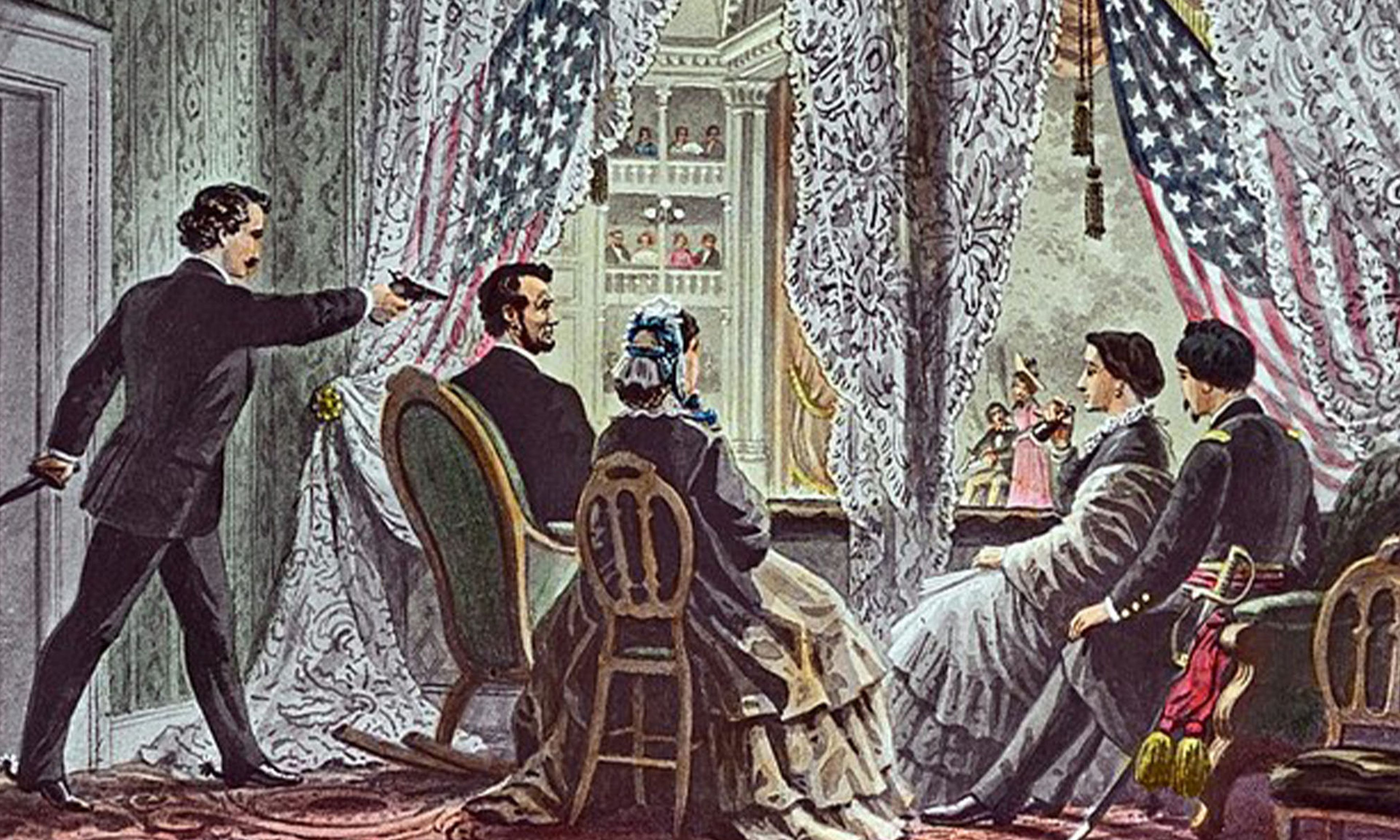
Slide depicting John Wilkes Booth leaning forward to shoot President Abraham Lincoln as he watches Our American Cousin at Ford’s Theater in Washington, D.C., April 14, 1865, based on the depiction from a mechanical glass slide by T. M. McAllister of New York, restored by Adam Cuerden

Public domain/via Wikimedia

One hundred and fifty-nine years ago, a 26-year-old white supremacist and Confederate sympathizer named John Wilkes Booth pointed a .44 caliber derringer pistol at the back of Abraham Lincoln’s head and squeezed the trigger. The 56-year-old president clung to life for nine agonizing hours, expiring the next morning in a cramped room rented by Union veteran Willie Clark.

Lincoln’s death elevated a bigoted Democrat from east Tennessee, Andrew Johnson, to the presidency — and thereby changed the course of Reconstruction. Booth’s bullet pitched a nation still reeling from four years of fratricidal war — a conflict that had snuffed out the lives of nearly 3 percent of the U.S. population — into a moment of profound precarity.
BM

About the Author

Brian Matthew Jordan

Brian Matthew Jordan was a Pulitzer Prize finalist for his 2015 book Marching Home: Union Veterans and Their Unending Civil War and is a member of the Jack Miller Center's scholarly network.

Comments

Advertisement

Advertisement

