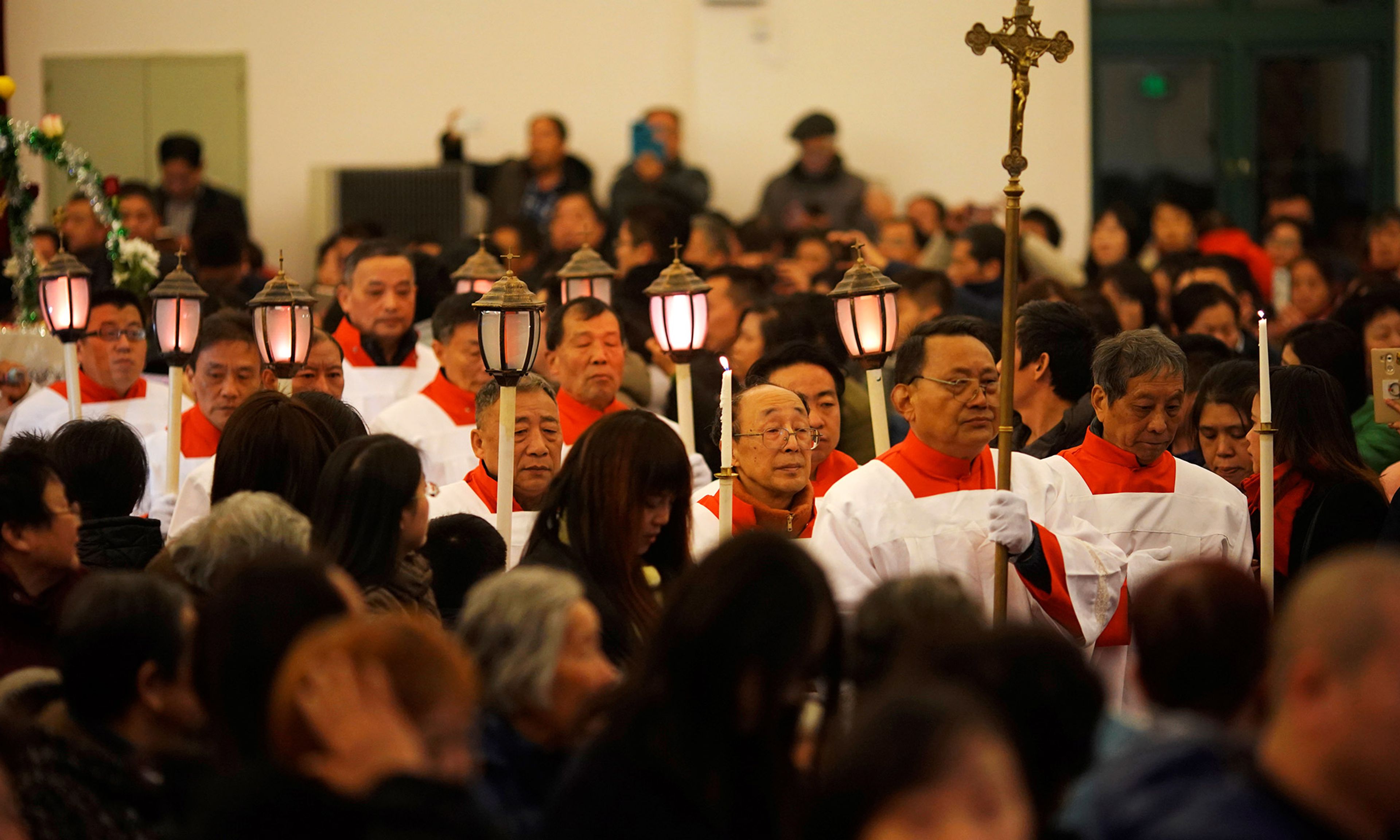
Ahighlight of the subdued funeral of Pope Benedict XVI at St. Peter’s Basilica on Thursday morning was the sight of Cardinal Joseph Zen, dressed in flowing red robes, unbowed by political pressures from either the Chinese Communist Party or the Vatican, concelebrating the Mass with Pope Francis. It was an extraordinary moment that stood out in an otherwise too ordinary ceremony for such a great theologian-pope. Perhaps for the last time, Zen, the 90-year-old former bishop of Hong Kong, was viewed worldwide performing his ministry at the epicenter of Catholic power, in the symbolic embrace of the universal Church, in a role befitting a heroic church leader. It was a stark contrast to his public appearances over the past year, in the dock of a Hong Kong courtroom and entering interrogation at a police station, facing the unjust accusations of the Chinese Communist Party, not to mention his last visit to Rome, in 2020, when the papal-palace gates firmly shut him out.
Zen’s appearance was also a reminder of Benedict’s remarkable pastoral concern for the Catholic Church in the People’s Republic of China (PRC). In a recent blog post, Zen wrote a tribute to the deceased pope, praising his significant efforts to elevate the issue of the Church in China. Benedict’s most consequential action in this regard was to make Bishop Zen a cardinal, in 2006. Zen has been the voice of conscience for the suffering Church in China in recent years. It was undoubtedly Benedict’s wish to have him invited to his funeral. Benedict’s other China initiatives hold enormous potential, and Zen states that they remain the best way forward for China’s Catholics. But, as he argues, they have been thoroughly undermined by Vatican bureaucrats in the Roman Curia, who seek an essential Church goal, episcopal unity within China, but pursue it even at the sacrifice of communion with the universal Church, headed by the pope.


Comments