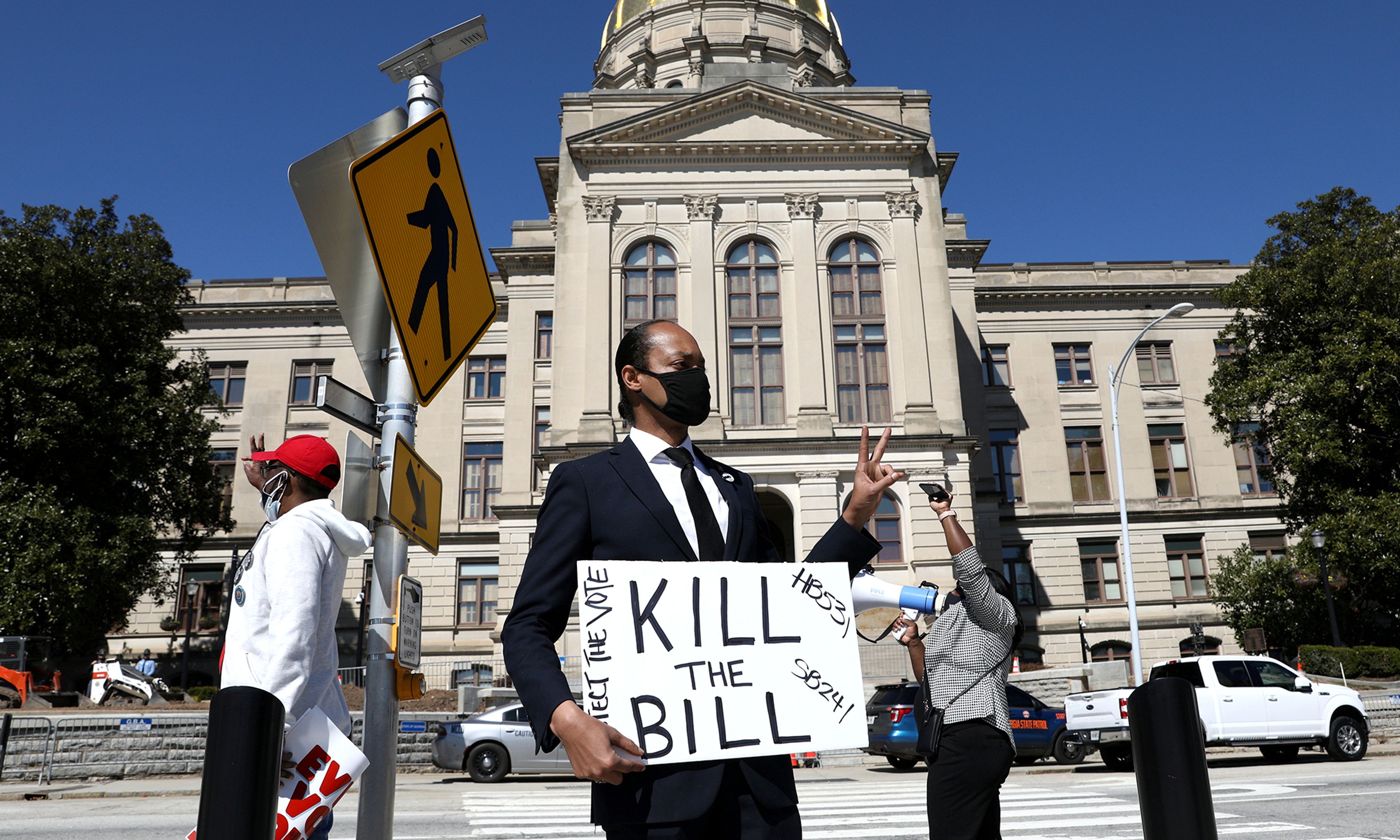
The thing about boycotts is that they don’t work too well in a vacuum. If you start a parade and no one gets in line behind you, you aren’t a leader; you’re just a fool walking down the middle of the street twirling a baton.
The failed boycott-Georgia movement illustrates the limits of the Democratic Party’s tactic of attaching hysterical overreaction and claims of racism to virtually any Republican idea, even a routine package of voting reforms. The Democrats turned the volume up to eleven on the Georgia elections bill signed into law March 25, labeling it the second coming of Jim Crow even before it was signed. Joe Biden, in a “Hello, fellow kids” moment meant to prove he was hip to cutting-edge Democratic thinking, on March 31 asserted that this ordinary, dull piece of good-government legislation was actually worse than Jim Crow, and that most of the country was in the process of becoming something more awful than 1957 Mississippi. “This is Jim Crow on steroids, what they’re doing in Georgia and 40 other states,” Biden said on ESPN on March 31. He was unaware that New York and many other states already have on the books policies comparable to, or more restrictive than, the new Georgia law, such as bans on outside groups’ providing things of value to voters waiting in line at the polls.





Comments