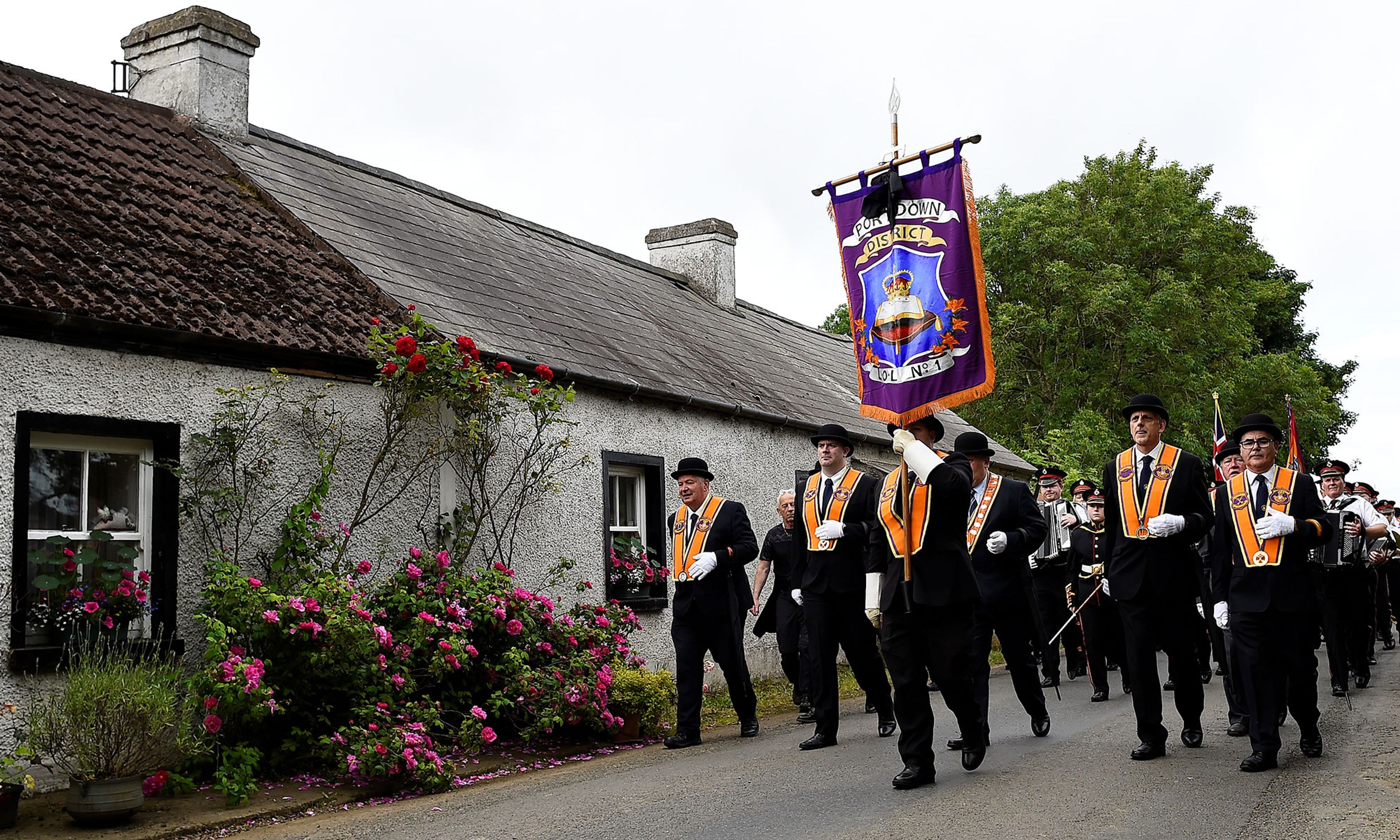
On July 17, 1920, just days after the boisterous Orange parades in Ulster, the Irish Republican Army assassinated Royal Irish Constabulary divisional commander Colonel Gerald Smyth as part of its broader campaign in the Anglo-Irish War. Smyth was a Protestant Ulsterman from County Down. The fiery Irish Unionist, Edward Carson, reacted with fury. Carson, a Dublin lawyer, rapidly became the political tribune of Ulster’s resistance to Home Rule and then its will for self-government. “We in Ulster will tolerate no Sinn Féin,” he warned at a rally. If the government failed to protect unionists from them, “we,” he intoned, “would take matters into our own hands. We will reorganize.”
It was that simple: We will get violent, and you know it’s true. On this threat, Northern Ireland was built. But just the threat itself. If Ulster had ever openly, in an undisguised, acknowledged, and officially organized way, engaged in what Ulstermen sometimes threatened, it would have provided Parliament at Westminster the political will to put it down and force it to make terms with the majority on the island of Ireland. Parliaments are built, constitutions reordered, and a union maintained on the threat alone.





Comments