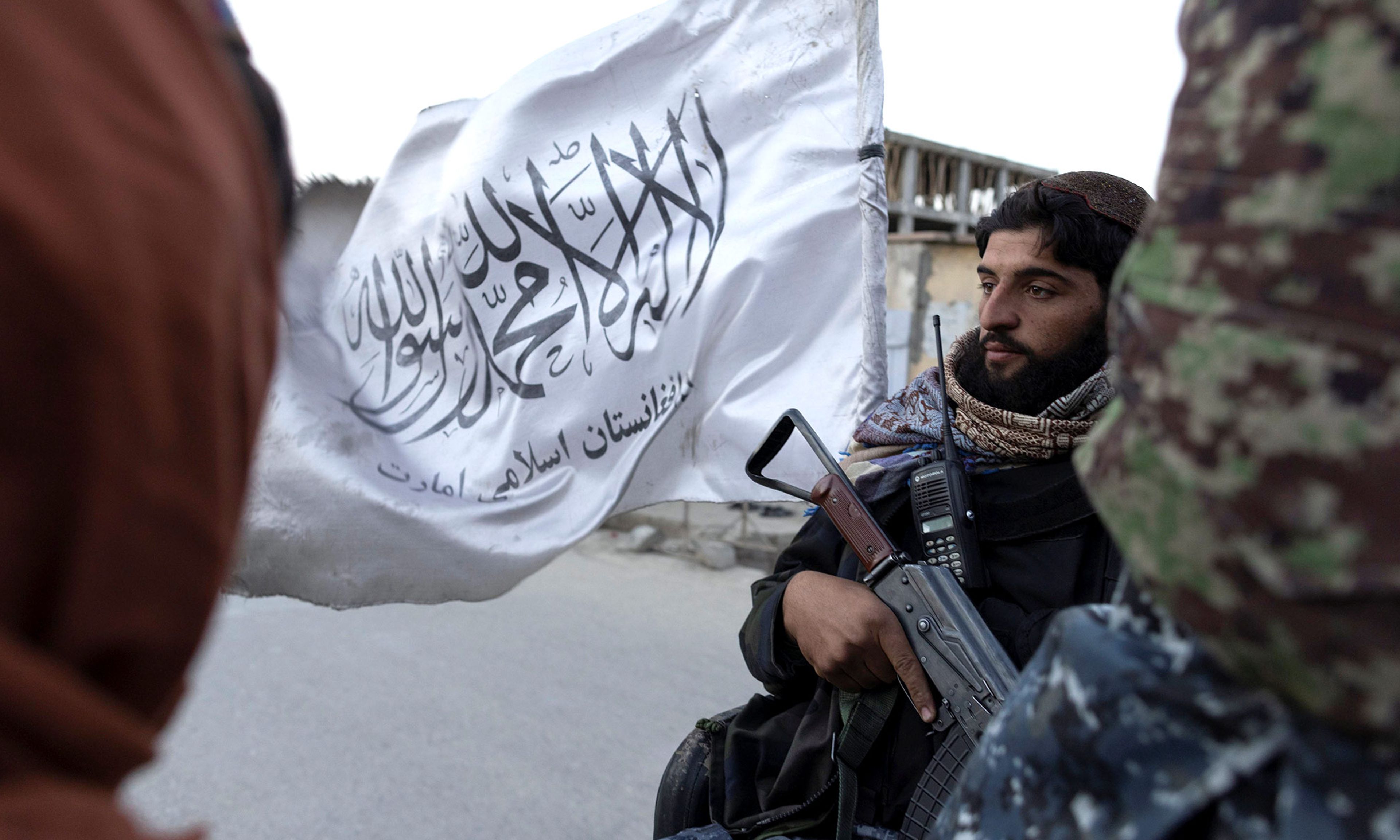
Testifying to the Senate Armed Services Committee last week, Under Secretary of Defense for Policy Colin Kahl made a startling observation: The Islamic State-Khorasan, ISIS’s branch in Afghanistan, could “generate” the capability to attack the United States in as soon as six months. Al-Qaeda, the terrorist organization that brought the U.S. military to Afghanistan 20 years ago, could possess the same capability in one to two years.
Kahl’s assessment not only inspired a wave of hyperbolic headlines, but seemed to give credence to claims that withdrawing U.S. troops from Afghanistan would hamper U.S. intelligence-collection efforts. Those concerns are not necessarily far-fetched; common sense suggests that removing troops from a particular country could affect the quality and quantity of information that the U.S. can scoop up there. CIA director William Burns made precisely this point during his own congressional testimony in April, commenting that “when the time comes for the U.S. military to withdraw, the U.S. government’s ability to collect and act on threats will diminish. That’s simply a fact.”





Comments