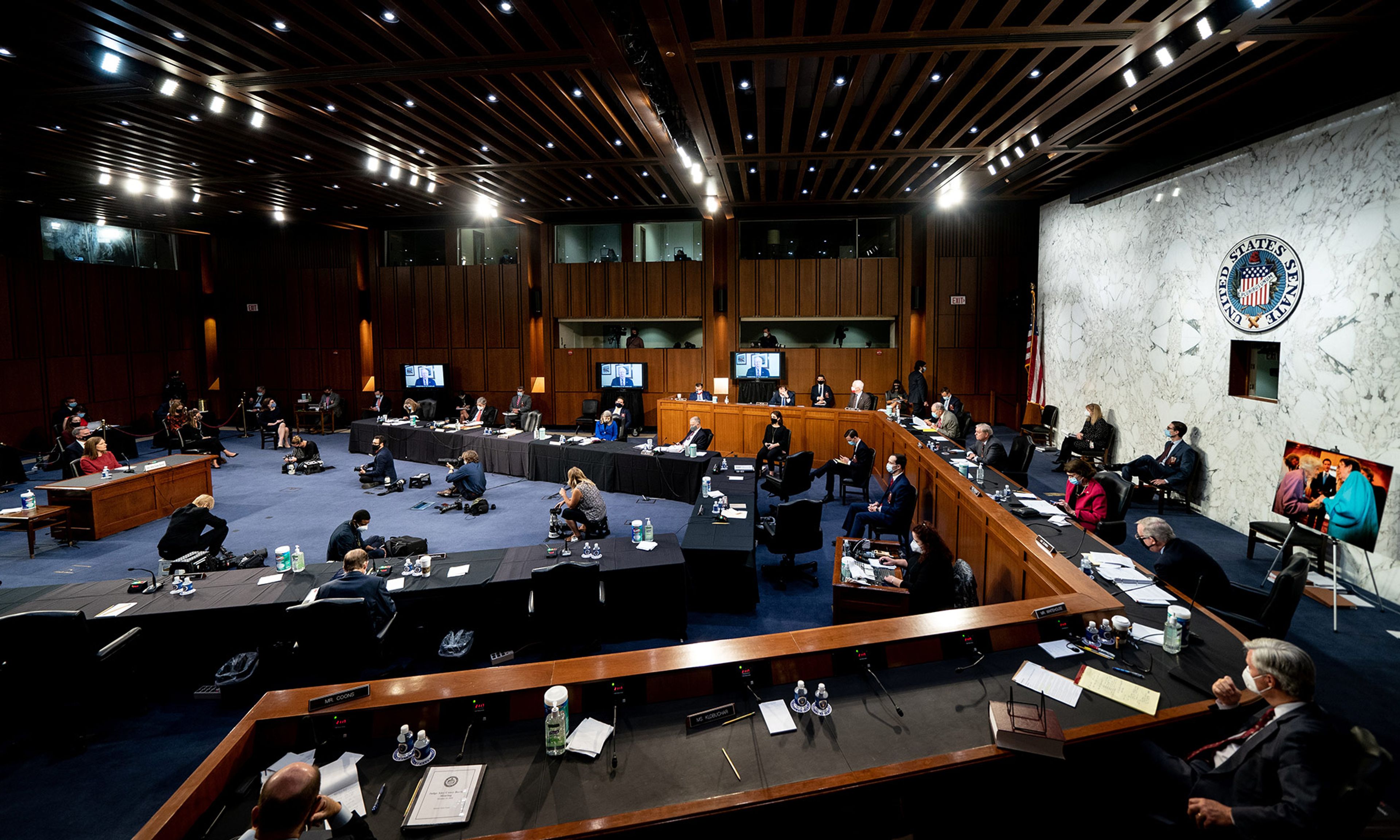
Adam J. White, a resident scholar at the American Enterprise Institute who serves as executive director of George Mason University’s C. Boyden Gray Center for the Study of the Administrative State, writes in the Washington Post that Supreme Court confirmation hearings are “indispensable.” White contends that hearings are worth preserving because they provide nominees with the opportunity to demonstrate the requisite legal acumen, and Americans with a chance to at once “focus their minds on the Constitution,” and have their voices heard “through their elected senators.”
He is right to say that on balance it is better to hold confirmation hearings for judicial nominees than not to. Even in their current form, they build confidence in the nominee, in the process, and in our system of government. Getting rid of them altogether would be detrimental to nominees, to the process, and to the judicial branch. That being said, it should be readily apparent to anyone who paid attention to Amy Coney Barrett’s appearances before the Senate Judiciary Committee this week that there are serious structural issues with how hearings are conducted. Certain reforms could improve the process such that senators could better interrogate nominees, nominees could better establish themselves as qualified to sit on the Court, and the American people could better understand the role of our Article III institutions.




Comments