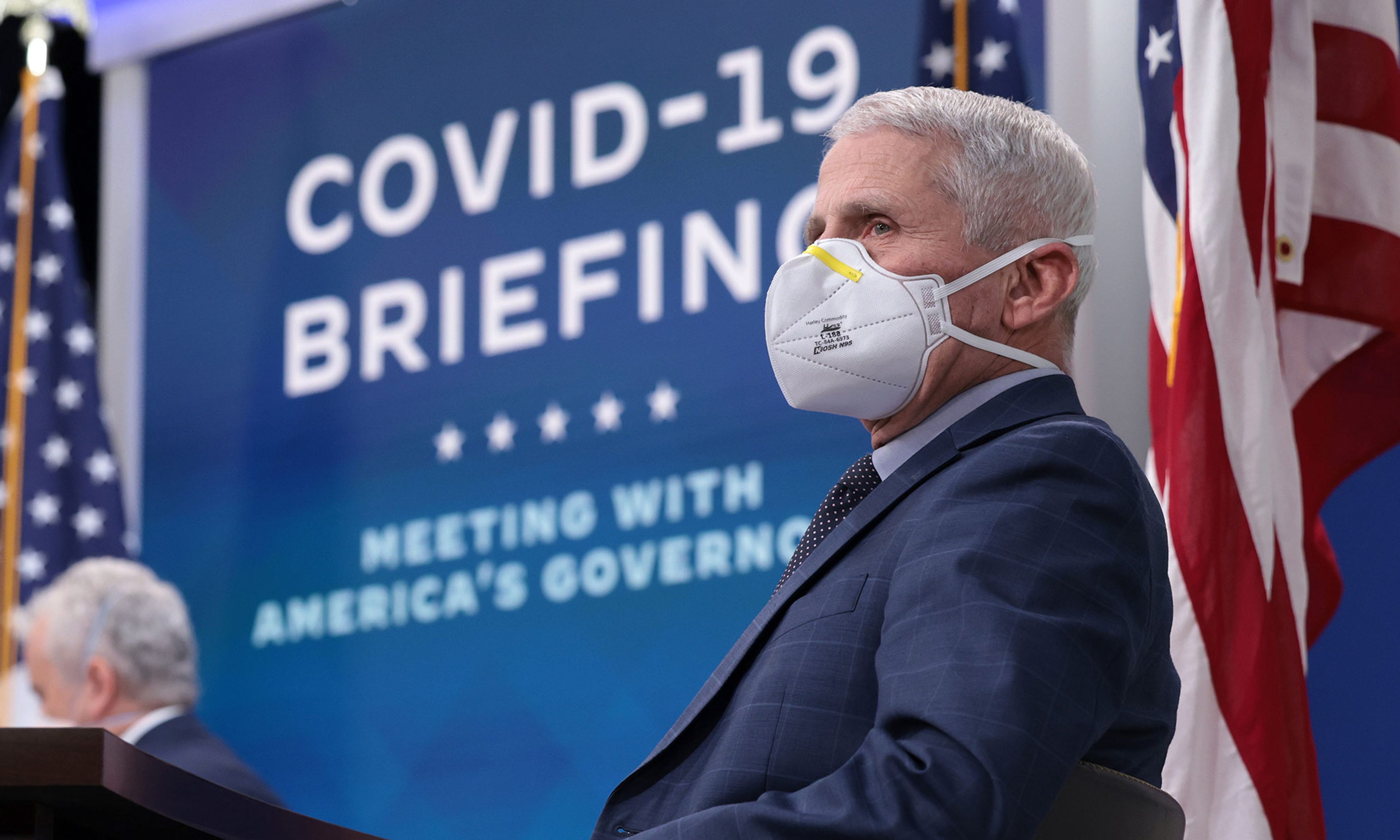
Over the course of the pandemic, “trust the scientists” has devolved into an empty platitude meant to shut down any layperson who has the temerity to question the wisdom of Covid policies. It needs to be swiftly retired as we enter 2022.
The problem with “trust the scientists” is twofold. One is that the so-called experts have often been wrong. People have distanced, locked down, and masked up for nearly two years, and Covid continues to spread, with more than 800,000 Americans now dead. Nor can it be said that Covid outbreaks have been limited to areas that have disregarded the public-health community. Right now, New York City, which requires masks and is home to one of the earliest and strictest vaccine-passport regimes in the U.S., is reporting record numbers of cases. The argument that Omicron is different because it is able to evade vaccines is not a particularly compelling defense of the experts, either. Before Omicron, there were four major variants of Covid, and it was only a matter of time before one variant found a way around vaccines. Arguing that people should get vaccinated and boosted anyway because it reduces the chances of severe Covid or death is fair. But were we to shift focus to “reducing death” as opposed to “stopping” or “slowing” the spread, our policies would look a lot differently than they do now.




Comments