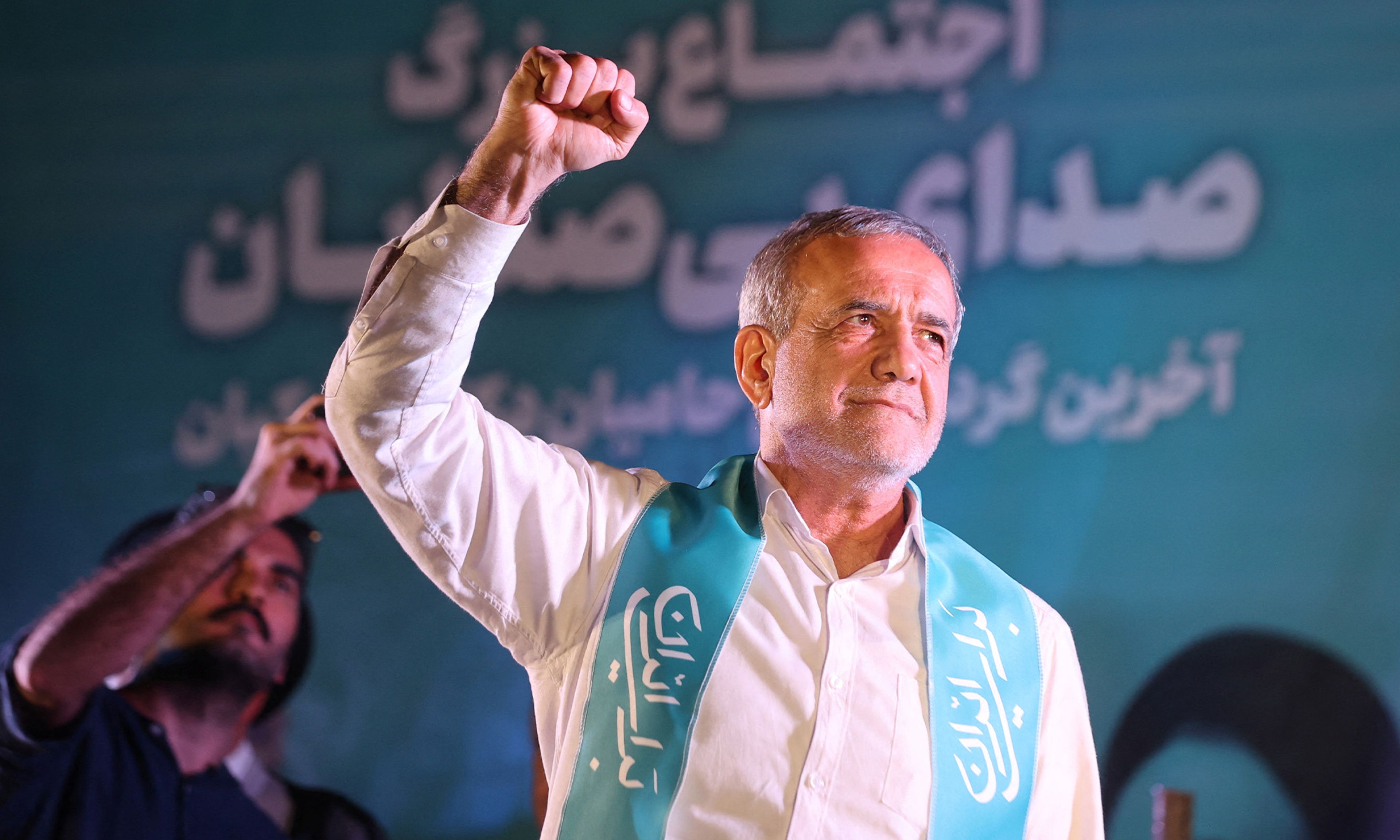
Masoud Pezeshkian’s victory in Iran’s presidential election on July 5 was met with a markedly positive reaction by international media. Many have touted the president-elect’s supposedly reformist bona fides — either by asserting that he wants “women to have the right to dress as they choose,” by emphasizing his calls for renewed talks with the West, or by claiming he supported antiregime protest movements in recent years. This coverage both contradicts Pezeshkian’s wider political profile and feeds into the narrative promoted by the Islamic Republic’s spin masters. It also demonstrates Khamenei’s probable motivation for allowing Pezeshkian to be put forward as a candidate in the first place.
From the beginning of his career, Pezeshkian has supported the Islamic Republic’s repressive policies. Even before entering politics, he enforced compulsory hijab-wearing among his staff at Tabriz University of Medical Sciences. Despite his academic background, there is scant evidence he supported the 1999 student protests while deputy health minister during President Mohammad Khatami’s first term. Further, unlike cabinet minister Mostafa Moeen, who resigned in protest, Pezeshkian retained his position and was promoted to health minister in Khatami’s second term.



Comments