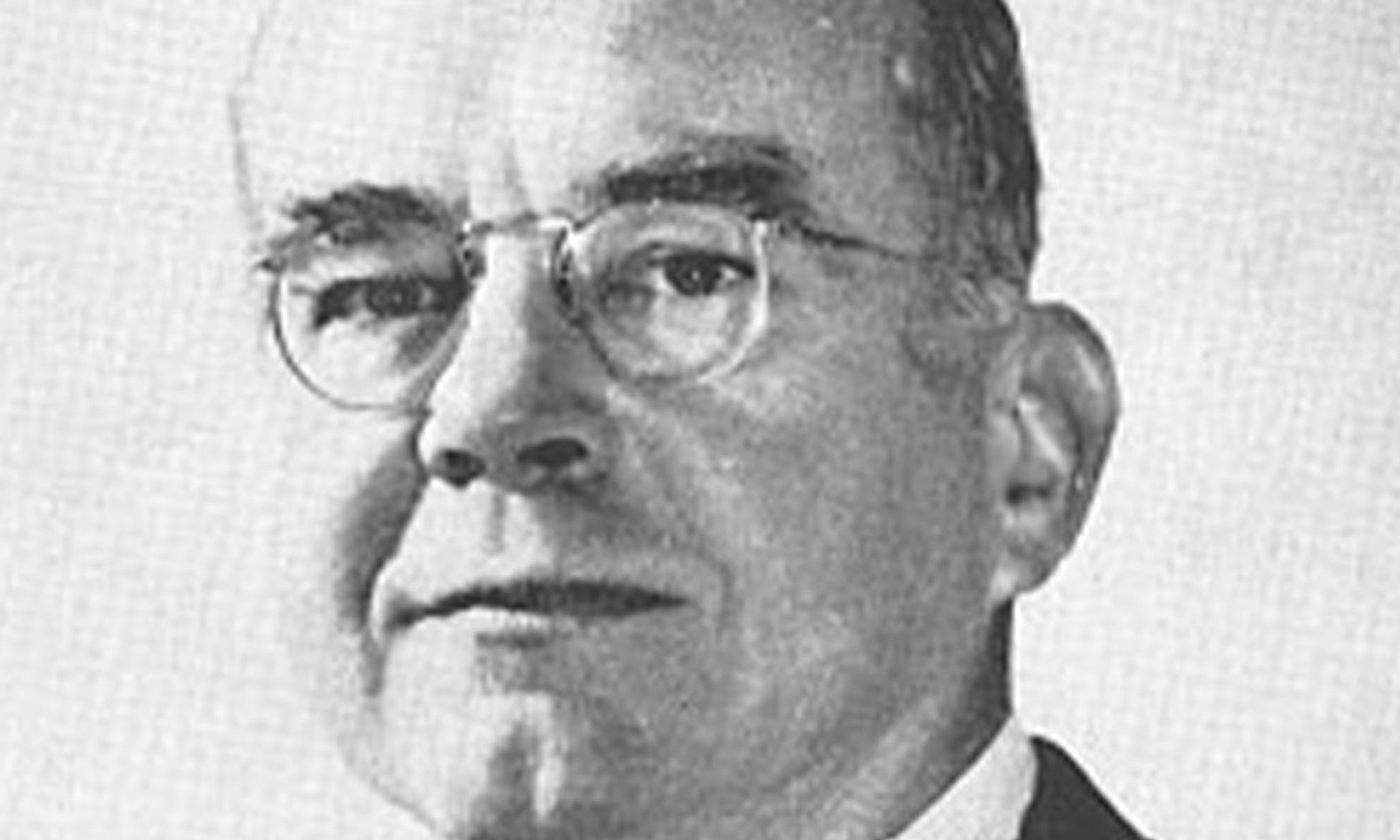
Conservatives are more divided over American involvement in Ukraine than liberals are. Some conservatives continue to favor aid for the nation Russia invaded, a stance resembling the anti-Russia position of the Cold War, updated for a world of American hegemony. Other conservatives preach an “America First” approach that questions U.S. interest in Ukraine’s security as part of a broader skepticism of the post–Cold War international order. Both views can to some degree be traced to James Burnham, an influential academic who became an editor at National Review after abandoning communism. That’s because there were in fact two James Burnhams. Each inspired a part of American conservatism.
The first James Burnham was an international hawk. Writing during the Cold War, this Burnham demanded a hardline aggressive foreign policy that aimed at liberating the people of Eastern Europe from the Soviet yoke. His The Struggle for the World (1947) warns against Soviet expansion and insists that the United States must use power — possibly even violence — to confront the Soviet behemoth because containment could never win. The hardliner argued that provincial isolationism no longer sufficed in the dangerous post–World War II era. This Burnham demanded an American empire — specifically, a soft empire, through which the United States exerted its power around the world against communism.




Comments