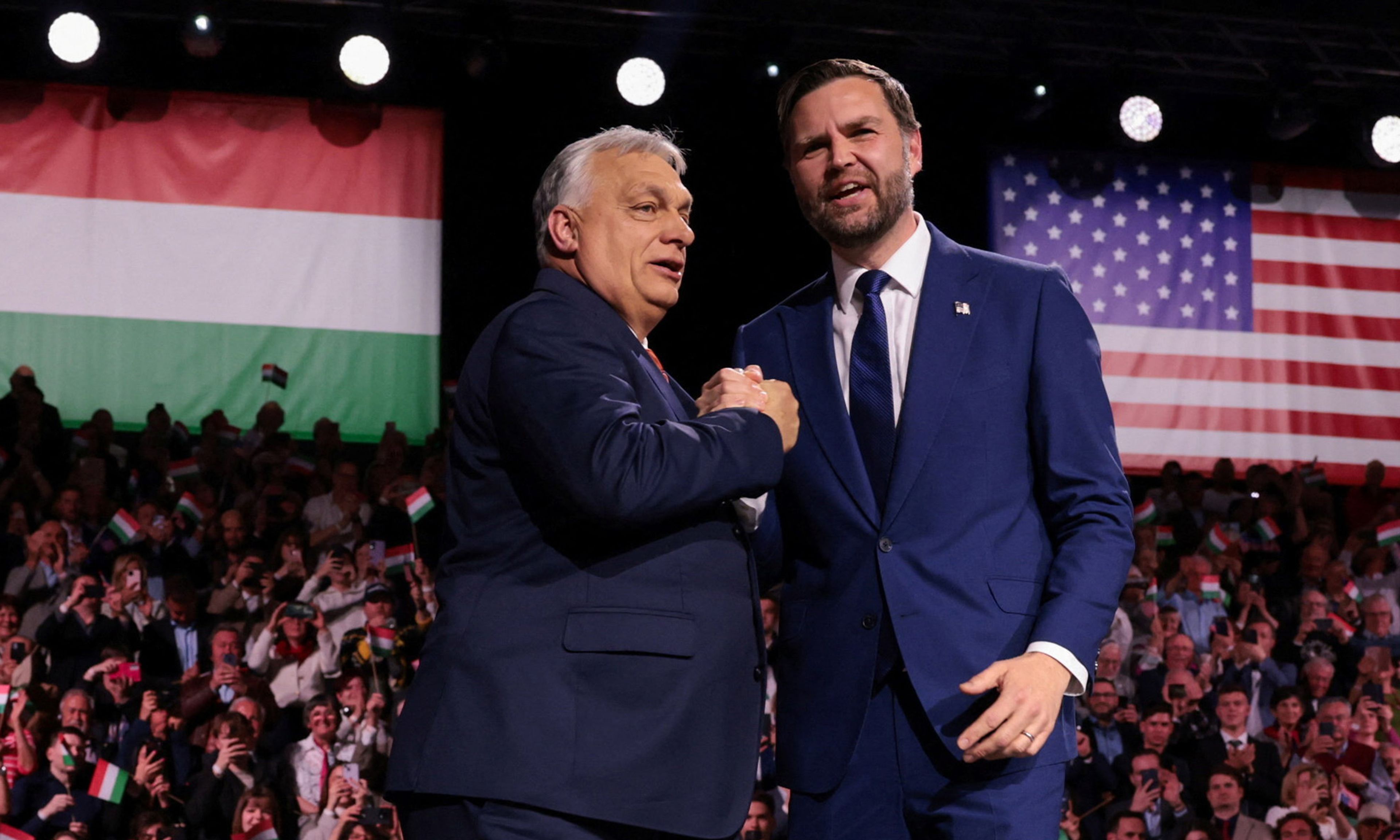
JD Vance may not worry about the political capital he wagered on Hungarian Prime Minister Viktor Orbán, whose party suffered a catastrophic defeat at the polls this week. Perhaps the vice president believes there will be few lasting costs associated with his failed effort to boost Orbán’s “post-liberal” project, but nothing was gained from it. Indeed, Vance’s investment in that enterprise never made much practical sense.
Orbán was never overtly warm to American national interests. Rather, his government advanced the objectives of Vladimir Putin’s regime inside the European Union in ways that were often at odds with Donald Trump’s policy goals. In the wake of the Israeli pager attack on Hezbollah in Lebanon, according to the Washington Post’s reporting, Orbán’s foreign minister floated an intelligence-sharing relationship with the Islamic Republic of Iran. Orbán might be a “great guy” in Vance’s estimation, but he was hardly a friend to the United States.





Comments