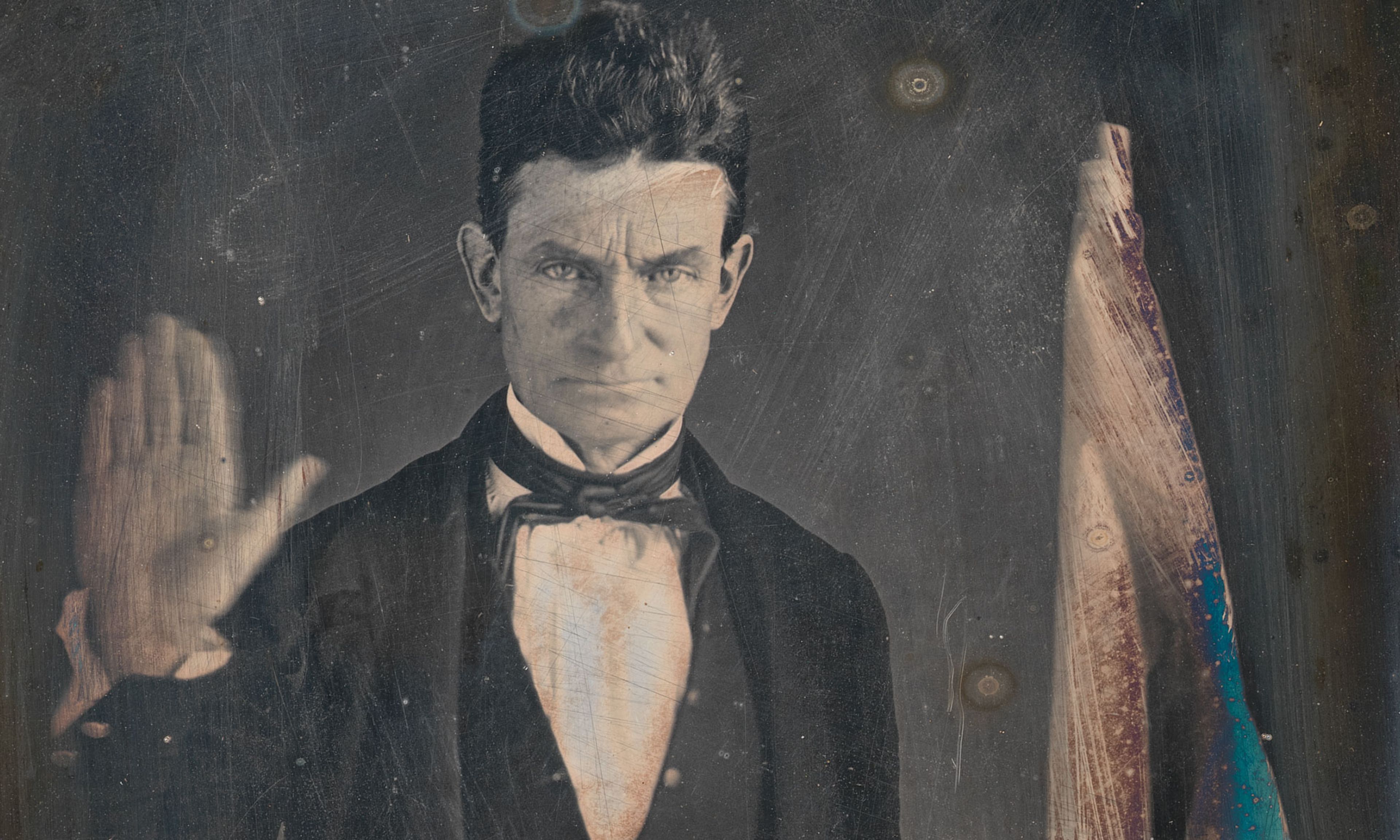
Luis DeCaro, a professor of Christian history at New York’s Alliance Theological Seminary, recently made the case in Christianity Today for “Why White Evangelicals Should Claim John Brown.” DeCaro, author of several books on Brown, seeks to reconstruct the radical abolitionist’s legacy. Brown murdered five pro-slavery settlers at sword-point in Pottawattamie, Kansas Territory, in 1856. Three years later, he led 20 men in an occupation of the federal arsenal at Harper’s Ferry, Va. Instead of inciting a slave uprising as he hoped, Brown was arrested, tried for treason, and hanged. Noting that Brown’s name is virtually absent from historical surveys of American Christianity, DeCaro urges correction of what he considers an omission. Why?
The gist of DeCaro’s argument is that Brown was a pious evangelical who, even as elites began embracing more liberal theology, adhered to orthodox views such as the inerrancy of Scripture. Brown’s strict Biblicism is central to DeCaro’s argument: “He urged people, ‘Be determined to know by experience as soon as may be, whether Bible instruction is of Divine origin or not,’ convinced that if they tested the Scripture, they would discover the truth.” Certainly, he felt assured of his interpretation of Scripture, telling a minister shortly before his death: “I cannot believe that anything I have done . . . will be lost to the cause of God.”




Comments