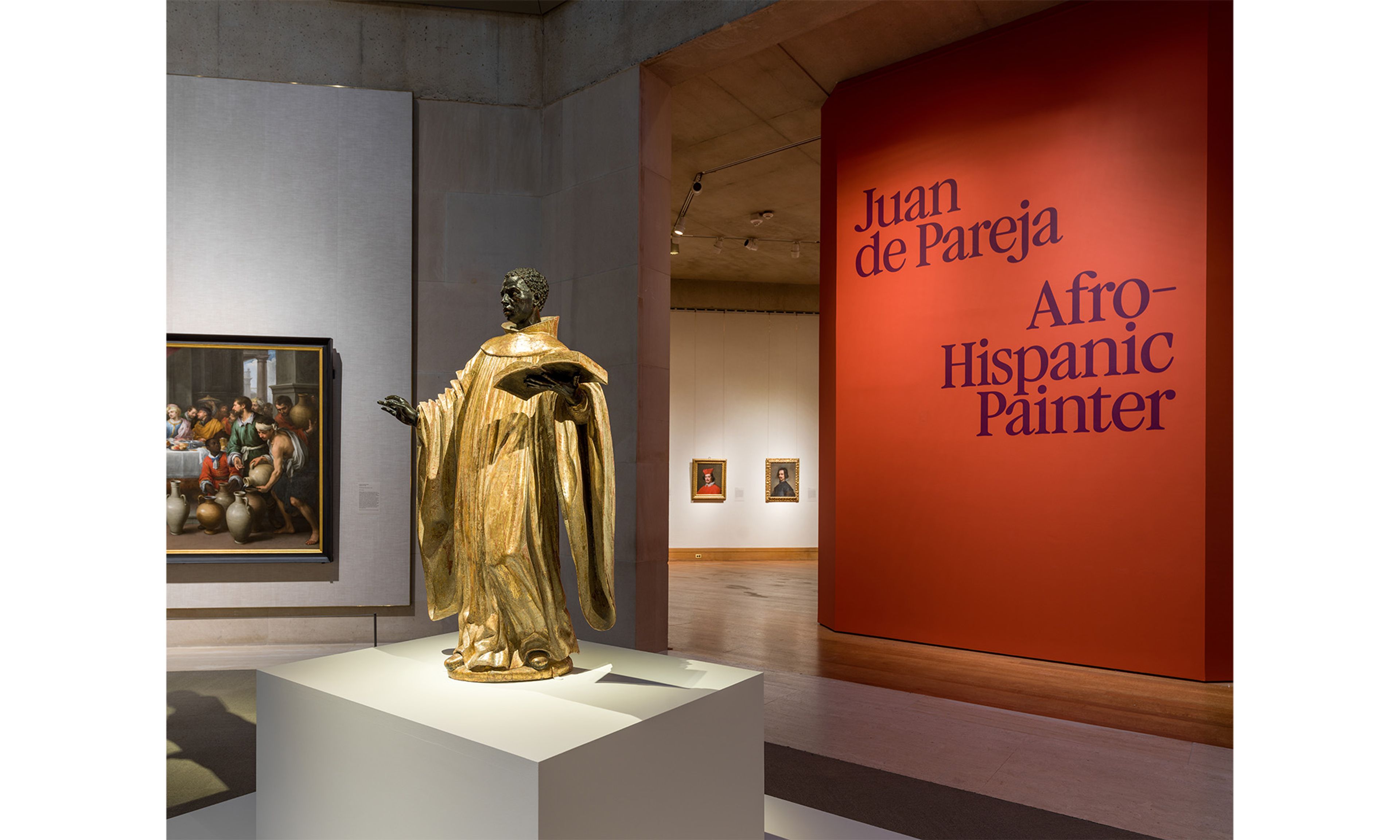
Juan de Pareja: Afro-Hispanic Painter is the very good, new exhibition at the Met. It’s topical, revelatory, succinct, smart, and scholarly. Here and there it’s tendentious, but who can argue with eight, possibly ten, paintings by Diego Velázquez (1599–1660), Philip IV’s court painter, or two wonderful Murillos? At the heart of the show is Velázquez’s 1650 portrait of Pareja (c. 1608–1670), his assistant, an artist, and his slave until Velázquez freed him fully and finally in 1654. It’s a splendid portrait and part of the Met’s history. When the Met paid $5.5 million for it in 1971, it smashed records for Old Master painting prices.
Velázquez painted only 250 or so works. A busy man, he was the king’s portraitist but also his chief curator and palace decorator. Most of Velázquez’s art is at the Prado. In 1971, and more so now, he’s a rara avis on the art market. And the Pareja portrait, with its muted, harmonious grays and blacks, its subject both bold and composed, is Velázquez at his peak in the genre of intimate portraiture. The Met’s purchase of the picture was a sensation for its price, rarity, and quality. Fresh meat, it had lived in the Earl of Radnor’s country house in Wiltshire since around 1814.





Comments