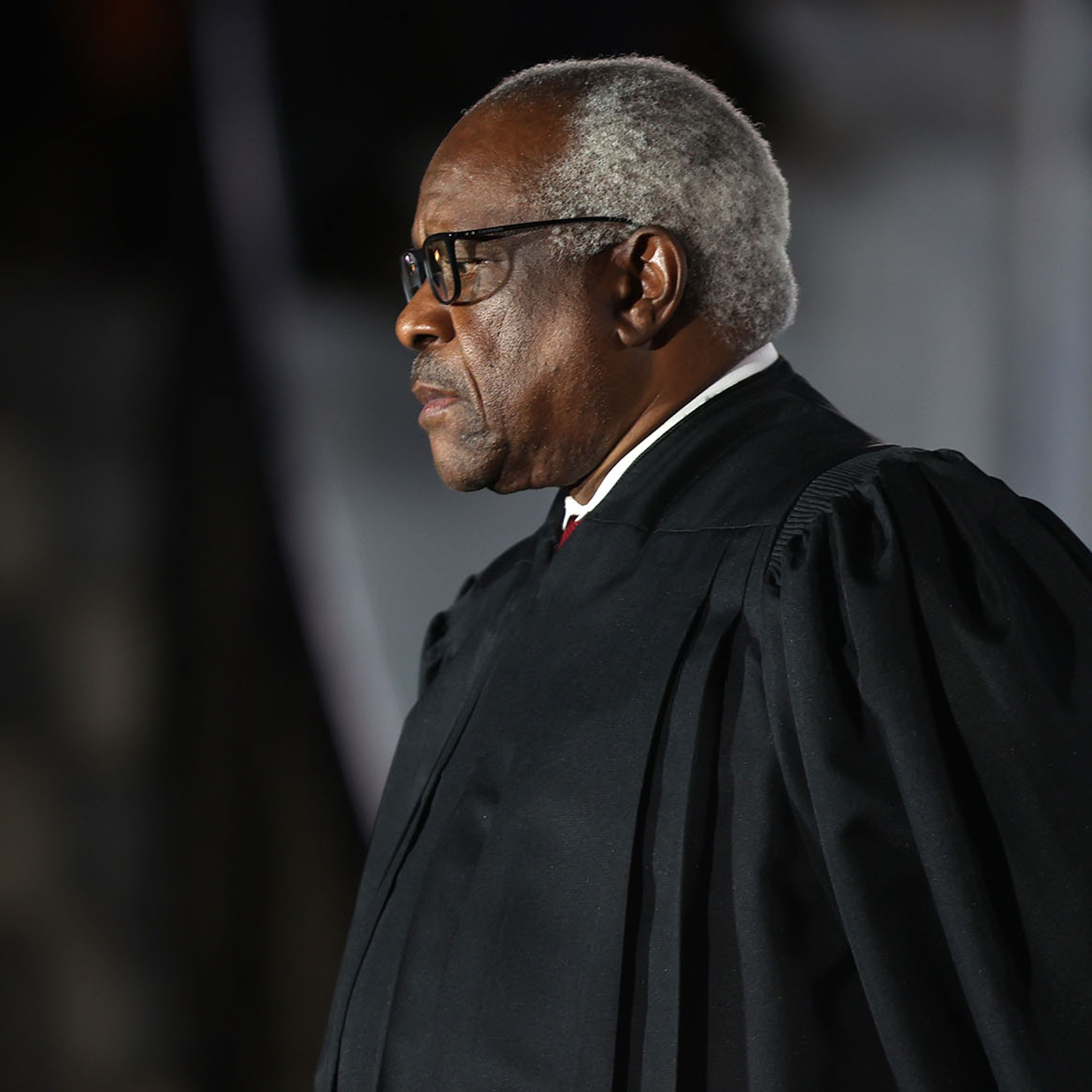
In positing that conservative jurists and legal pundits are apt to temper their enthusiasm for judicial restraint and originalism when necessary to rationalize such right-wing policy preferences as race-neutrality, Ramesh Ponnuru’s recent New York Times op-ed focuses, in part, on the Supreme Court’s June 22 decision in Northwest Austin Municipal Utility District Number One v. Holder. There, ruling 8-1 in an opinion written by Chief Justice John Roberts, with Justice Clarence Thomas as the lone dissenter, the Supreme Court cast severe doubt on, but declined to invalidate, Section 5 of the Voting Rights Act. As I said in a column on Saturday, I believe Ramesh’s critique of the Court’s performance in the VRA case merits a response.
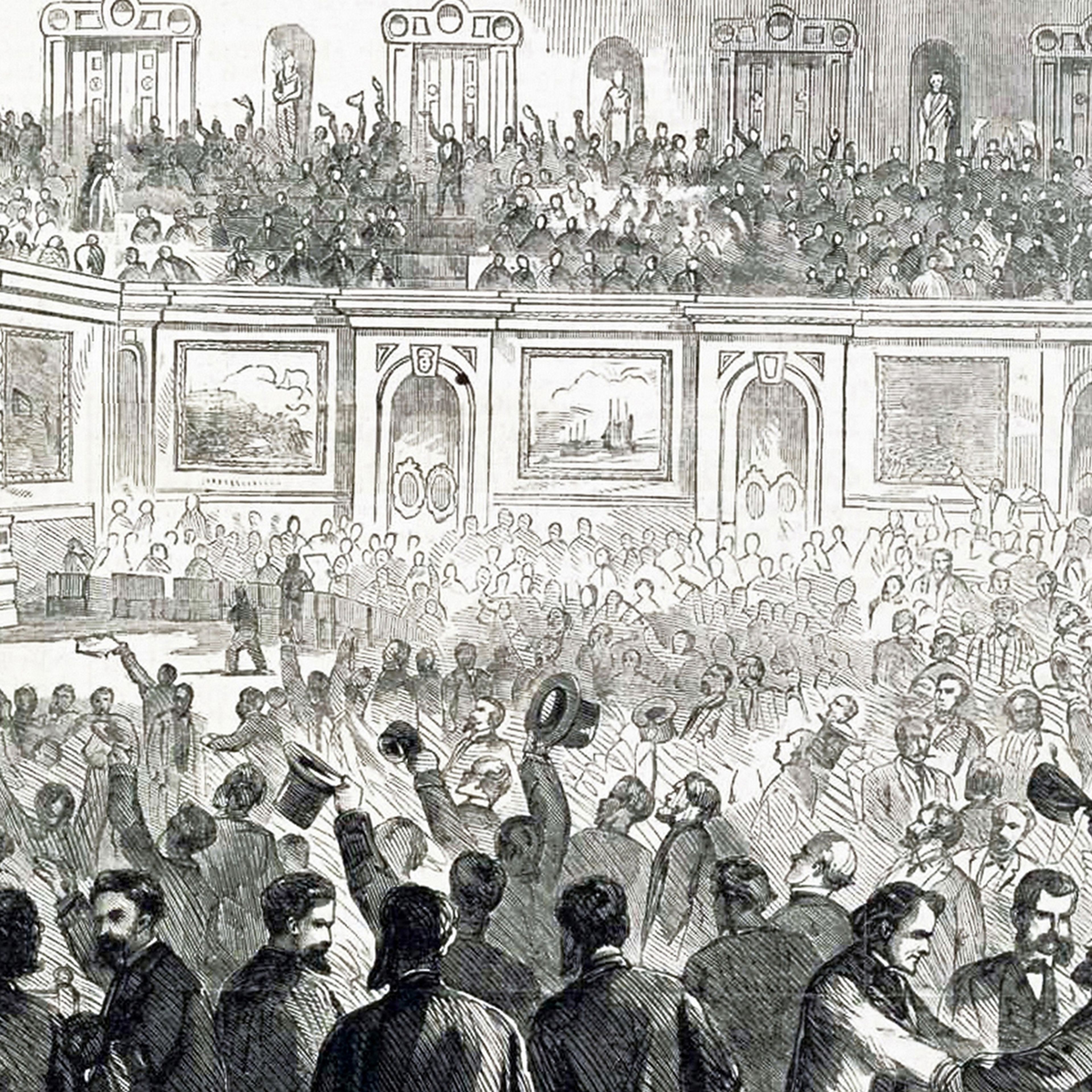
The VRA reflects the tension between two important interests: the power of the states in our federalist democracy to conduct elections; and the right to vote, which the 15th Amendment guaranteed to former slaves freed by the Civil War and the 13th Amendment. For the first century after its 1870 ratification, the 15th Amendment was largely a parchment promise. Particularly in the Jim Crow South (i.e., what is now the pervasively integrated South), blacks were denied the franchise and subjected to various other indignities in a decades-long campaign of violence, intimidation, and subterfuge — including, Justice Thomas recounted, literacy tests administered in former slave states which had previously made it a crime to teach blacks to read and write. Given the justice system’s interminably slow wheels, new machinations were devised before federal courts could remedy the old ones.
Enacted in 1965, the VRA was designed to address that intolerable state of affairs by very aggressive measures. In particular, Section 5 pressed the outer limits of permissible federal interference with state sovereignty. It targeted states that had engaged in forbidden practices as recently as 1964 and had unduly low (less than 50 percent) voter registration. Throughout these states, it imposed a “preclearance” mandate. It forbade governmental units from implementing any change in election procedure — no matter how ministerial, and regardless of the absence of discrimination evidence — unless and until the proposed change was approved by the Justice Department or a special federal court in Washington.
Congress recognized that this formula was drastic. The national government has no generalized supervisory authority over the states, which are sovereign political units. The 15th Amendment does not nationalize elections; it permits Congress to address the abridgement or denial of its voting-rights guarantee. Yet, Congress well knew that Section 5’s sweeping net would capture state subdivisions that had not engaged in discriminatory voting practices. Ideally, enforcement should be limited to remedying actual violations, not potential ones; roping in innocent political communities for the greater good of ensnaring every guilty one was certain to violate state sovereignty. In the Hobson’s choice between these two evils, the travesty of black disenfranchisement justified this powerful medicine. But only, the statute cautioned, if mitigated by two important safeguards — safeguards that have proved illusory over time.
The first was the preclearance measure’s limited duration. Section 5 was only supposed to last five years. But, despite the national transformation in racial integration and minority governmental representation over the ensuing 54 years, no federal legislator wants to be smeared as a racist. So the provision was never allowed to lapse, and now, after the latest 25-year extension in 2006, is not slated to expire until 2031.
The second purported safeguard was the so-called “bail-out” procedure for states and subdivisions able to demonstrate track records of nondiscrimination. This escape hatch is onerous and impractical. Like legislators, the Justice Department does not want to risk being painted as racially insensitive — and some administrations (such as the present one) are only too happy to demagogue the issue of race to pander to minority voters. Over the years, DOJ strangled the bail-out prescription by reading it hyper-exactingly. As Chief Justice Roberts observed, this rendered it a “nullity.”
From its very inception, preclearance prompted deep misgivings in the Supreme Court. In upholding the VRA the year after its passage, in Katzenbach v. South Carolina, the justices stressed that only “exceptional conditions [could] justify legislative measures not otherwise appropriate.” At best, Section 5 was conditionally constitutional: The extreme remedy could be justified only by the continuing existence of the dire wrong. Absent continuing harmful effects from intentional racial discrimination, Section 5 would clearly violate both state’s rights and the self-government liberties of citizens within communities innocent of discrimination.
Quite obviously, these continuing harmful effects, the effects that — barely — kept Section 5 within the limited remedial warrant granted to Congress by the 15th Amendment, no longer exist. It is inconceivable that they will recur in our country, which has just elected its first African-American president and has high-ranking black officials throughout federal, state, and local governments (to say nothing of African-American prominence in our culture and institutions). Under the circumstances, all nine justices in Northwest Austin agreed that Section 5 raised “serious constitutional questions.” Nevertheless, the majority concluded that striking it as infirm was unnecessary.
For reasons that will become clear, I believe that was the wrong call. But, like Ramesh (if I understand what he is intimating about his own position), I am not as deeply disappointed as some on the right. The chief justice should be commended for skillfully corralling a strong majority for the proposition that Section 5 is highly dubious — who would have believed the Court’s leftist bloc would ever agree to that? Ostensibly honoring the principle of “constitutional avoidance,” which instructs judges to resist deciding constitutional questions (and striking down statutes) if there is an adequate alternative basis to resolve the case, the chief justice’s opinion leaves Section 5 to collapse of its own weight: Having been critically wounded, it will now be subjected to a flood of challenges. As a practical matter, that’s a result to be celebrated.
As a legal matter, however, Justice Thomas had the better of the argument. The constitutional-avoidance doctrine is invoked when the case can be resolved on alternative grounds. The majority’s alternative does not resolve the case; it postpones resolution. Moreover, although the conditions that justified Section 5 no longer exist — rendering the statute no longer constitutional — victory for the Texas district is still not assured, precisely because of preclearance. The lower courts had held the district was ineligible even to seek bail-out. It’s great that the Supreme Court has reversed that ruling, so that the district — and, derivatively, all political subdivisions — are now eligible to seek bail-out. But the ultimate issue is not whether they can seek it, but whether they will get it. If the Section 5 criteria continue to be so superciliously applied, they won’t — so Section 5 is still in dispute, and the Court should thus have determined its validity, not just cast doubt on its validity.
It is here that I believe Ramesh’s critique fails. In fact, I think he falls into a trap laid by the Left in its tireless battle to control the language of our policy debates — since the side that wins the language battle usually wins the substantive battle. In this instance, at issue is what it means to be an “activist” judge.
By Ramesh’s lights, Justice Thomas abandoned judicial restraint: By reasoning that Section 5, though valid when enacted, should now be struck down as outdated, Thomas is said to usurp the power of Congress to make such policy determinations. But the claimed constitutional excess of a federal statute that infringes the constitutional liberties of the states and their citizens is exactly the type of question the federal courts are supposed to decide. Indeed, that is why the Katzenbach Court was originally asked to resolve the validity of the VRA in the first place, 43 years ago.
Harvard and University of Chicago law professor Cass Sunstein (now President Obama’s regulatory czar) tried to redefine the concept of judicial “activism” in a 2005 book of the understated title, Radicals in Robes: Why Extreme Right-Wing Courts are Wrong for America. Professor Sunstein argued that “activism” is the willingness to “strike down the actions of other parts of government, especially those of Congress” — that is, no consideration should be given to whether the subject matter involves an area outside the competence of the courts (such as national security) or whether the congressional or presidential action in question grossly exceeds the enumerated powers of the political branches. The only question is whether the court invalidates the action; if it does, it is “activist.”
Ramesh’s critique of Justice Thomas seems perilously close to this assessment. But Sunstein — despite being cited authoritatively by the left-wing media whenever courts reach conservative results — is obviously wrong. Charles Cooper, an originalist who headed the Reagan Justice Department’s Office of Legal Counsel, quite correctly counters that an activist is “simply a judge who departs from the original meaning” of the constitutional or statutory provision at issue. If a congressional statute violates the Constitution, it would be activist for a judge not to strike it down in an appropriate case. So if Justice Thomas is correct on the constitutional analysis (and correct that the avoidance doctrine was not properly invoked), his opinion is an exercise in proper judging, not an abandonment of judicial restraint.
Ramesh nevertheless argues that Thomas (and, for that matter, the rest of the Court) has gone astray by failing to discuss “any historical evidence about what the ratifiers of the 15th Amendment intended.” Analysis of that evidence, Ramesh intuits, would undermine any claim that the ratifiers “wished to empower courts to determine which voting rights laws were necessary.” I respectfully disagree. I think Ramesh fails to account for the centrality of text.
In A Matter of Interpretation, the trail-blazing originalist Justice Antonin Scalia explains that, first and foremost, originalists are textualists. The first rule of construing a constitutional provision or a statute is not to divine the original meaning. It is to examine the text. We only debate what something means if the something is unclear. To be more concrete, if an 1870 provision said, “As a unit of measurement, a ‘foot’ shall be 12 inches,” an originalist would not delve into what the society of 1870 understood that to mean. Where the Constitution says a person who has not reached the age of 35 is ineligible to be president, there is no need to probe what that meant in 1787 in order to apply it today.
To be sure, sometimes seemingly unambiguous language nevertheless gives rise to questions about meaning. The best example is probably the First Amendment’s command that “Congress shall make no law . . . abridging the freedom of speech.” Despite the apparent clarity, the provision has never been understood to mean what it literally says. At the time of the amendment’s adoption there were certain well-known categories of permissible speech regulation, and speech in those categories (and others) continued to be regulated without incident. Thus there were plausible arguments that the First Amendment didn’t mean exactly what it said.
By contrast, there are no plausible arguments that the 15th Amendment doesn’t mean exactly what it says, which is: “The right of citizens of the United States to vote shall not be denied or abridged by the United States or by any State on account of race, color, or previous condition of servitude”; and, in Section 2, “The Congress shall have power to enforce this article by appropriate legislation.”
Justice Thomas argued, in dissent but not controversially, that the 15th Amendment “was ratified in order to guarantee that no citizen would be denied the right to vote based on race, color, or previous condition of servitude.” There is nothing ambiguous about that, nor about Section 2’s vesting of enforcement power in Congress. Yes, Section 2 contains a word — “appropriate” — that is the cause of debate and litigation. But the fact that we argue over what is appropriate doesn’t mean the word itself is unclear: Congress may enforce the amendment by appropriate legislation but not by inappropriate legislation. Clearly, what is or isn’t appropriate is a function of (a) the limited, enumerated powers of Congress, (b) the reserved powers and sovereignty of the states, and (c) the scope of the 15th Amendment. (On the scope issue, it is elementary that a provision intended to enforce a guarantee is constrained by the guarantee — it cannot expand or reduce the guarantee in the name of “enforcing” it.)
Given the clarity of the 15th Amendment, it is unsurprising that none of the justices discussed historical evidence of its original understanding. Providing no historical evidence of his own, however, Ramesh maintains that the original understanding would demonstrate that the ratifiers did not want courts to pass on the validity of voting-rights laws. Of all Ramesh’s arguments, I find this one the least persuasive.
As detailed above, the 15th Amendment expressly empowers Congress to enact enforcing legislation. By 1870, when the amendment was adopted, courts had long been reviewing federal legislation. There is nothing in the 15th Amendment that hints at a purpose to strip courts of jurisdiction over enforcement legislation. Indeed, though there is debate to this day about the breadth of the Privileges and Immunities Clauses of both the original Constitution (Art. IV, sec. 2) and the 14th Amendment (adopted only four years before the 15th Amendment), the common-law right to seek judicial enforcement of the privileges of citizenship traces back to the Middle Ages and, in Federalist No. 80, Hamilton noted that they would be enforced by the federal courts. Assuming we can agree that a vested voting right is a privilege of citizenship, recourse to the courts over voting-rights issues — and thus judicial scrutiny — should be a given.
In theory, Congress could have stripped the courts of jurisdiction to review voting-rights issues by statute. It could have done so upon enacting the VRA. It could also have done so after the Supreme Court exercised its jurisdiction to review the VRA in Katzenbach, or before (or after) any of the numerous times the courts have reviewed the VRA and Section 5 in the ensuing five decades. It did not. That, plus the VRA’s design — which, as noted above, actually created a special court specifically for the purpose of considering preclearance questions — leaves no reason to doubt the propriety of subjecting voting-rights laws to judicial scrutiny.
This doesn’t mean the conservative case against all race-conscious policies is necessarily sound or supported by the post–Civil War amendments as originally understood. That is the more challenging aspect of Ramesh’s op-ed, and I’ll address it in an upcoming article. That said, the recent voting-rights decision and Justice Thomas’s dissent do not support fears of right-wing judicial activism or an abandonment of originalism.
– Andrew C. McCarthy is a senior fellow at the National Review Institute and the author of Willful Blindness: A Memoir of the Jihad (Encounter Books, 2008).




Comments