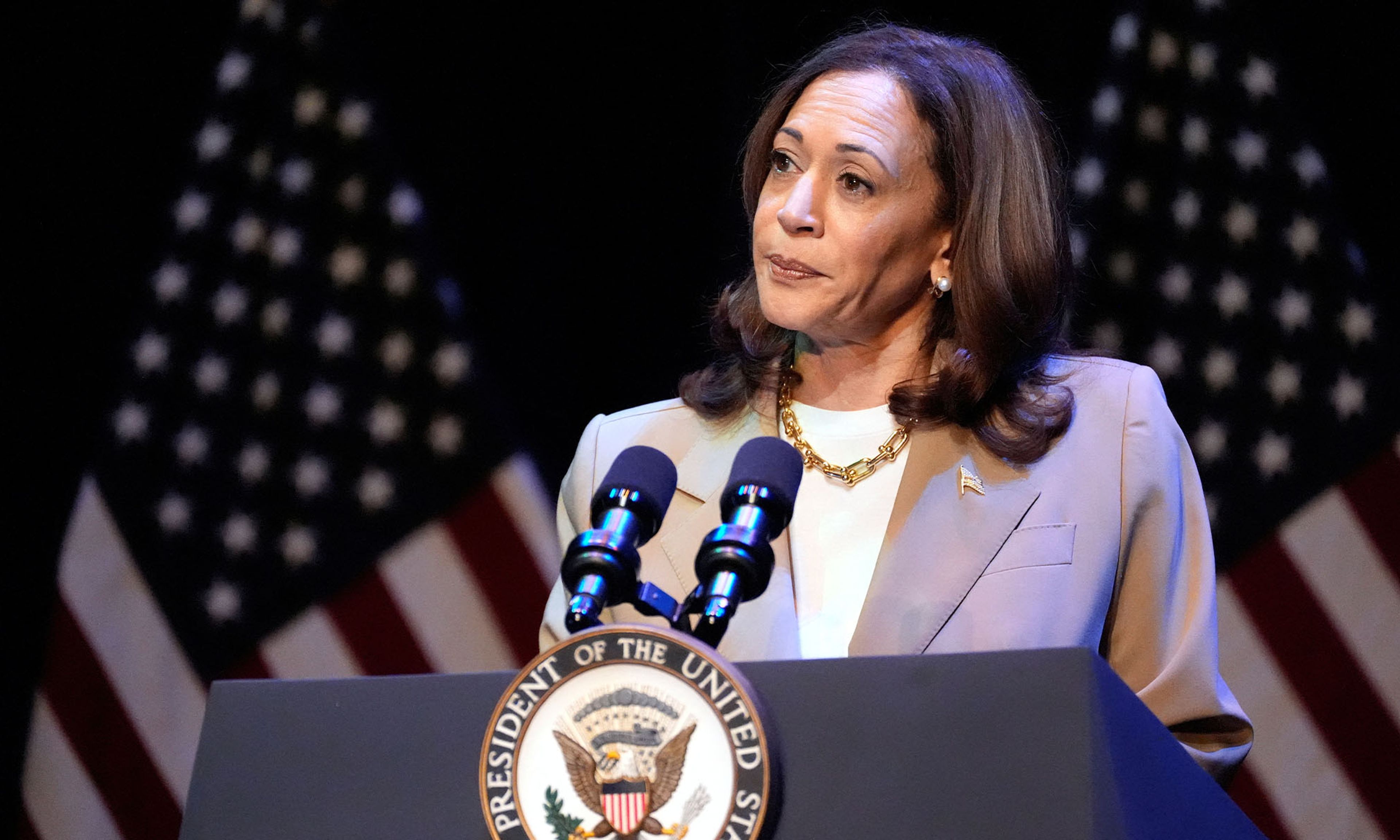
If one strips away the many glittering layers that have been added to her avatar by the operators and sycophants of America’s contemptible national press, one soon notices that Kamala Harris has a policy problem. Politics, even now, is about more than baubles and encomia, and in their obstinacy, most voters remain at least somewhat interested in the policies that each candidate brings to the feast. It would no doubt suit Kamala Harris down to the ground if she could spend the next 100 days being hysterically feted with visions of “Kamalot” — dispiritingly, that’s a real neologism — but, at some point, she’s going to have to answer a smattering of substantive questions, and, when she does, she’ll have three realistic options from which to choose: (1) Run on the radical agenda that she adumbrated in 2019; (2) embrace the array of positions that have made the Biden–Harris administration one of the least popular in modern memory; or (3) cut the president she serves loose and gesture at a contrived moderation in which she does not in any sense believe. None of these is ideal.
Thus far, it seems as if Harris is being forced by gravity to plump for Option 2. Last week, her campaign vowed that she would seek to impose no new taxes on individuals who earn less than $400,000 per year. That, verbatim, is President Biden’s position. Soon afterward, the campaign not only reversed Harris’s 2019 position on fracking — which was to ban it completely — but insisted that those who had seen the many videos in which she had made her toxic vow were guilty of making “false claims,” and it confirmed that, henceforth, “she would not ban fracking” if given the chance. That, too, was President Biden’s effective approach, right down to the immediate attempt to change the subject to “climate-change legislation.” Given that 2019-era Harris wanted to kick 150 million people off their private health insurance, make an open border a matter of explicit policy, extend Medicaid to illegal immigrants, ban modern sporting rifles by executive order, consider racial reparations, and pass the Green New Deal in its entirety, it seems likely that this reflex will persist.





Comments