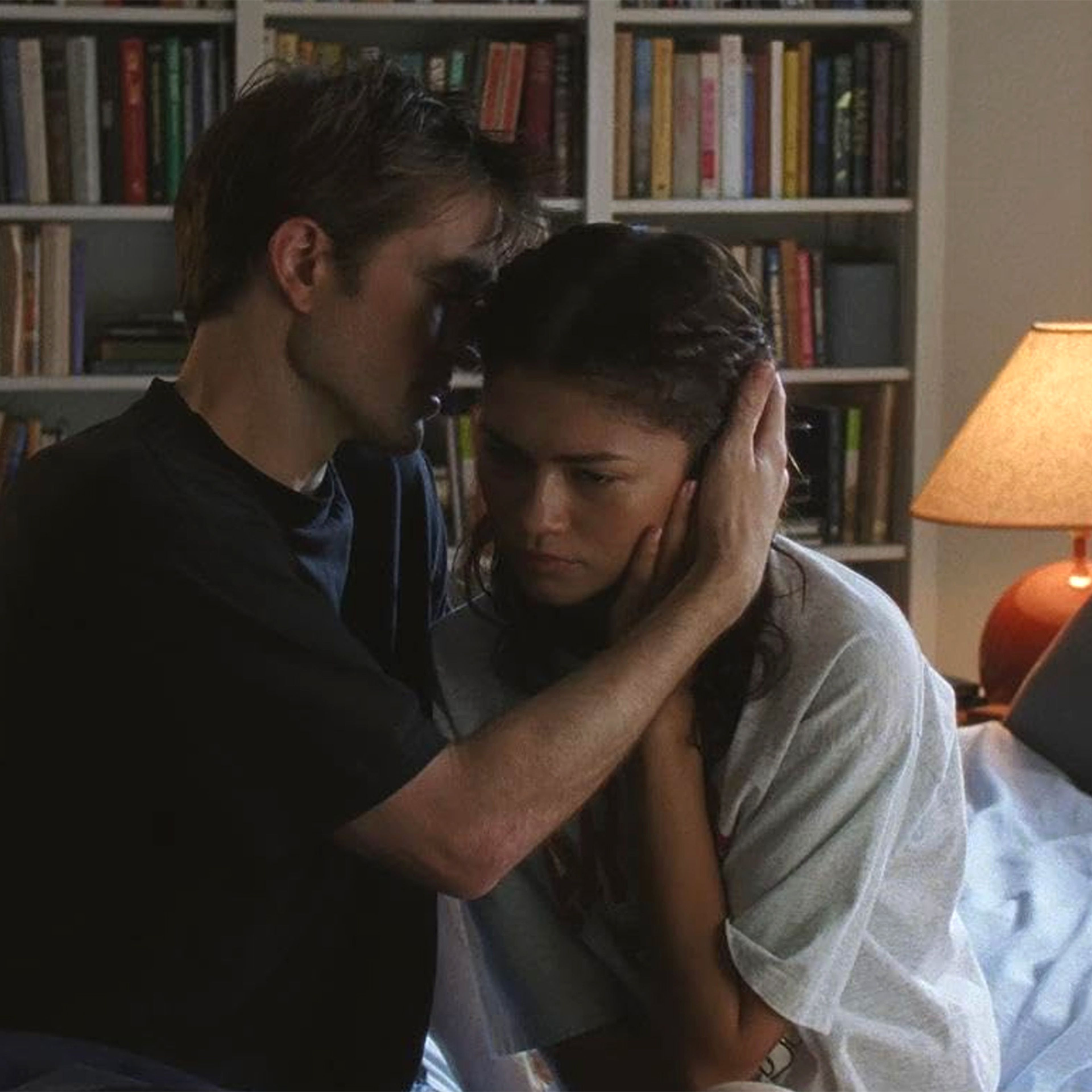
“I guess I needed something. I needed to feel alive. I just wanted to do something outrageous. There’s so much I wanted to do with this life and it’s like I haven’t done any of it.” That’s Jamie Lee Curtis as a middle-aged suburban wife and mother about to be whisked into a high-velocity espionage adventure in the eminently enjoyable 1994 Arnold Schwarzenegger film, True Lies. After delivering this line, Curtis follows a pre-Governator Arnie into battle with nuke-toting Middle Eastern terrorists, saving the country and her family while spicing up her marriage. In The Last Kiss, moping hipster heartthrob Zach Braff echoes the same disappointed sentiment, saying, “I’ve been thinking about my life lately, and everything seems planned out. There are no more surprises.” The difference, though, is that Braff is playing an immature, self-obsessed 29-year-old about to become a father, and instead of zipping off to thrilling adventure, he indulges himself in the seductions of an equally immature young lady a decade his junior. Where Curtis’s character heroically threw herself into action, Braff pathetically contents himself with getting some. This is the template for The Last Kiss, an occasionally interesting, often irritating dissection of the shallow, self-serving relationships of a group that has been labeled “indie yuppies”: the blandly hip, mostly urban twenty-somethings who have wholly bought in to the ploy of finding individual identity in lifestyle consumerism. Shot with the blasé entitlement of a Volkswagon commercial, it’s a movie about a generation that bought their pre-fab personalities at the mall and ordered their life goals from the Internet, yet still wonders why everything seems so dull and predictable. And it’s about the frictions that occur when they discover that, unlike those trendy pre-faded jeans and earth-tone sweaters, human relations cannot be loved and worn for a season, then carelessly tossed away. The movie follows a quartet of 29-year-old guy friends conveniently involved in nicely representative relationship stages. One is married, but wants to leave because he can’t handle his nagging wife and crying baby; one is a girl-hopping bachelor who prides himself on his womanizing; another is recovering from a recent breakup with a fiancé; Braff’s character Michael is about to become a father with his live-in girlfriend, yet shies away from committing to marriage. It’s like Desperate Housewives, or maybe Sex and the City, except with aimless, laconic dudes instead of driven, chatty ladies. Each of the characters fits into a different relationship stereotype, but they all share in clinging desperately to any last strand of immaturity. They fawn over strippers, plan random road trips, and converse like overgrown high-schoolers. When Michael breaks the news that he’s going to be a father, his stubbly, cigarette-smoking friend replies, “Now you’re having a baby? How intense is that?” as if having a baby were like playing a new Xbox game or a mastering a snowboarding trick. Adulthood, and the responsibilities it entails, are to be avoided at all costs; like a sulking mob of J. Crew-clad Peter Pans, these perpetual children refuse to grow up. Of course, even though they run from responsibility, that doesn’t mean that each of the characters isn’t eager to take on the privileges of adulthood. Sexual permissiveness is the norm, and their daily existences read like glossy catalogs of middle-class luxury: flat-panel televisions, hybrid cars, and giant sound systems keep them comfortably pacified within the womb of consumerism. Even symbols of childhood imagination become lost behind the façade of domesticity: Sitting in a wooden tree house, Michael sighs and remarks, “It’s like a condominium or something.” The movie can’t decide whether it wants to portray the domestic life as prison or palace. On one hand, domesticity is what Michael pines for at the end of the film. But the movie also spends a lot of time showing us how trapped its characters are by their surroundings, and wants us to sympathize with Michael when he gives in to the seductions of Kim (Rachel Bilson), a cute young college student who woos Michael for no discernable reason other than plot necessity. When he hooks up with her, it’s obviously the move of a total jerk, but not in the movie’s enlightened view. He’s just experimenting, see? Trying to break free of his boring, regular life. . . . Oh, the horrors of moderate luxury and stability. (Fortunately, in the theater I was in, all of the women outside the press section booed when Michael finally kissed Kim.) Oddly enough, the movie seems to think of itself as the antidote to the twenty-something culture of casual sexual dalliance. But it is far too timid and too dedicated to its cutesy tone to make its characters suffer any real consequences for their blithering narcissism. Instead, it lamely suggests that the problem with its characters’ frivolousness about sex and relationships isn’t what they’re doing, but the attitude with which they’re doing it. If only one has the strength of will to perform some dramatic act of apology, it seems to say, all will be fine and forgiven. The film at least plays lip service to one good idea when the father of Michael’s girlfriend sternly intones that “What you feel only matters to you. What you do to the people you love is the only thing that matters.” But despite the film’s ostensible support of these words, its characters are never required to do much more than follow their own shifting whims. Michael’s repentance is a saccharine, romantic-comedy-inspired demonstration aimed at getting back in good graces with the woman he cheated on, not an act of sacrifice. Two of the four male leads simply hit the road, lives and subplots unresolved, and the frustrated married man’s alleged turn toward the responsible is epically self-deluded. The secondary female characters fare no better: They’ve either rejected their men and been left alone or taken them back with little expectation of better behavior. When Kim first meets Michael, she says, “Everyone I know I know is having a crisis. I know you’re not supposed to have them till midlife, but I think something’s happened to our metabolisms.” It’s too cute, but it’s somewhat true: We have entered the age of the quarter-life crisis, with its rippling waves of insecurity, anxiety, self-absorption, and its all-encompassing consumer mentality. One wonders if, instead of indulging in emotionless hook-ups, maybe they ought to follow Jamie Lee Curtis’s lead and head off for spectacular adventure. At the very least, it would make for more entertaining movies. – Peter Suderman is assistant editorial director at the Competitive Enterprise Institute. He blogs on film and culture at www.alarm-alarm.com
Share this story

About the Author
NR Staff comprises members of the National Review editorial and operational teams.
Advertisement
Advertisement


Comments