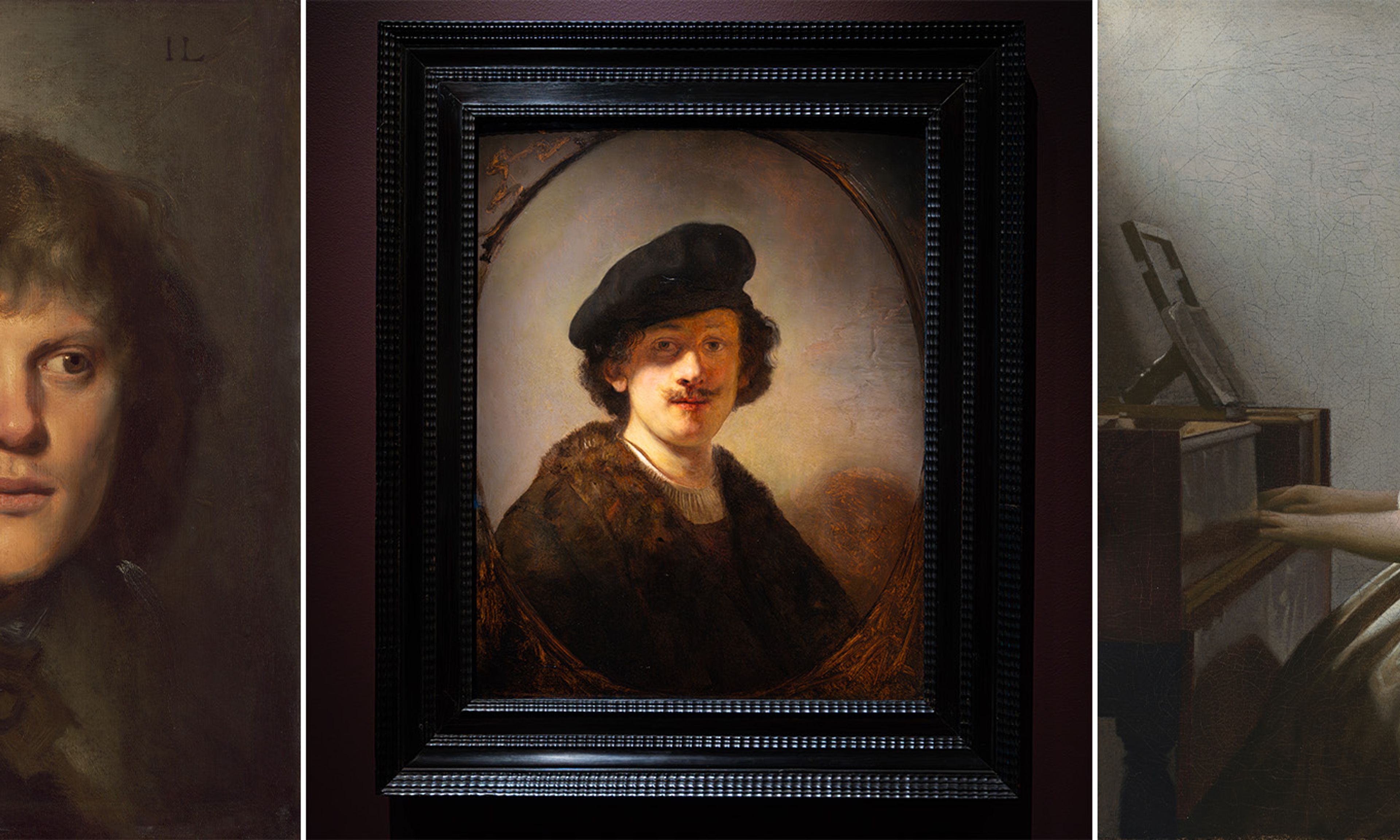
Last week, in reviewing Art and Life in Rembrandt’s Time, just opened and full of wonders at the Norton Museum of Art in West Palm Beach, I dwelled on the 17 Rembrandt paintings in the exhibition, all from the private Leiden Collection that’s so rarely seen. Scholars and fans of Rembrandt (1606–1669) don’t often consider him in his role as a teacher, which is what I’m focusing on today. Rembrandt had many students over 40 years, some of whom became accomplished artists. We can’t call them followers of Rembrandt. Lots of the art in Rembrandt’s Time comes from Jan Lievens, Rembrandt’s peer and fellow student in the 1620s; and Rembrandt’s own students, including the divine Carel Fabritius, Gerrit Dou, and Arent de Gelder, each inspired by Rembrandt to develop his own vision. That was a central part of Rembrandt’s pedagogy.
Rembrandt’s Time is astutely curated to keep the surprises coming. It doesn’t begin with Rembrandt, the star attraction, but with self-portraits by Jan Lievens (1607–1675) and, we think, Dou (1613–1675). Dou shows himself to be a young, unassuming, but ambitious artist, dwarfed by his large canvas. He wants to be a history painter, judging from the size and shape of the canvas, which suggests a complicated narrative, and his trunk full of props used to dress his models. Lievens’s self-portrait puts a confident, high-spirited, bold, and brash artist before us. Both artists strive for character, self-awareness, and self-assertion.





Comments