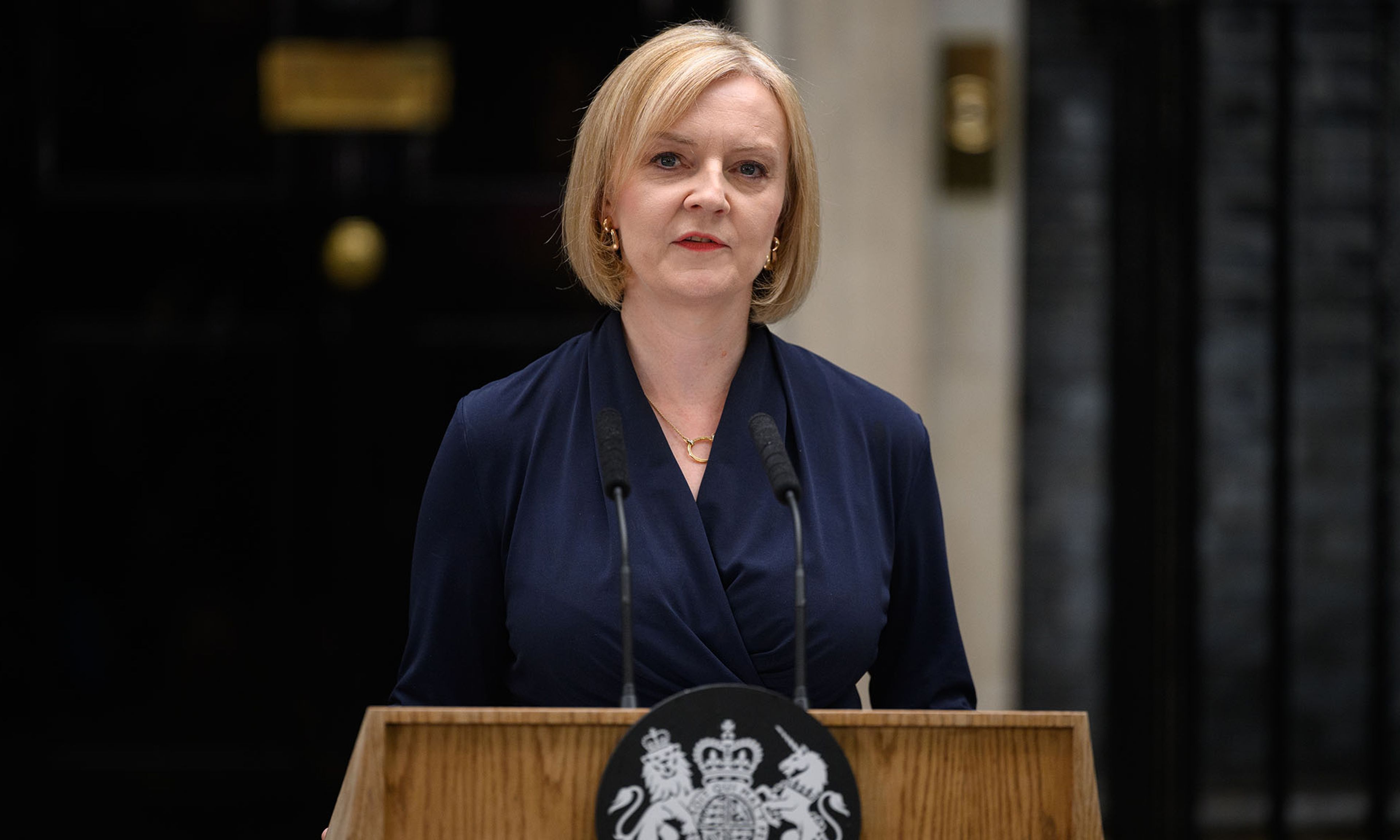
There have, it is true, been stickier moments to become Britain’s prime minister: May 1940, for one, when Winston Churchill took the top job. Nevertheless, however glowingly Boris Johnson may, in his farewell speech, have spoken of his legacy (“foundations that will stand the test of time,” “great solid masonry,” the “path to prosperity” paved, and so on), the reality is that Liz Truss, his successor, has inherited one hell of a mess, politically and economically, and time is already running out for her to fix it.
The best thing that Truss has going for her may be that expectations are so low, partly because of some in the media caricaturing her as none too bright, a verdict very hard to reconcile with how far she has come. According to a poll reported in Bloomberg, only 12 percent of Brits believed she would make a good or great leader. More than half reckoned she would be poor or terrible. She is not an impressive speaker and, although her intentions are good, her policy prescriptions are not always properly thought through. She can give the impression of being a Thatcher tribute act. But if she wants to do Thatcher, she must do it right. That includes copying the unillusioned calculation with which Mrs. T pursued her agenda for most of her time in office.





Comments