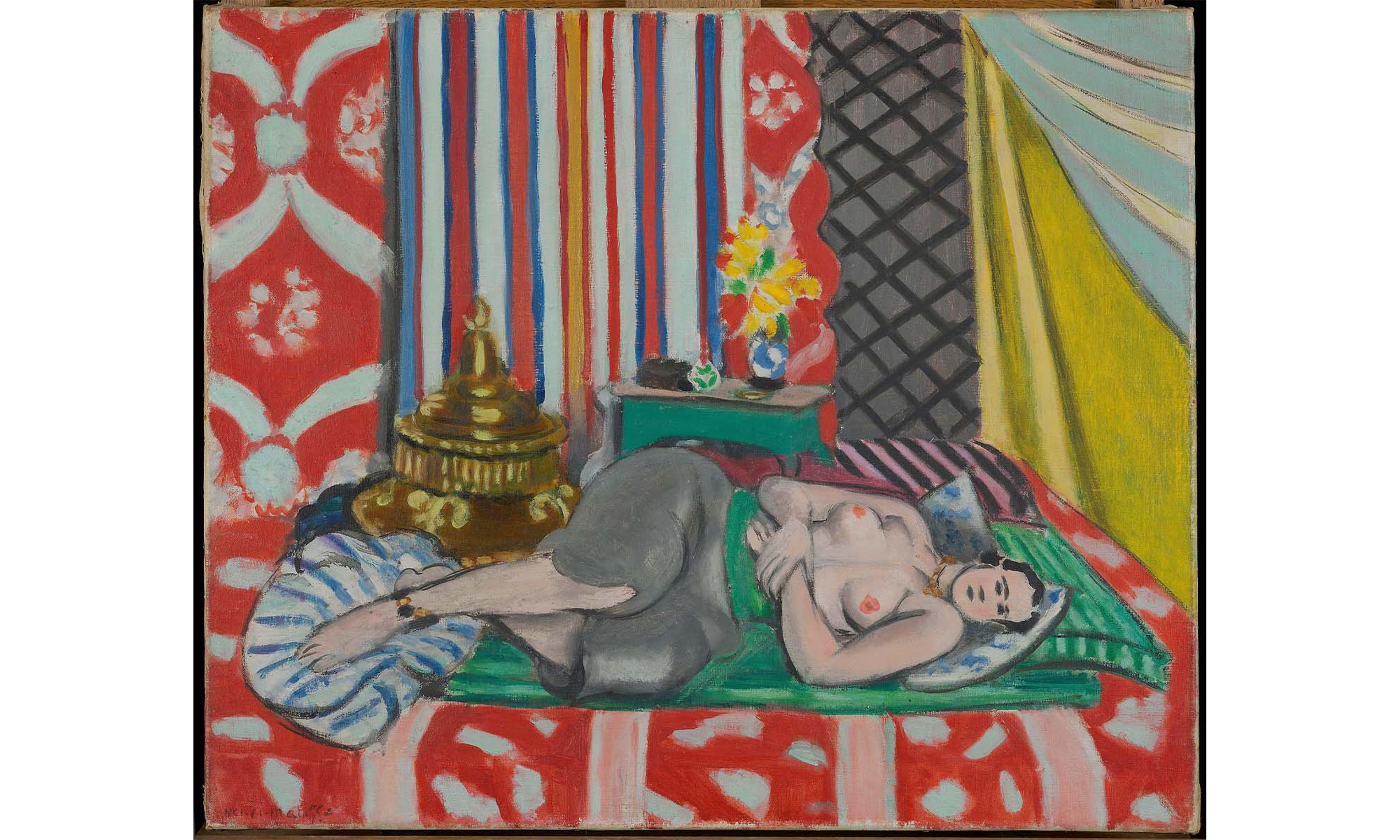
Matisse in the 1930s is the satisfying, surprising new exhibition at the Philadelphia Museum of Art (PMA). It’s satisfying in that it’s well presented and intellectually coherent. It’s surprising, even a revelation, since I came as an agnostic — at best — on Henri Matisse (1869–1954), who seemed to me derivative more often than not. I left not loving his work overall but enjoying first the jolt and then the tonic of his lush, sultry color.
His doggedness appeals, too. Matisse had a dull, uninspired 1920s, painting odalisques in Nice. Starting in the early ’30s, he shook the sand from his flip-flops, thanks to The Dance, a wall mural commission for Dr. Barnes’s grand hall in his new home, school, and galleries near Philadelphia. I just did a profile on the Barnes and reviewed its wonderful Modigliani show.





Comments