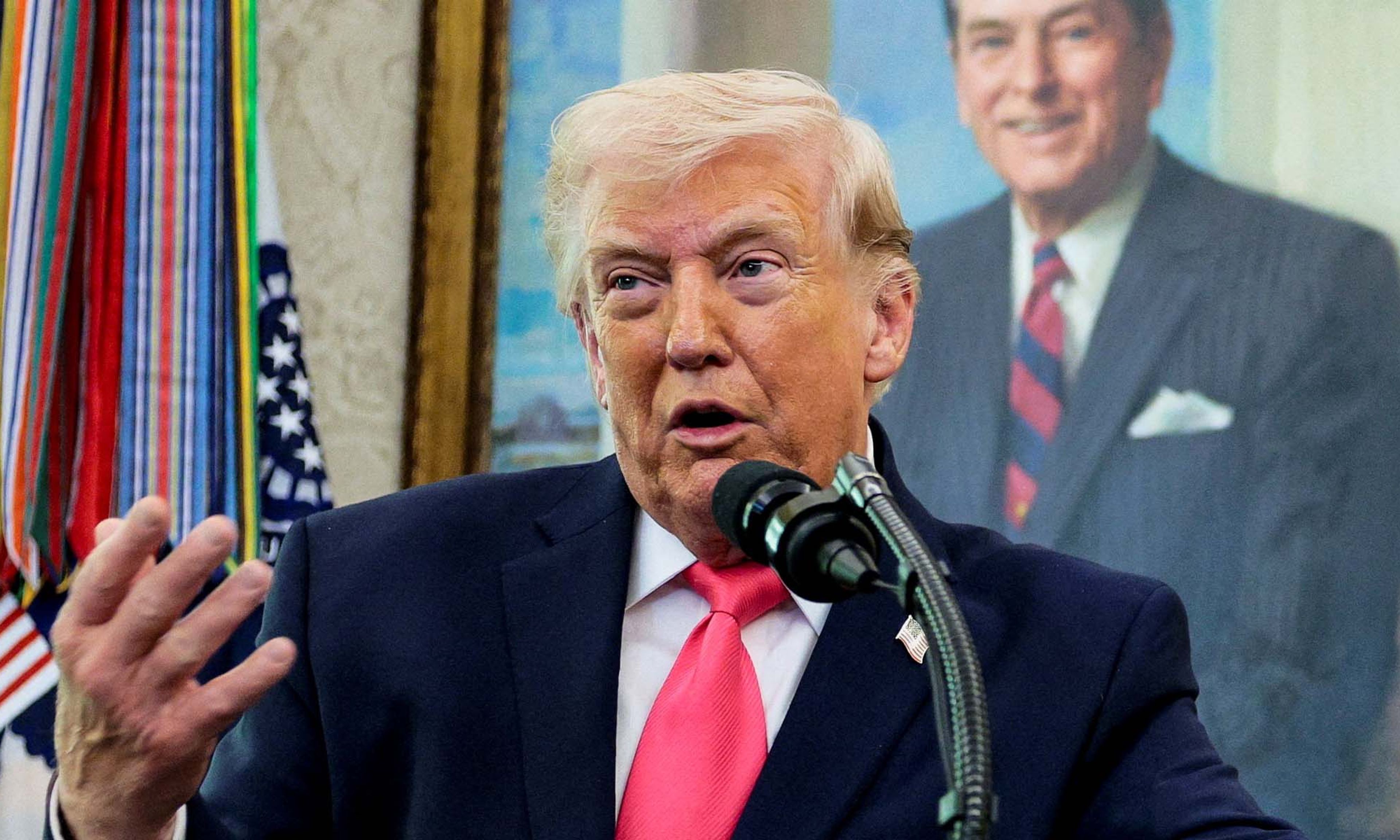
There has been some pretty unsurprising but bad analysis of the election results since Tuesday night. There also has been some very good analysis, from National Review’s editors, from our own Jim Geraghty, from our own Dan McLaughlin, from Yuval Levin, from Erick Erickson, and plenty of others on the conservative right. There is no need for a redundant analysis that merely restates what has already been said, even though an amen to all of what they said should be assumed. What I want to suggest, in total alignment with my aforementioned friends and colleagues, is that these election results capture the very essence of the twin deficits in the Trump-era moment: a newfound contempt for both the free and the virtuous society.
The debate over the ’s role in this Republican debacle would be comical if it were not so maddening. With virtually no one operating in good faith or making a serious argument, a whole cabal of people have claimed, all statistical evidence and voter polling to the contrary, that the sole reason for states like Texas, Kansas, and Mississippi flipping is the Iran war. Inversely, no one who disputes that monocausal theory of the case denies that the Iran war is unpopular, and that its unpopularity was a contributor to the decline of approval for President Trump and to the results Republicans suffered all over the country Tuesday night. That voters detest the state of prices, and that they believe (with obvious basis in fact) that tariffs are connected to this, is not disputable by credible people. That the bizarre handling of the Iran war led to a Strait of Hormuz debacle, and to significant problems for fuel prices and a downstream impact from diesel prices, is also obvious. Reasonable people can disagree as to how much of the Iran war contribution was related to opposition to de-nuclearizing Iran versus the way in which it all went (e.g., a failed MOU negotiated by the vice president, repeated claims of victory that were obviously untrue, and a sustained period of time with no clear resolution). But all advocates of a multi-causal explanation of the midterms recognize the significant role Iran played.




Comments