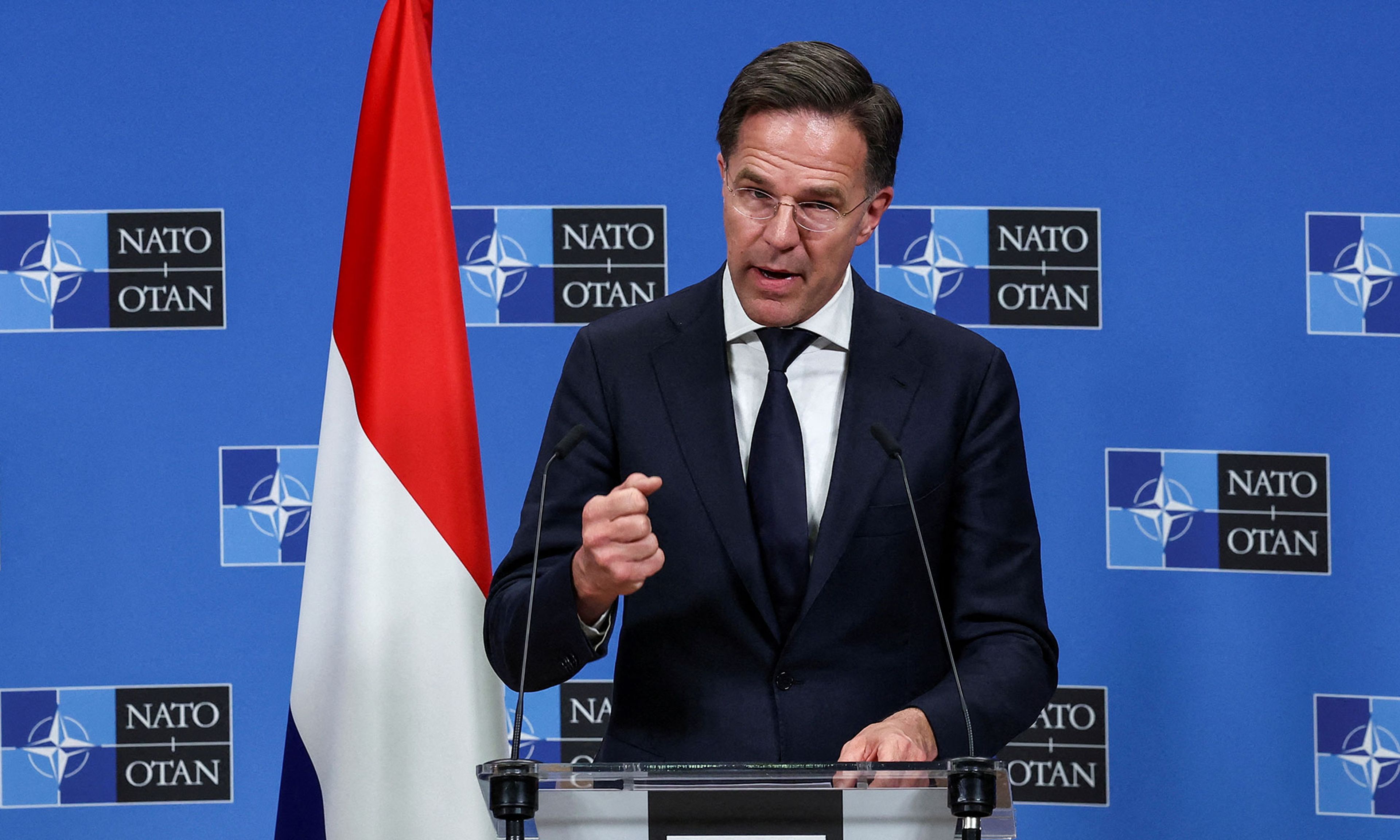
We now have confirmation that the outgoing Dutch prime minister, Mark Rutte, will become the next secretary-general of NATO when Norway’s Jens Stoltenberg steps down this fall. Rutte is regarded as a calming influence, someone who has an instinct for harmony, for pouring oil upon troubled waters. Famously, he earned a reputation for himself back in 2018 as the “Trump Whisperer,” credited with easing a conflict over NATO defense spending between Trump on the one hand and Macron and Merkel on the other. Since European leaders have worked themselves into a lather over the prospect of a second Trump presidency, Rutte’s presence at the NATO helm has won widespread approbation.
Perhaps we should hold the applause for now. Looking back at Rutte’s tenure in Dutch politics, one sees an inveterate compromiser and, moreover, one who seemingly embodies in full the values that European voters — including voters in the Netherlands — are now starting to reject. He is a man that the “Eurocrats” of Brussels can do business with, and so too the Biden administration, that, critically, stamped his appointment with its seal of approval. Perhaps that is an essential condition for the NATO job, but it opens the door to doubt. Although Rutte has said the right things about the varied threats facing the alliance, he seems ill suited to lead — emphasis on the word “lead” — NATO through the likely perils of his upcoming four-year term.




Comments