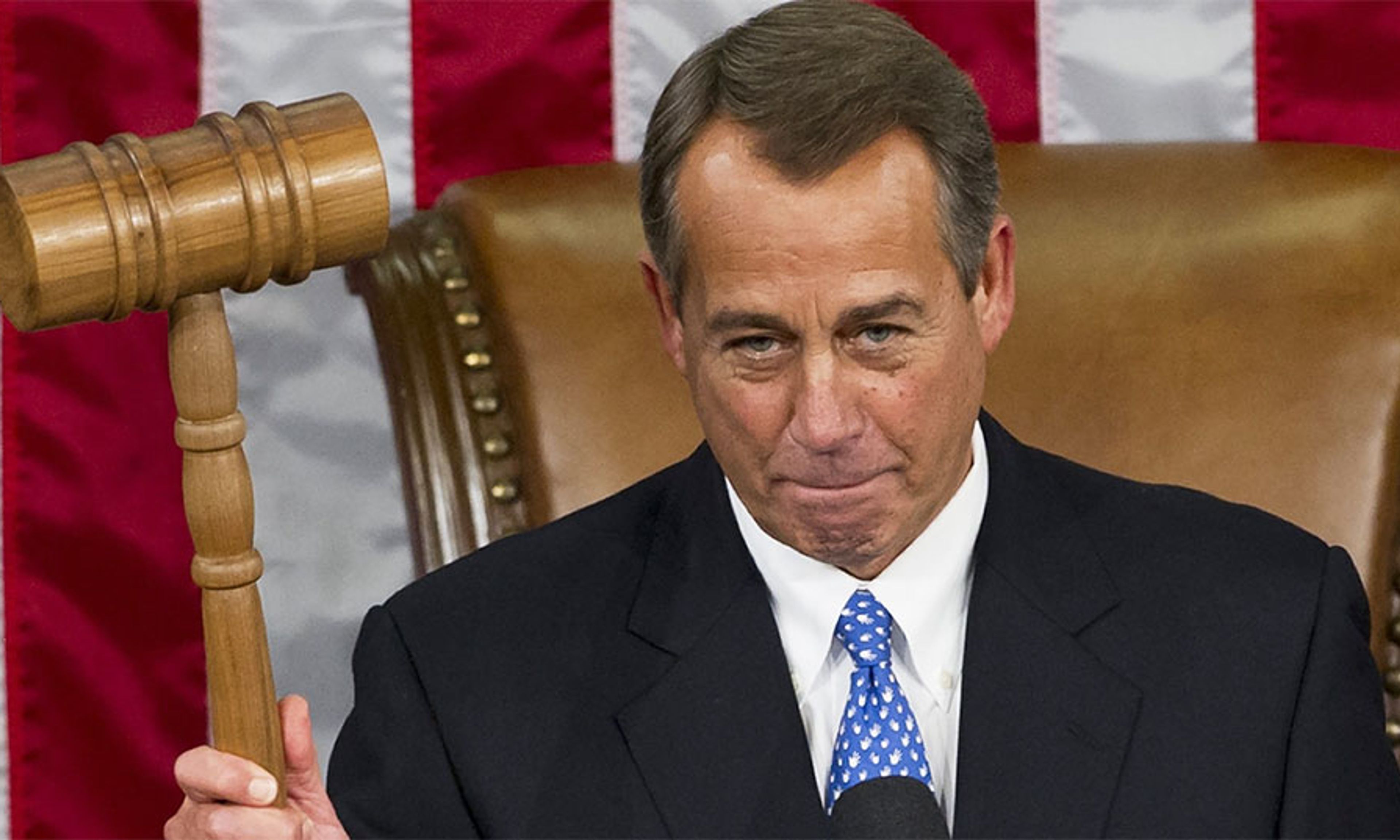
Republicans will have to keep their eyes on the big picture in their search for a new House speaker. As Ramesh Ponnuru and Yuval Levin have noted, some of the media spin has obviously been overblown. The GOP will survive whether it settles on a replacement for John Boehner sooner or later. It will even survive if some Republicans — quelle horreur! — disagree with each other.
However, there are real tensions within the Republican caucus. And, contra the current Beltway mythology, those differences go far beyond divisions between those who want to “govern” and those who want to “burn it down.” There are real, principled differences on topics such as immigration, trade policy, and various government-subsidy programs. In many respects, it’s a good thing that Republicans are having a real debate on these topics. The current status quo has clearly fallen short on a number of levels, so some policy reform is needed, and debate is often a crucial antecedent to reform.
#share#In light of the importance of that reform, Republicans should think not only about the proposed legislative tactics of a candidate for speaker but also about the ability of that speaker to be a spokesperson for a broader set of policy principles. I tend to doubt that, in the November 2016 general election, many votes will be decided by whether Republicans “won” or “lost” a government “shutdown” at the end of 2015 — or whether there was a government “shutdown” at all. Far more votes will be affected by whether the Republican party has a platform that speaks to the interests of the average American, reaffirms the foundations of constitutional governance, defends essential liberties, and offers a responsible fiscal and foreign-policy vision. The eventual GOP presidential nominee will ultimately have a great influence on the 2016 electoral platform, but legislative leaders will also have much to say in that platform, too, especially in laying the groundwork for it.
#related#So, as they search for a new speaker, Republicans should be on the lookout for someone who can articulate that forward-looking vision. In part because Republicans do have a somewhat fractious caucus, they would also be well served by a speaker who respects and has the trust of the various intraparty factions. A breakdown of trust within the congressional GOP has damaged the ability of the caucus to respond nimbly to the affairs of the day. Restoring this trust will require compromise (and might even mean disappointing corporate lobbyists at times), and it will also demand policy imagination. Structural forces have made the speaker’s chair an especially uncomfortable one in recent years, but this discomfort could be lessened by a governing vision that unapologetically champions the middle class, economic revival, civil integration, pluralism, policy reform, and personal liberty. Such a vision could help Republicans cement the support of the base and expand their electoral coalition.



Comments