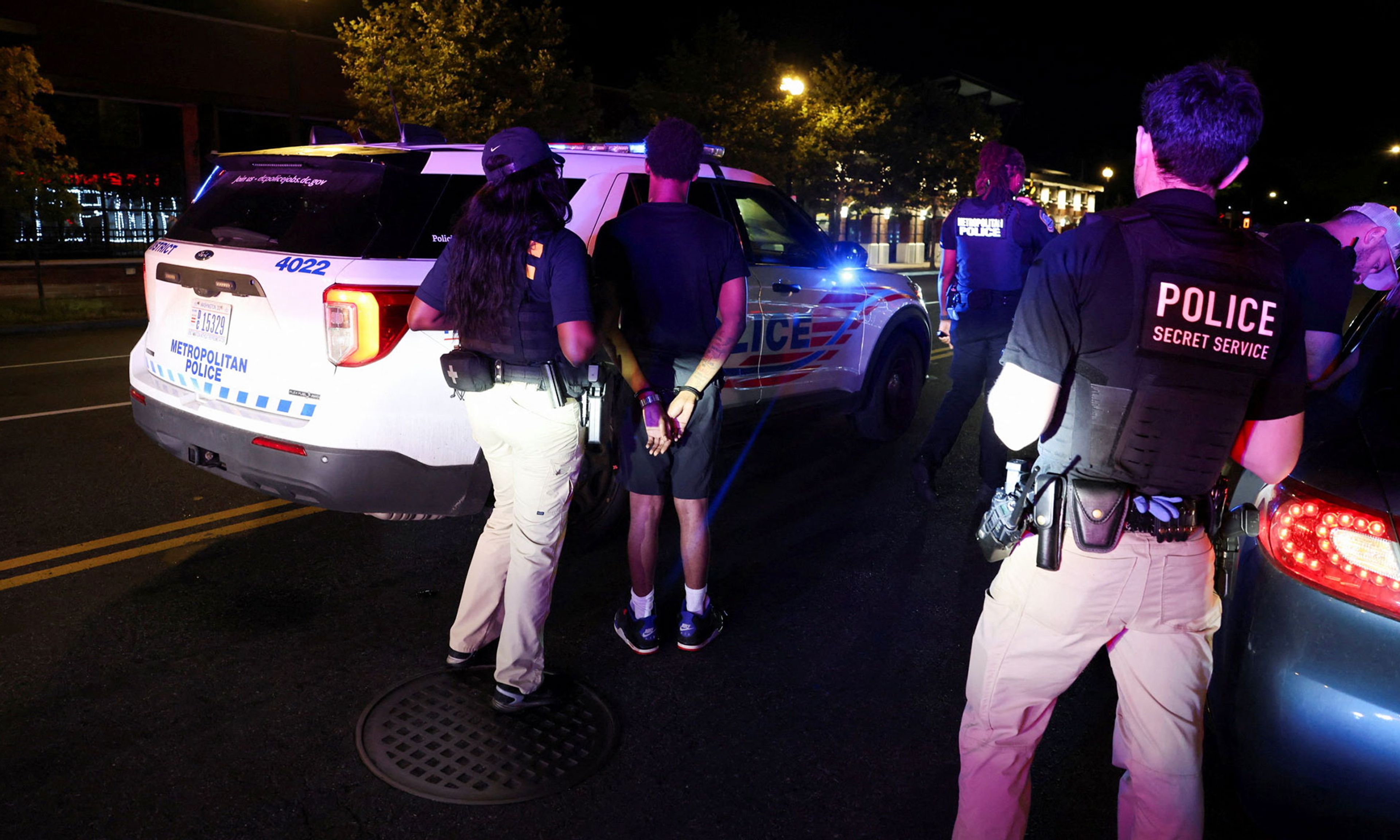
When President Trump invoked Section 740 of the D.C. Home Rule Act, giving the federal government temporary control over the police force in Washington, D.C., I was ecstatic. Anyone who has lived in or near D.C. over the past decade, as I have, knows that the city has become far more dangerous. But mainstream media outlets and Democratic politicians have invented all sorts of reasons to criticize the president’s move.
Some critics point to D.C.’s overall crime rate, which appears to have dropped for the past two years. D.C. Mayor Muriel Bowser, for example, claims that Trump’s move is excessive because D.C. crime has (supposedly) dropped to a 30-year low. Other critics claim that various outlandish motives prompted Trump’s decision. Representative Glenn Ivey (D., Md.) believes that Trump is just overreacting to the recent attack on a popular DOGE staffer. Alternatively, The Bulwark’s Sarah Longwell argues that Trump is trying to move on from the Jeffrey Epstein news cycle. The Washington Post’s Josh Rogin, meanwhile, is hyperventilating at the possibility of Trump’s using the police to “rehearse” some nefarious plan. Senate Minority Leader Chuck Schumer, too, dismisses the Trump administration’s stated reasons for intervening and says that he feels “perfectly safe” in the city, without mentioning that he has a large, armed security detail.




Comments