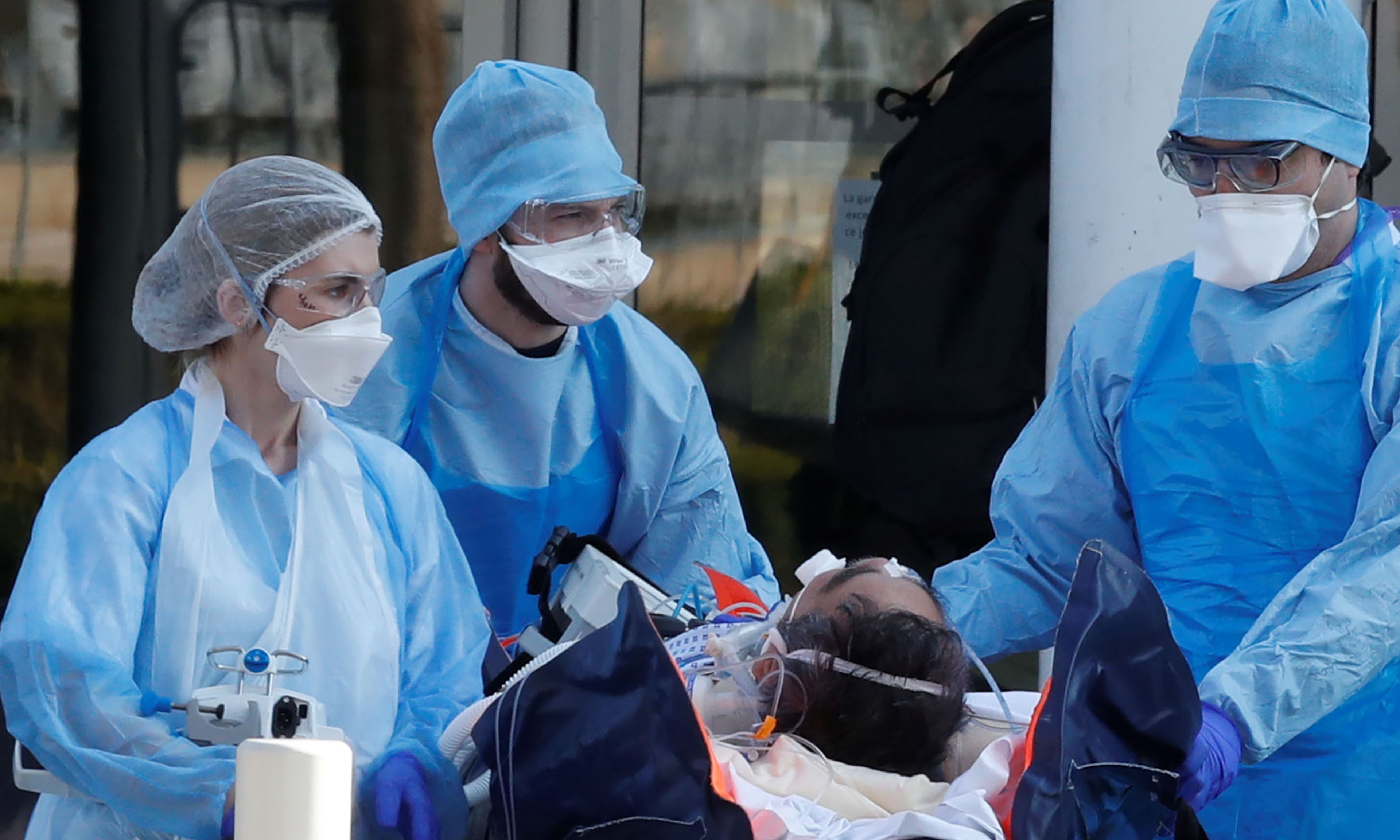
As governments worldwide impose restrictions on freedom of movement, critics of that response to the pandemic raise various objections. Anne Applebaum warns that rulers will exploit the crisis to suspend civil liberties and that, fearing death, people will accept and even applaud many such power grabs. The Italian philosopher Giorgio Agamben worries that something of the emergency measures taken now will linger after the pandemic subsides. “Italians are prepared to sacrifice practically everything . . . to avoid the danger of falling ill,” he writes in the European Journal of Psychoanalysis. “Our society no longer believes in anything but naked life” — i.e., people are surrendering much of their freedom to the state because they make the more fundamental error of fetishizing their mere biological existence. “What is a society with no other value than survival?”
Here in America, R. R. Reno echoes the thought, arguing that “there are many things more precious than life” and that the proposition that we have a moral duty to “save lives ‘at any cost’” is “a dangerous falsehood, one that leads to barbarism and slavery.” That idea was formulated perhaps most famously by Hegel in his passage on the “primal conflict”: The one who backs down for fear of losing his life becomes the slave to the one who, in his struggle for “recognition” — for honor, we might say, or prestige — risks his life, subordinating his animal instinct for self-preservation to an aspiration that is putatively nobler and unique to the human person.


Comments